Copenhagen is one of the few cities where the contemporary work and the mid-century inheritance speak the same language. The Nordic modernist tradition and the current generation of Danish practices share a restraint about material and daylight that a photographer either respects or destroys.
Architectural photographer working in Copenhagen, for architects, developers, interior designers and cultural institutions. Copenhagen work includes Kaktus Towers by BIG, Bjarke Ingels Group, shared by the practice and recognised at the Architecture MasterPrize.
This far north the light is the whole scheduling problem. Midsummer gives a very long, very low golden window that is exceptional for architecture; midwinter gives a few grey hours. Copenhagen is a city where choosing the month is a bigger decision than choosing the hour.
Commissions are taken here from the Dubai and Riyadh bases as international work, with travel, access coordination and any permits built into the scope and arranged before the shoot rather than on the day.
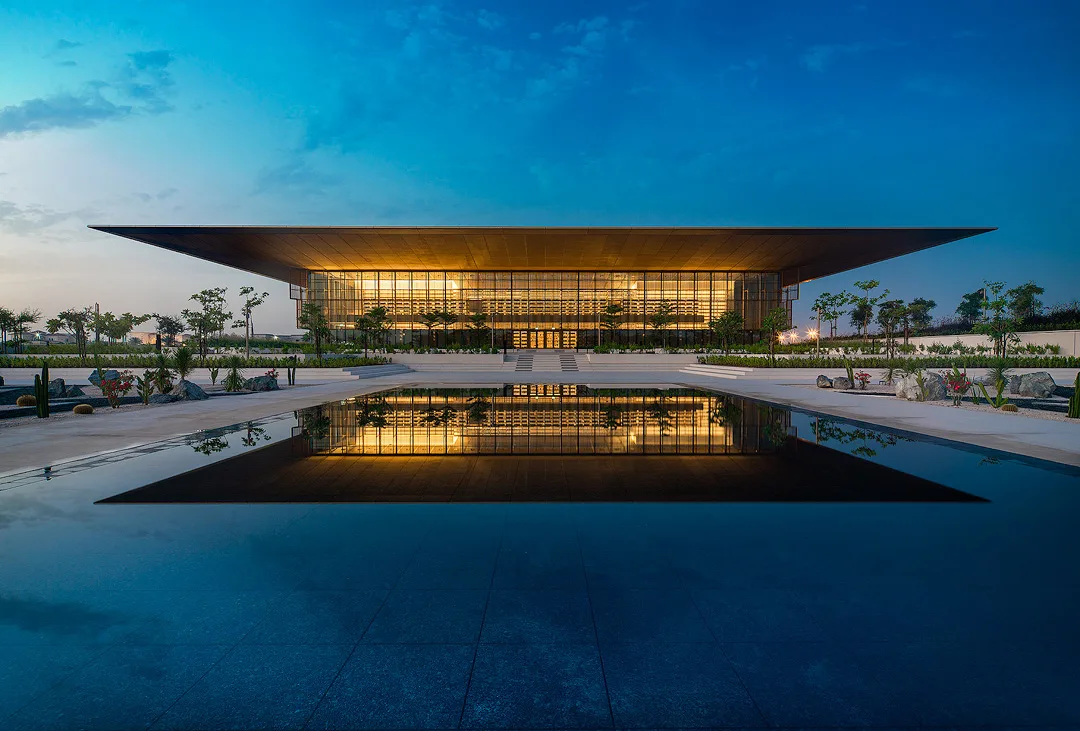
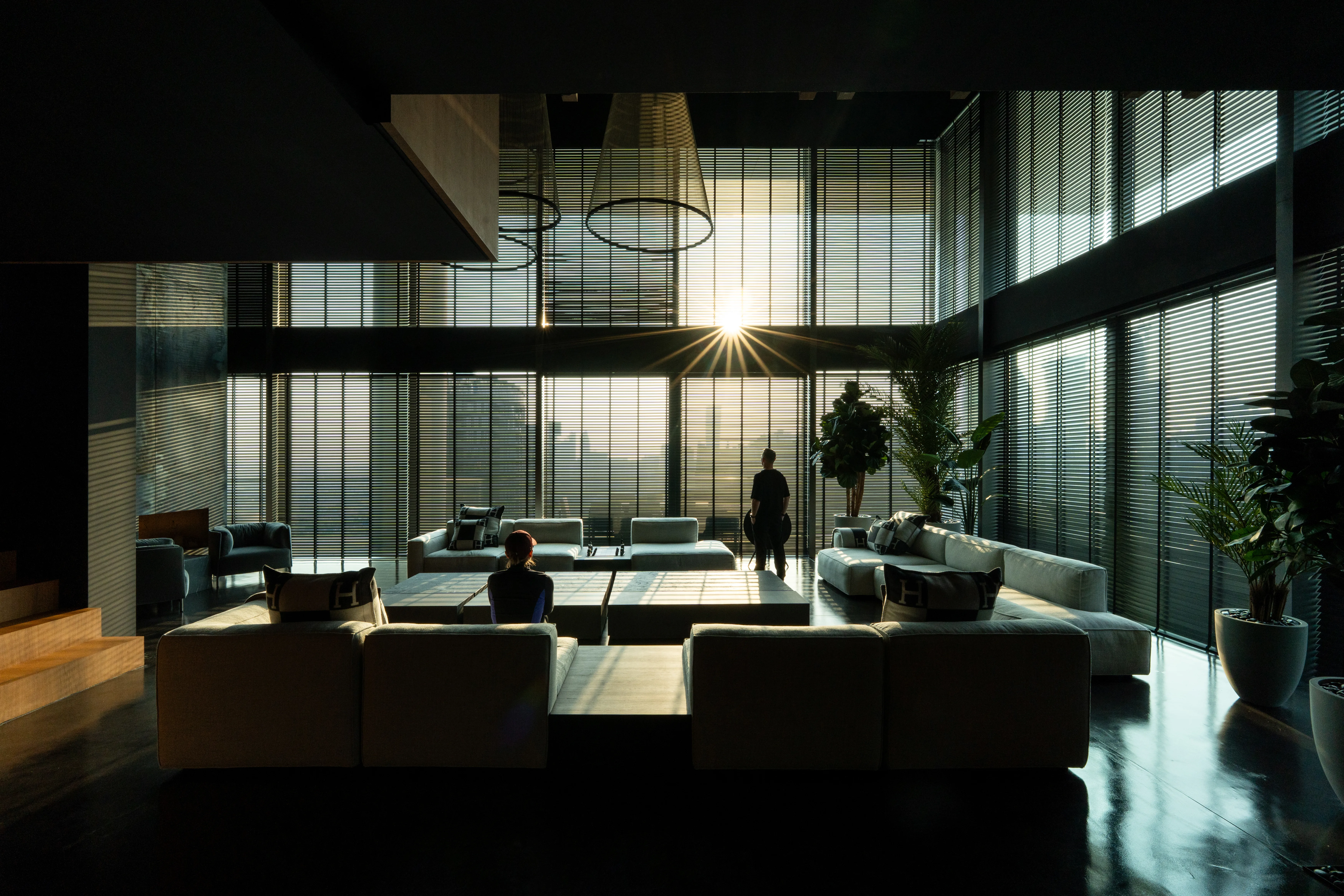
The named body of work sits across the Gulf: House of Wisdom by Foster + Partners, the year-long documentation of King Abdullah Financial District in Riyadh across 90+ buildings, which took 1st Place in Cityscapes at the International Photography Awards 2025, and Noir Matière in Dubai, awarded Best Project Photography at the Créateurs Design Awards.
The relationship with BIG began on the UAE Pavilion at Expo 2023 Doha, their first built work in rammed earth.
Every commission is delivered for marketing, publication and awards submission, with medium format capture and fine art realistic retouching.
Kaktus Towers
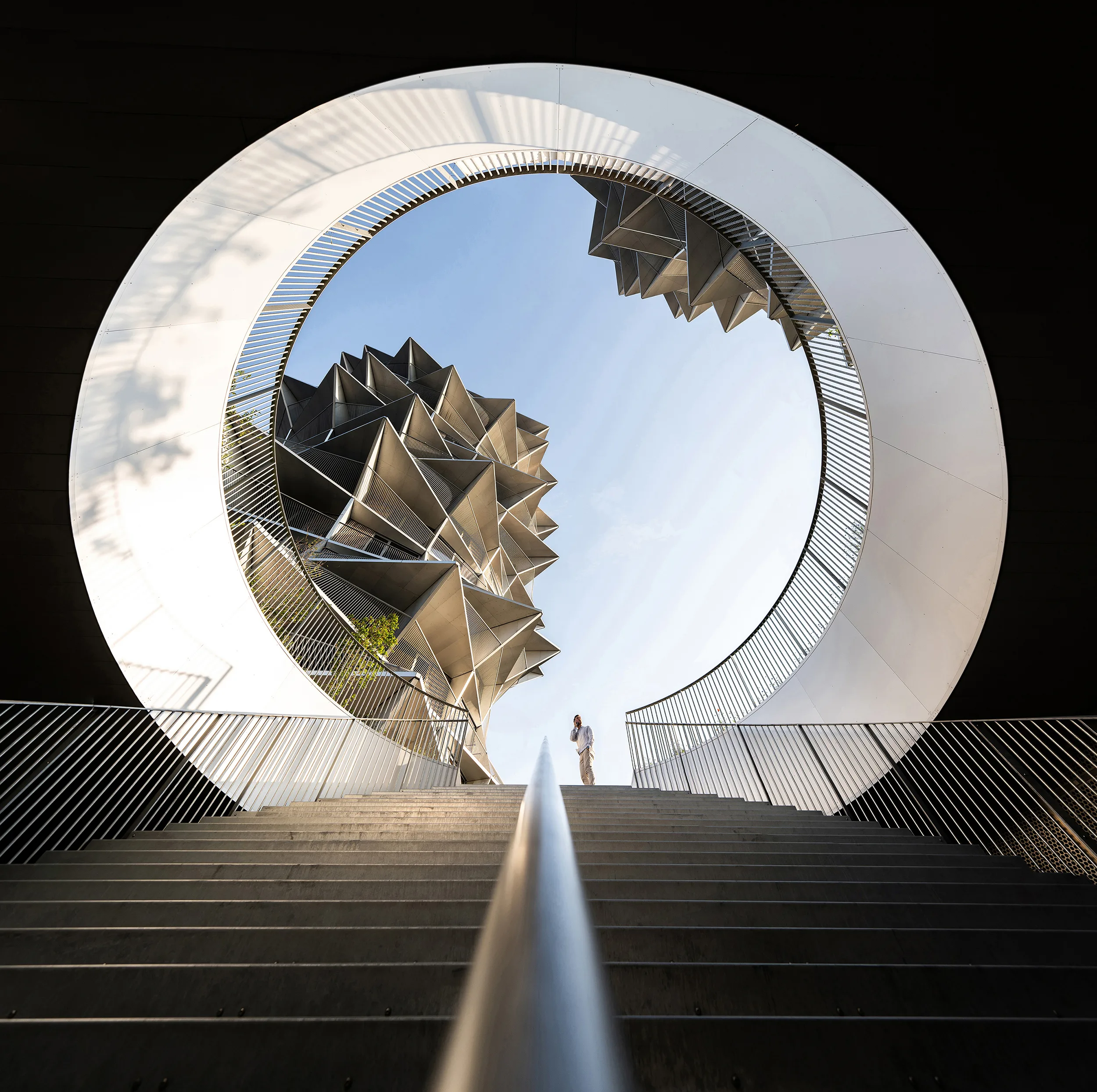
Two residential towers of 100 and 80 metres by BIG, Bjarke Ingels Group, whose skewed floor plates rotate at every level to produce the spiked profile the building is named for. It is a characteristic BIG move: the geometry is not a styling decision, it is what gives every apartment its own orientation and a private terrace, so the plan and the silhouette are the same idea.
The photography was made across different times of day, with the strongest material at golden hour, when low light catches the sharp-edged balconies and the aluminium panels and changes the facade completely. The waterfront setting and the ordinary rhythm of people cycling around the base gave the frames a human scale that a purely formal treatment of a building like this would lose.
The images were shared by BIG and by Bjarke Ingels, and the project was recognised at the Architecture MasterPrize. The working relationship began earlier, on the UAE Pavilion at Expo 2023 Doha.
Reading Copenhagen as Architecture, Not Skyline
Copenhagen is one of the few cities where the contemporary work and the mid-century inheritance speak the same language. The Nordic modernist tradition and the current generation of Danish practices share a restraint about material and daylight that a photographer either respects or destroys.
This far north the light is the whole scheduling problem. Midsummer gives a very long, very low golden window that is exceptional for architecture; midwinter gives a few grey hours. Copenhagen is a city where choosing the month is a bigger decision than choosing the hour.
The method does not change with the city: the building is studied before it is photographed, the light is mapped through the day, and the schedule is built around when the architecture actually resolves rather than around a convenient afternoon.
Access, Permits and Aerial Work in Copenhagen
Denmark follows the EU drone framework, with registration and category rules and restricted zones around the airport and central institutions. It is a more workable aerial market than London or New York, but clearance is still arranged in advance as part of the commission.
Access to a private building, an occupied hotel or a working office is a coordination problem rather than an obstacle. Windows are agreed with building management and operations in advance so the shoot day runs without disruption.
How an International Commission Is Run
A Copenhagen commission is scoped like any other: brief, site information, a scouting pass where access and timing allow, then a shoot schedule built around the building. Travel and accommodation are quoted at cost as part of the project rate rather than marked up.
Delivery is ten to fifteen business days from the shoot as standard, faster where an award or publication deadline requires it. Full commercial usage rights are included for the commissioning client, and third party licensing is handled separately at a flat fee.