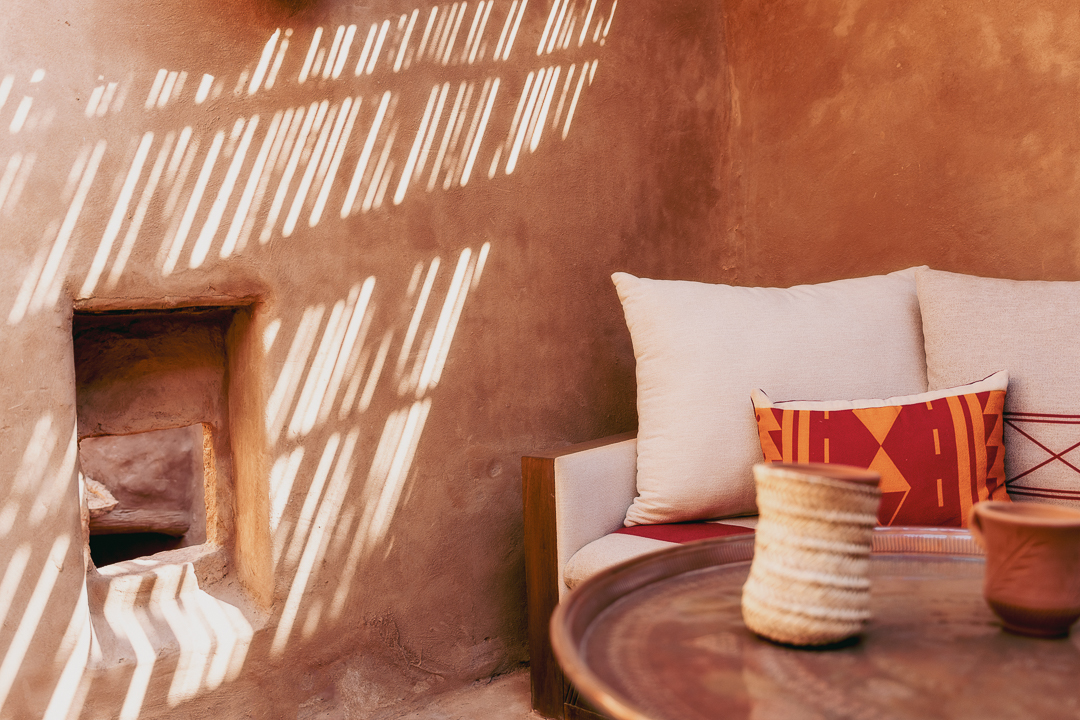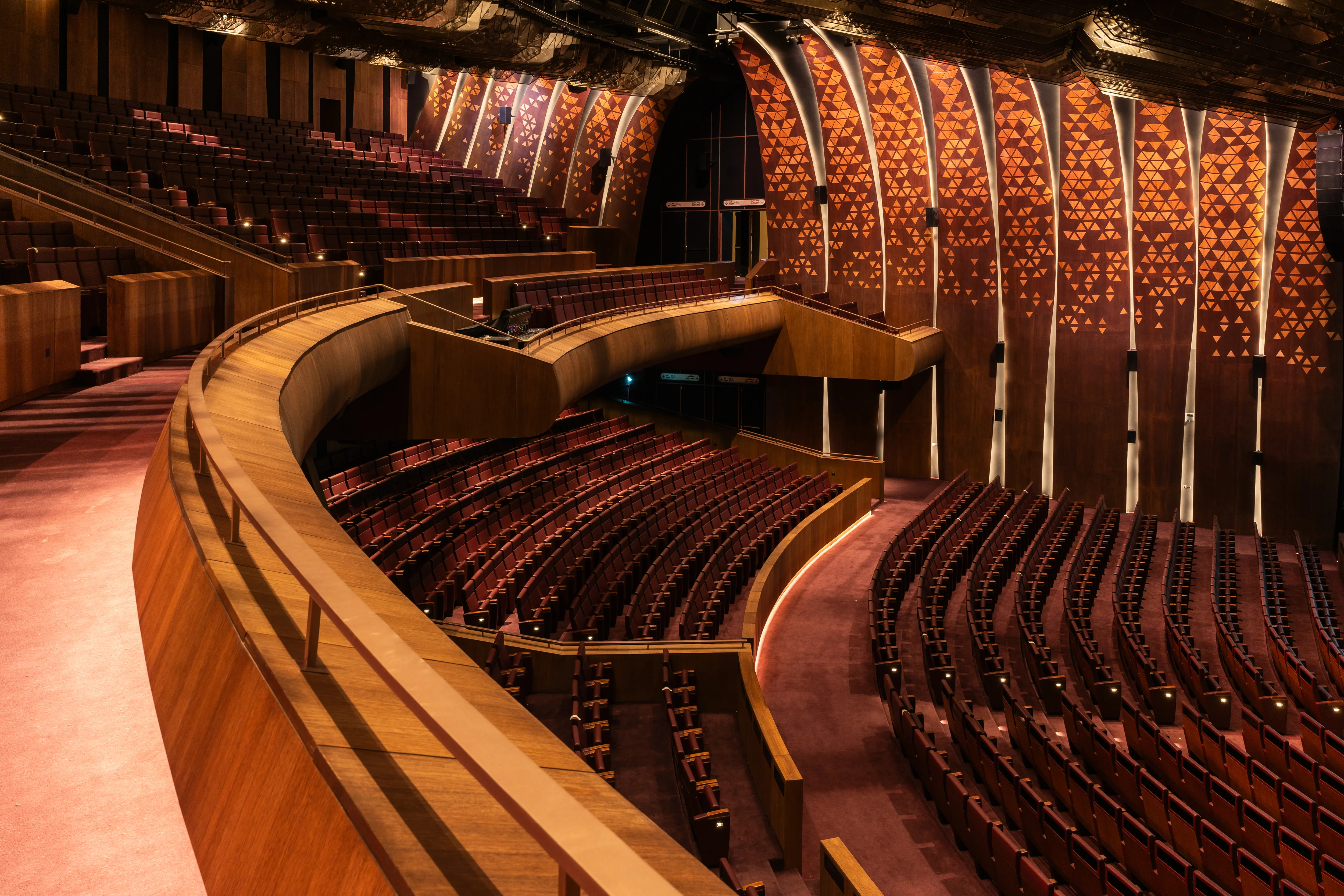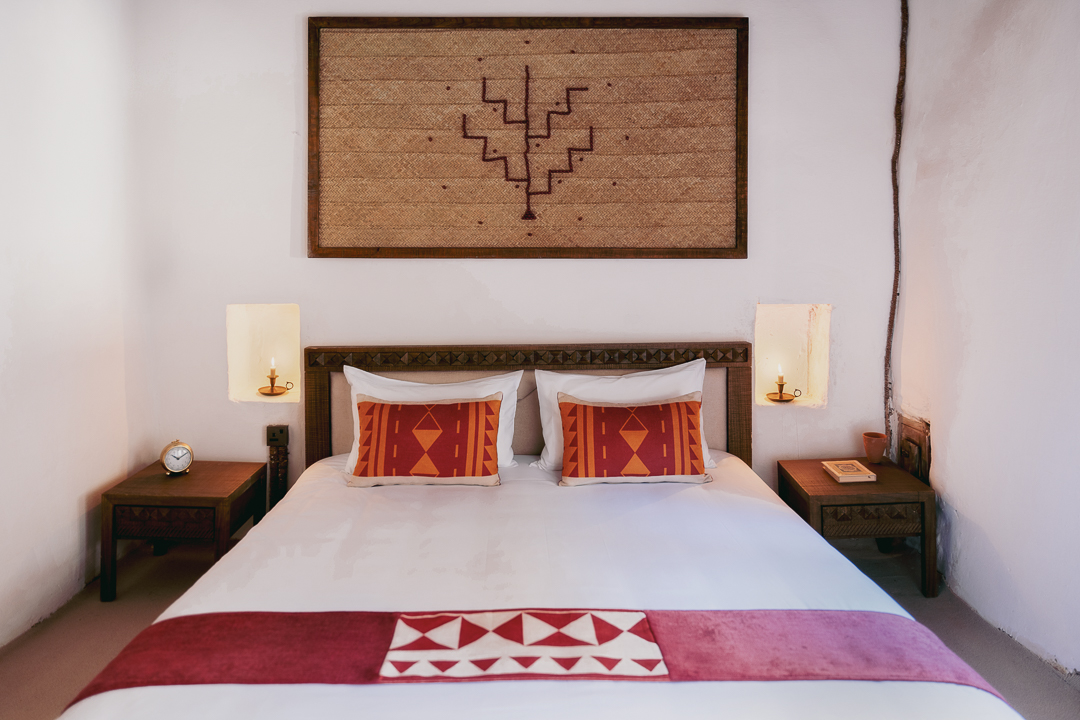
Photography of buildings brought back into use rather than built new. King Fahd Cultural Centre in Riyadh and Dar Tantora in AlUla Old Town are the two ends of that range on this site, a heritage building converted for contemporary use and a set of abandoned mud brick houses rebuilt as a hotel.
Heritage authorities and hospitality operators who have restored rather than replaced a building, and need the restoration itself documented, not just the finished interior.
Architects and conservation teams who want the relationship between old fabric and new intervention to actually read in the photograph, rather than be smoothed over.
The material is the subject. Original stone or mud brick next to new concrete, glass, or steel only works as a photograph when both are held honestly, neither hidden nor exaggerated.
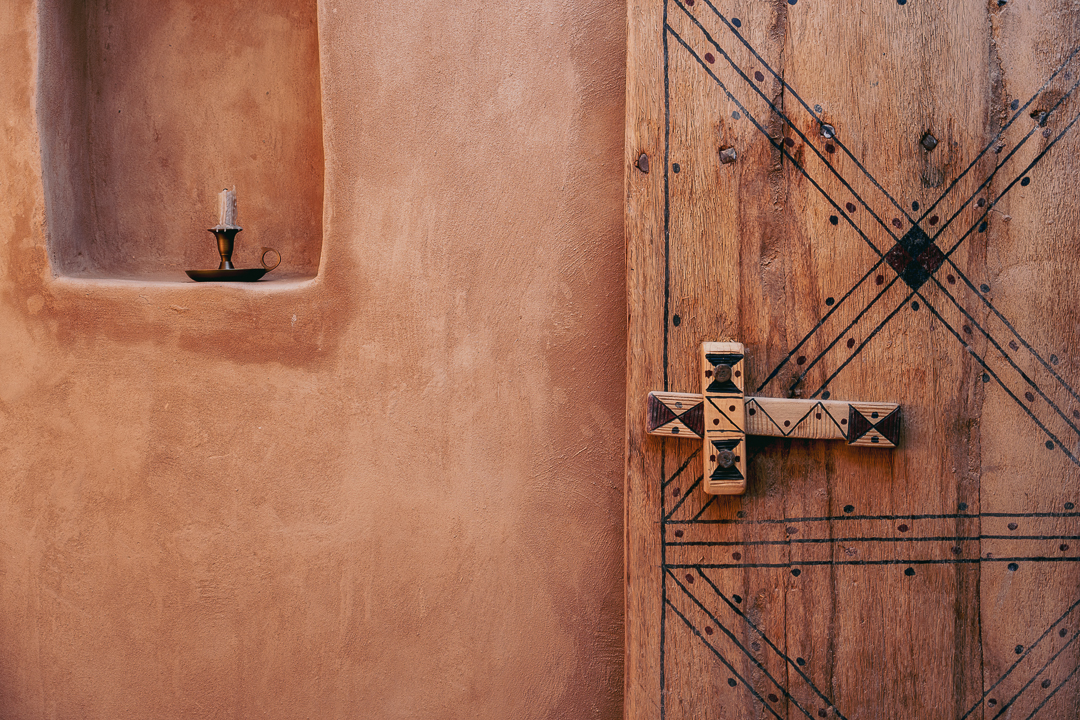
Texture carries more of the story here than anywhere else in the practice: worn plaster, hand-cut timber, the visible seam between what survived and what was rebuilt.
Two Different Kinds of Reuse
King Fahd Cultural Centre is a heritage building in Riyadh converted for contemporary cultural use, the older fabric carried forward inside a new programme. Dar Tantora in AlUla Old Town is the more radical version: a set of abandoned mud brick houses, rebuilt from close to nothing into a working hotel, with the reclaimed timber and traditional metalwork kept wherever it could be.
Both are restoration in the real sense, not a renovation dressed up as one, and the photography treats them that way.
What Changes About the Shoot
A restored interior is usually low-light by design, since heritage material rarely tolerates the glazing a new build allows. Capture leans on available light and long exposure rather than adding fixtures that would compete with the material itself.
Detail matters more than the wide shot. A single carved door or a length of reclaimed timber often carries the whole argument for why the restoration was worth doing, more than any room-width frame can.