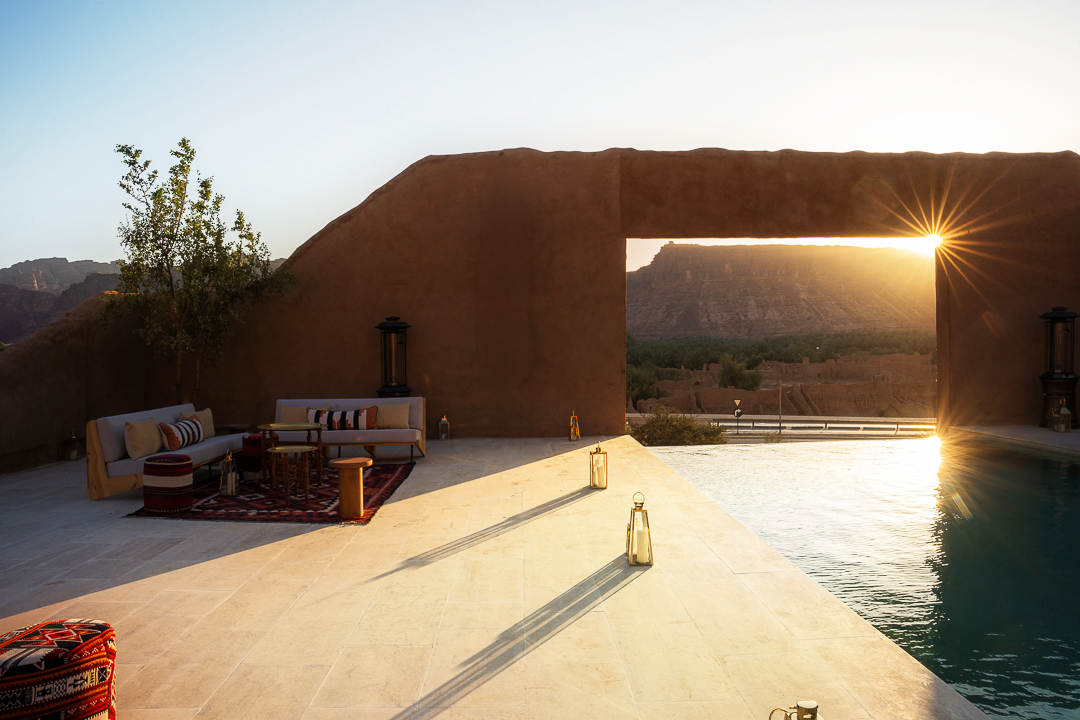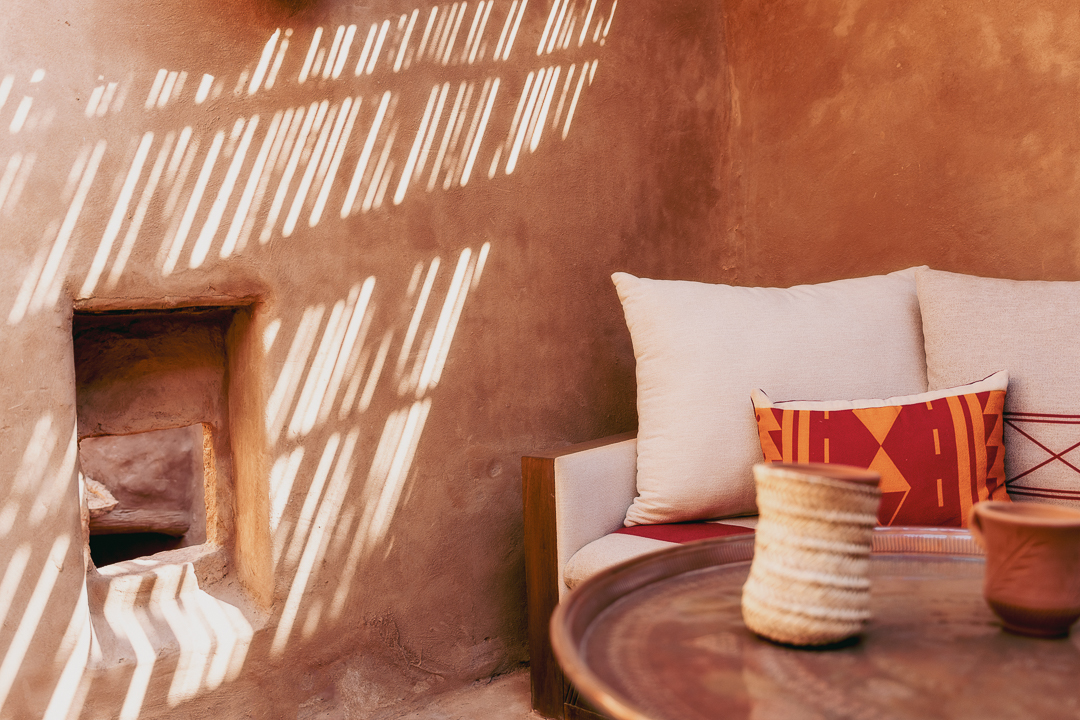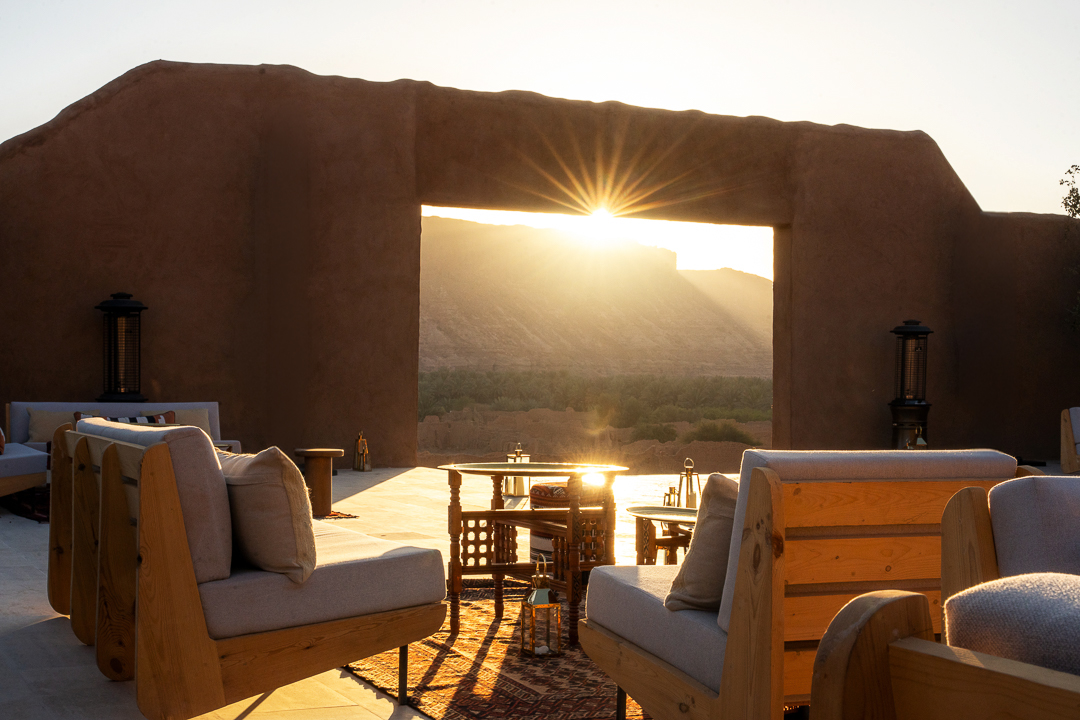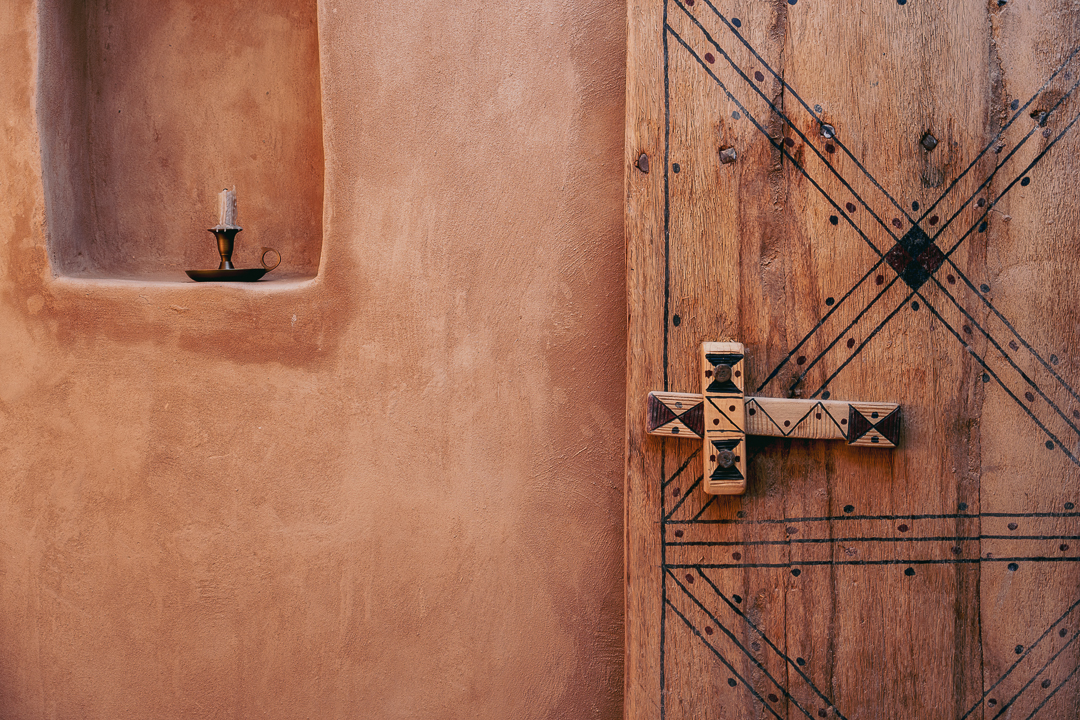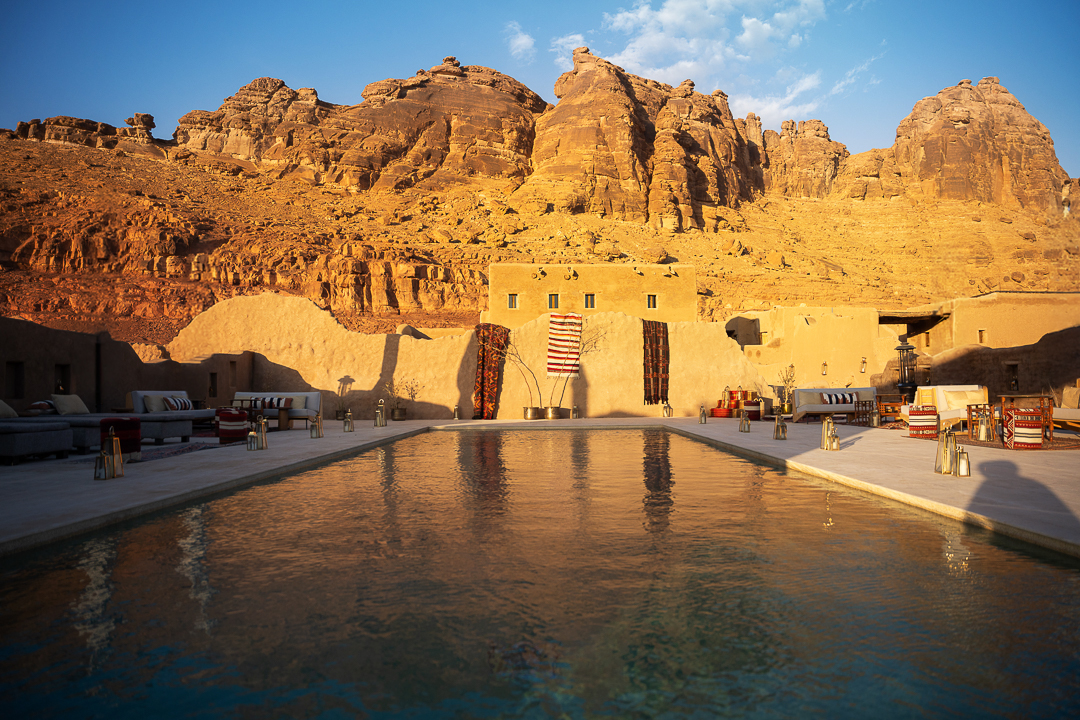
AlUla has been a working base rather than an occasional destination. Since 2022 the commissions here have run almost continuously, for the Royal Commission for AlUla and for the studios and hotels building in the valley, covering the restored Old Town, the desert art programme, and the architecture rising around both.
Architectural photographer working in AlUla, northwest Saudi Arabia, across a body of commissions that includes Dar Tantora The House Hotel in the Old Town, DesignSpace by the Italian studio GioForma, Desert X AlUla, and the executive terminal of AlUla International Airport for the Royal Commission for AlUla. Work from AlUla has run in Condé Nast Traveler, Architectural Digest Middle East, Time, Dezeen, and Designboom.
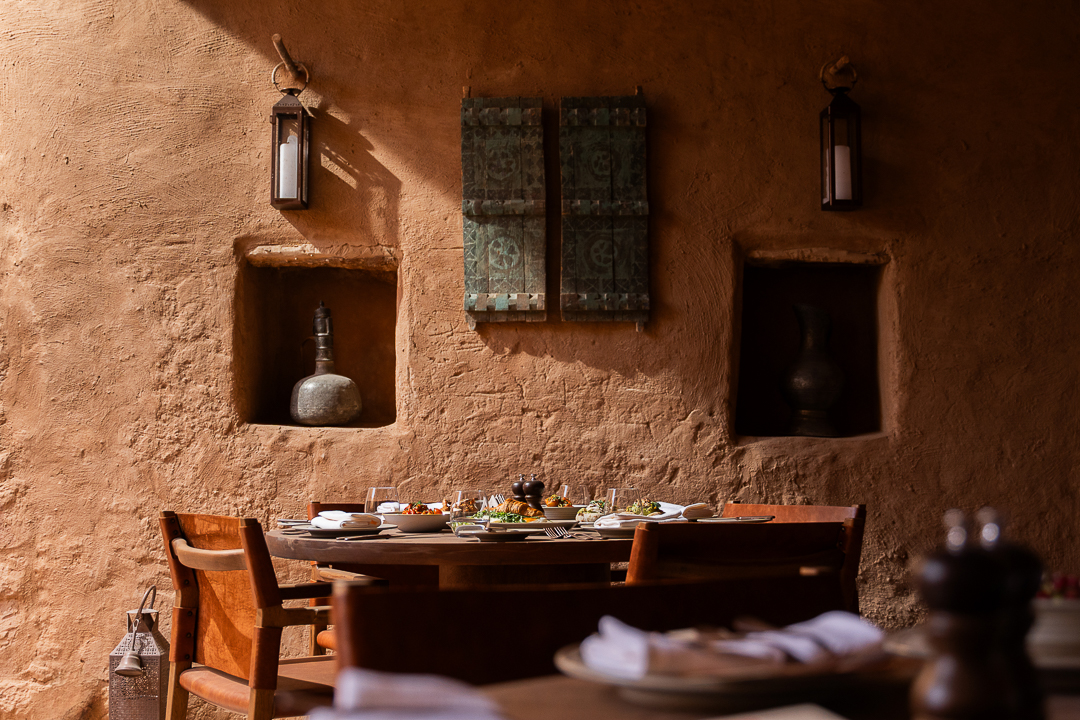
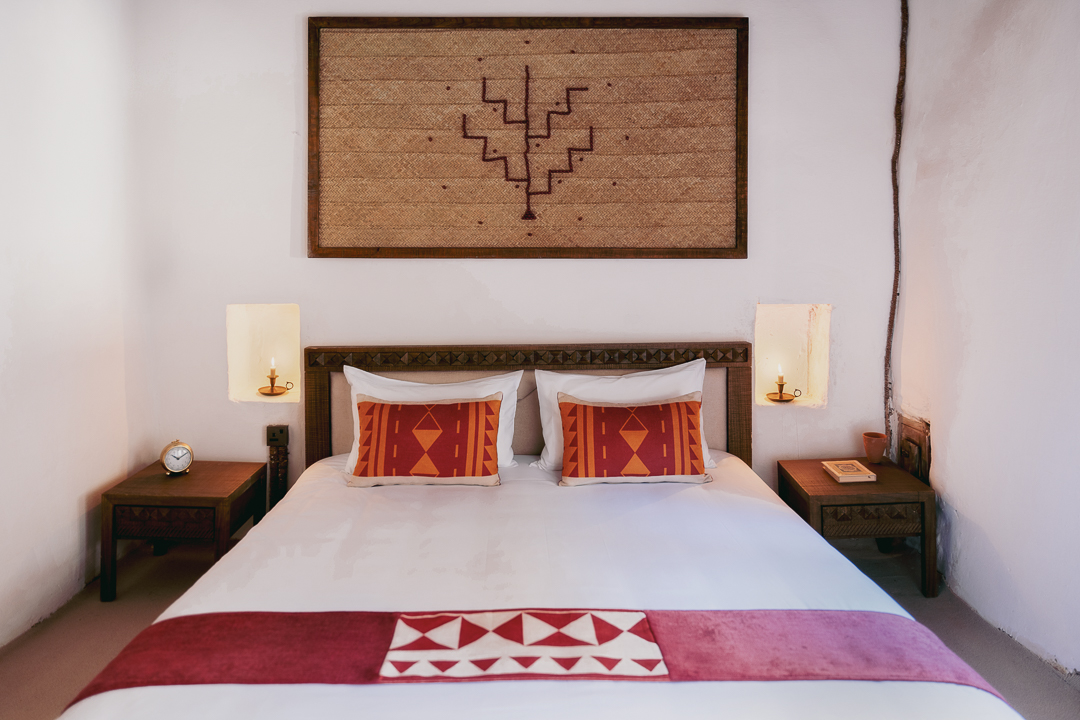
Dar Tantora The House Hotel approached me directly. The hotel is thirty abandoned mud brick and stone houses in AlUla's Old Town, along the historic incense trade route, restored into a single property by the architect Shahira Fahmy, who I worked with closely through the project.
The brief was to document a reopening rather than a launch, a place with centuries behind it rather than a new build. That meant the restored fabric itself: the labyrinthine mud brick interiors, the carved openings, the reclaimed timber, and Joontos, the in-house restaurant led by the Michelin starred chef Jaume Puigdengolas.
RCU has been a long running client rather than a single commission, across the executive terminal of AlUla International Airport, Desert X, the arts festival programme, and continuous documentation of the valley over several years.
AlUla is also, plainly, a place I like working. The absence of city noise changes how a project gets approached: there is room to slow down and work out what the architecture is actually about before the camera comes out. That shows up in the pictures.
Dar Tantora The House Hotel
Thirty abandoned mud brick and stone houses in AlUla's Old Town, on the historic incense trade route, restored into one hotel by the architect Shahira Fahmy. The hotel approached me directly for the photography, and the work on the ground was with the hotel and the architect.
Documenting a restoration is a different problem from documenting a new build. The subject is the fabric: mud brick that has been standing for centuries, carved openings, reclaimed timber, and rooms that connect in a way no contemporary plan would produce. The coverage ran from the architecture through to Joontos, the in house restaurant led by the Michelin starred chef Jaume Puigdengolas.
The work was covered across two sessions, a pre opening set while the property was still empty and a fuller session once it was operational, and it became the largest single press wave of my career. It has run in Condé Nast Traveler across the US, UK and Middle East editions, in Architectural Digest Middle East twice including the 2026 AD100 gallery, in Time's World's Greatest Places 2024, The Times UK, Sayidaty, and in syndication on Yahoo Life. It is also the photography on the hotel's own website.
DesignSpace, by GioForma
A concept space in AlUla designed by the Italian studio GioForma. GioForma designed it to belong to its landscape rather than sit on top of it, and that became the governing idea for the photography: the mountains and the terrain were treated as part of the subject, not as a backdrop behind it.
The shoot covered the full arc of a day, sunrise through sunset, to record how the light moves through and around the building. Artificial light was introduced at specific moments to work with the perforated walls, which shape light in a way that only reads at certain hours.
The work was published on Dezeen, Designboom, and Architectural Digest Middle East, and was shown as part of Milan Design Week.
Desert X AlUla
Commissioned by the Royal Commission for AlUla. Desert X is one of the most recognised international art events in the world, held every two years, bringing artists from across the globe to build large scale installations directly into the AlUla desert.
The coverage ran in two phases. In the months before the opening, the MassHouse team was on the ground almost weekly documenting the installations as they were built. Once the works were finished I came in personally, with a window of two to three days to photograph every completed installation before the public opening. Those were the images that went out for press.
The scope covered stills, video, and aerial, with a local aerial operator flying while I directed the frames. People are in a lot of those pictures deliberately. In landscape and architecture at that scale, a figure is what tells you how big something is, and it is what makes the viewer feel they could be standing there.
AlUla International Airport, Executive Terminal
Commissioned by the Royal Commission for AlUla to photograph the executive terminal and its art programme, under a special permit for access inside the airport. The brief covered the installations by a number of different artists individually, alongside the terminal itself as a piece of architecture.
The images were published in a premium book produced for and displayed at the airport, alongside wider photography of AlUla. It is a commission that sits between architecture and documentation, reading a building's art programme with the same seriousness as its structure.
Working Within a Protected Landscape
AlUla operates under heritage and environmental protection, and access is coordinated through the relevant authority rather than negotiated on site. That applies to vehicles, to positions off established routes, and to aerial work in particular. Permissions are established well before travel.
Drone operations require civil aviation authority clearance, and in AlUla there is a second layer: the landscape itself is protected, and heritage areas carry their own restrictions independent of airspace. Aerial frames here are planned, cleared, and specific rather than exploratory.
How an AlUla Commission Is Built
The schedule is the commission. Given how short the good light is and how far positions can be from each other, an AlUla shoot is planned to the hour, with the sequence of positions worked out before arrival rather than discovered on the day.
Capture is medium format, which the sandstone and the interior work alike genuinely demand. The tonal range between lit rock and shade is extreme, and the colour is the entire character of the place. Retouching is fine art realistic and, in AlUla more than anywhere, restrained.
Cooler months from roughly November to March are the working season, both for light angle and for the practical reality of multi position days in open desert.