
What Is Fine Art Architecture Photography?
What Is Fine Art Architecture Photography?
Most photographs of buildings are made to prove something. That the building exists, that it was finished on time, that it looks the way the render promised. That work is necessary and I do plenty of it.
Fine art architecture photography starts somewhere else. It starts when the building stops being the subject and becomes the material. The question is no longer what does this building look like, it is what is this building actually about, and can a still frame carry that.
I came to this from architecture rather than from photography. I trained as an architect and worked as one before any of this became a business, and that background is the reason I frame the way I do. An architect is taught to look at the end result first and work backwards. That is exactly what separates a considered photograph from a competent one.
The difference, stated plainly
There are three modes and they answer to different people.
Commercial architectural photography answers to a brief. A developer needs the tower to sell, an operator needs the suite to book, an architect needs a set for a submission. The client's goal is the measure of success.
Documentary architectural photography answers to the record. It captures the building as it is, honestly, and its value is accuracy.
Fine art architecture photography answers to the photographer. It is allowed to be selective, to abstract, to leave out most of the building in order to say one thing about it. Success is whether the idea survives the frame.
The three are not ranked. A single commission can contain all three, and most of mine do. What matters is knowing which one you are in when you raise the camera, because the decisions that make one work will ruin another.
Fine art is a choice, not a default
I need to be clear about something most people writing on this subject will not admit. Fine art is not automatically the better outcome. It is a tool, and like any tool it can be used on the wrong job.
The failure mode is specific. Push retouching, saturation, or mood too far and the image stops describing the building and starts describing the edit. It can look impressive at a glance and ring false the moment someone who knows the building looks closely, over-processed, synthetic, the kind of frame that reads as generated rather than photographed. That serves nobody, least of all the architect, because the building the client actually built is no longer what the photograph is showing them.
There is a more uncomfortable version of the same problem. Fine art technique can be used to flatter a building that does not deserve it, to make an unremarkable project look extraordinary through light and post-production rather than through the architecture itself. That is not a compliment to the work, it is a misrepresentation of it, and I do not think it is what the client is actually paying for even when it is what they think they want in the moment.
So I do not put every project through this treatment, and I would not trust a photographer who does. Some buildings earn it, meaning there is a real idea in the design worth abstracting toward. Others need to be shown honestly and plainly, because the honest version is already the strongest version, and reaching for a fine art treatment there would be decoration, not insight. Part of the job is judging, per project, which of those two is true, and staying disciplined enough to choose the plain version when that is the right answer.
Seven principles I actually work to
1. Name the idea before you name the shot
Before I open a single file, I make myself answer two questions. What is the subject, meaning the one element the eye should land on, not the whole frame. And what is the mood, in one adjective. Warm and heavy. Cool and remote. Bright and open.
Anything specific beats nothing. If I cannot answer both, I am not ready to shoot, and I am certainly not ready to edit.
Everything downstream is just execution. This is the only part that decides whether the work is fine art or just tidy.
2. Subtraction is the whole discipline
A building gives you too much. Fine art work is mostly the act of taking things out until the actual subject is the only thing left standing.
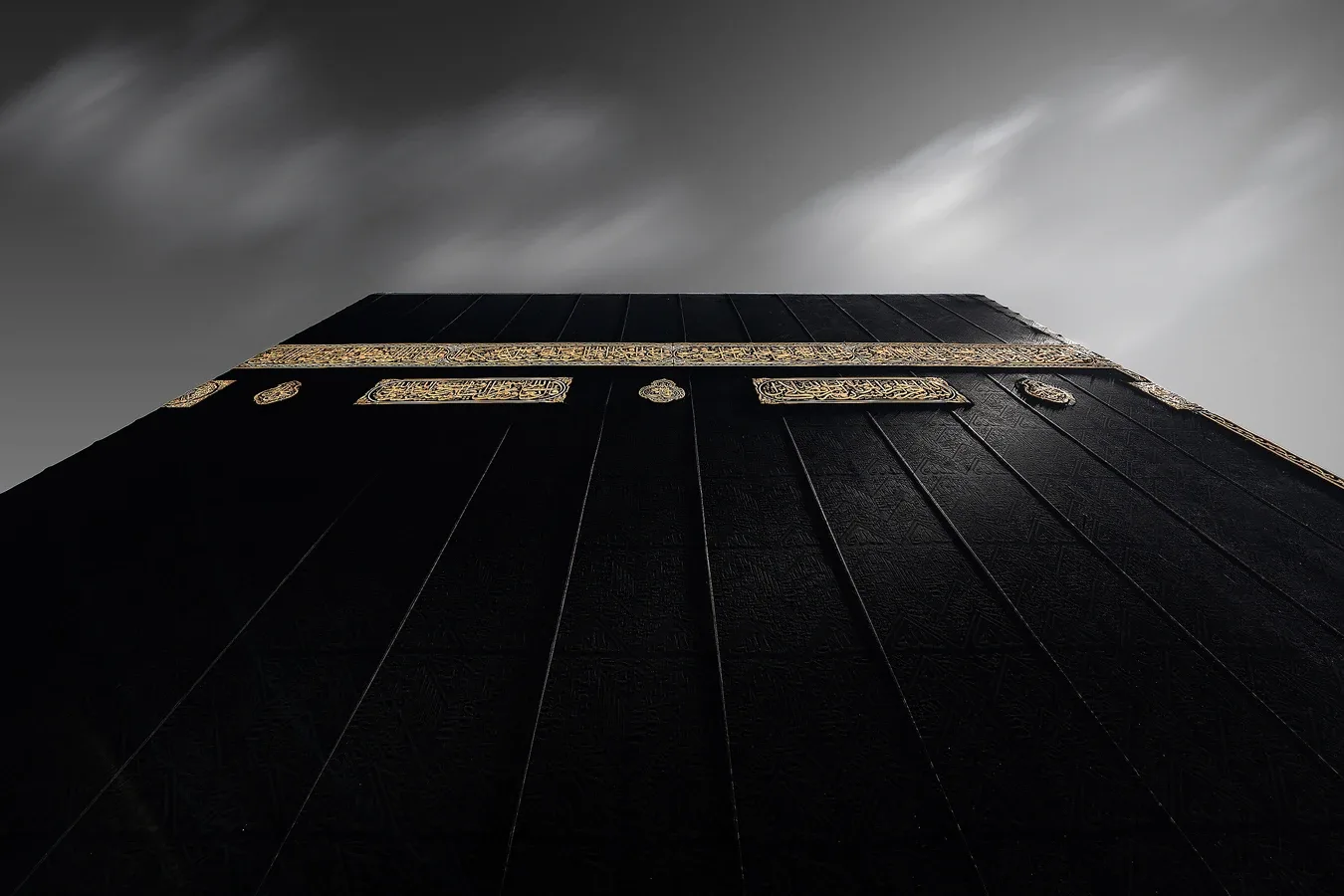
Subtraction does not mean removing the subject. It means removing everything that is not the subject. My solo exhibition at Xposure in Sharjah in 2026 was called Sacred Geometry, a body of work made inside Masjid al-Haram, and the Kaaba stayed the deliberate focal point of every image in it. What I stripped away was the crowd, the clutter, the incidental, everything that was competing with it for attention. What was left was the Kaaba read as pure geometry, rhythm and repetition, with nothing else in the frame to dilute it.
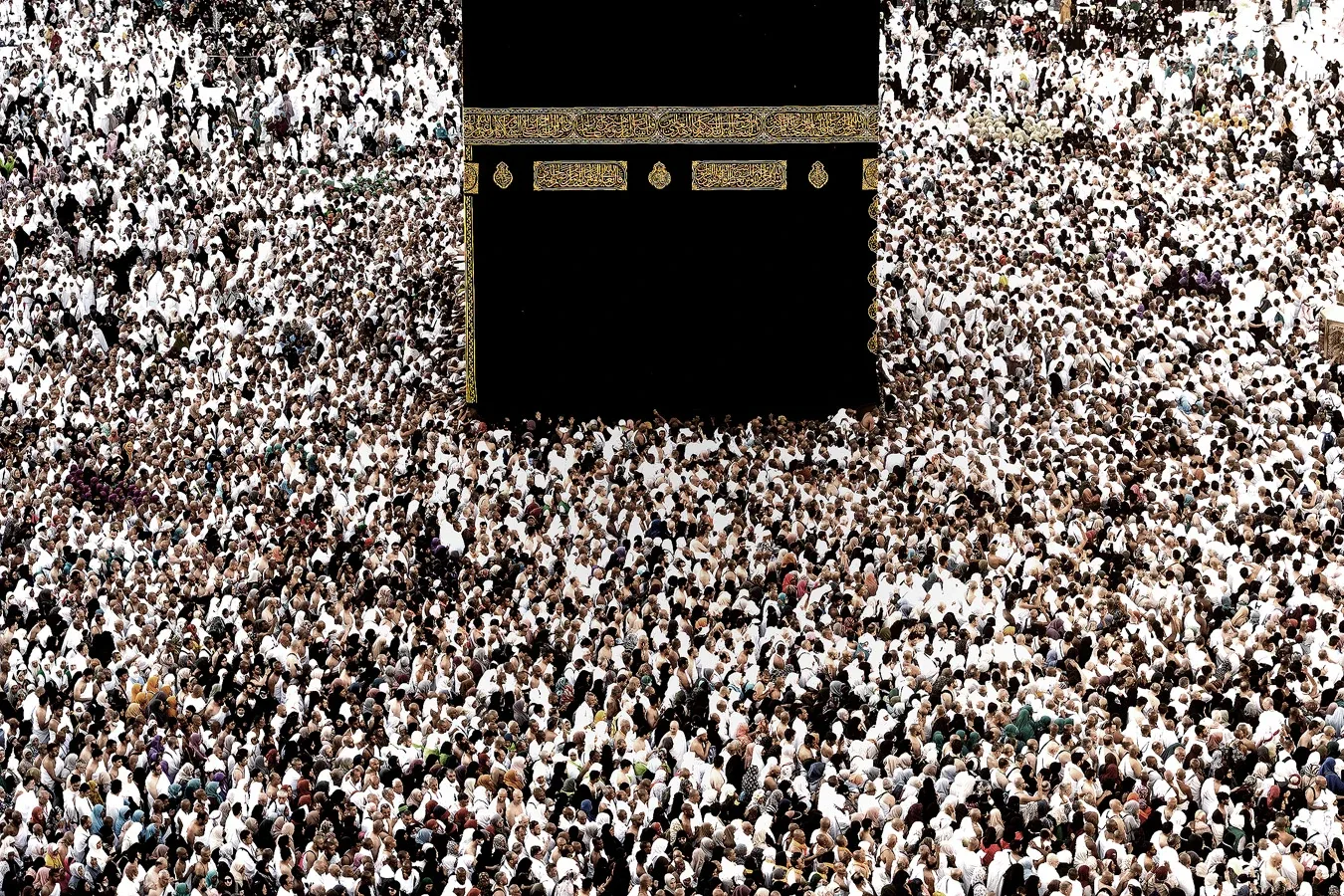
Legibility is not the casualty here, distraction is. The commercial version of a building shows what it looks like. The fine art version, done properly, shows what it actually is, which usually means the subject is clearer in the fine art frame, not less clear.
3. Light is a decision, not a condition
Every building has an hour when it photographs the way it was designed, and it is usually short. Not a good hour, the correct one.
Diwani House in Sharjah carries a Kufic inscription cut into stone across twenty five metres of its facade. It only gives that up at sunrise, when the light crosses low enough to lift the letters out of the wall. Photographed at noon it is a flat pattern. House of Wisdom by Foster + Partners is the opposite case, it only shows what its lighting design is doing during the few minutes at twilight when the warmth inside sits against a cool sky.
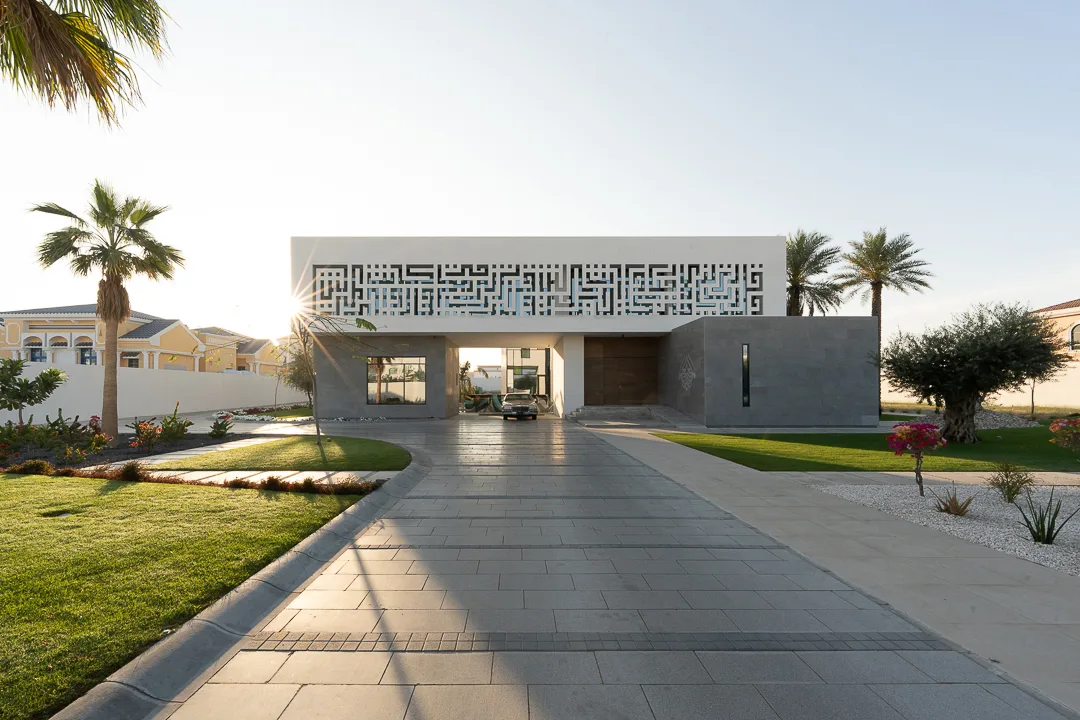
Waiting for the right light is not patience. It is the work.
4. Let the material speak
Texture carries meaning that shape cannot. Stone, mud brick, oxidised steel, polished concrete, blackened oak. In fine art work these are not surfaces, they are the vocabulary.
Noir Matière, a penthouse at Lana Residences in Dubai, was shot entirely on natural light. The apartment was designed around darkness, and the risk was that every dark material would collapse into the same dark. The whole job was finding the hour in each room when three different blacks became three different things again.
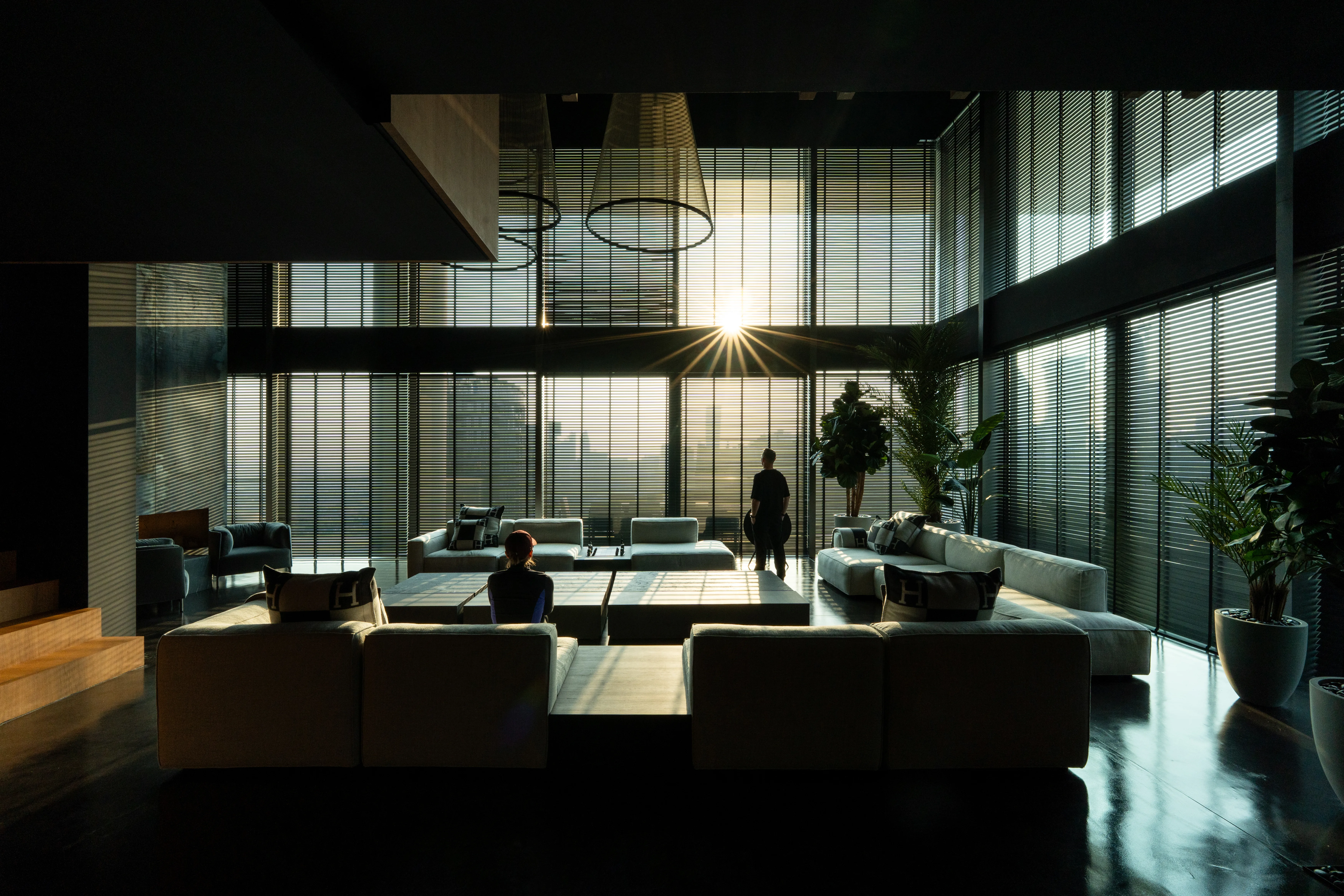
That series won Best Project Photography at the Créateurs Design Awards in Paris in 2026.
5. Finishing should refine mood, not repair mistakes
I have a defined editing method and I will not lay it out here, because the specifics are less useful than the principle behind them.
The principle is this. The goal is an edit that reads as real light, not as processed light. Shadows lifted but never crushed. Colour that belongs to the scene rather than colour that was added to it. Every adjustment has to serve the two answers from the first principle, the subject and the mood, or it does not belong in the file.
The failure mode in this genre is not an under processed image. It is an image that announces its processing.
6. Scale is only visible when something human is in the frame
This is the most practical thing on the list. In a space where a wall, a screen and a void can all read as the same plane, a person is the only reliable measure the viewer has.
I use figures constantly, and almost never for lifestyle. A single silhouette at the end of a corridor is not there to look aspirational. It is there so you know how far away the far wall is.
7. A body of work beats a portfolio of highlights
Repeated decisions become a signature. That only shows over a series.
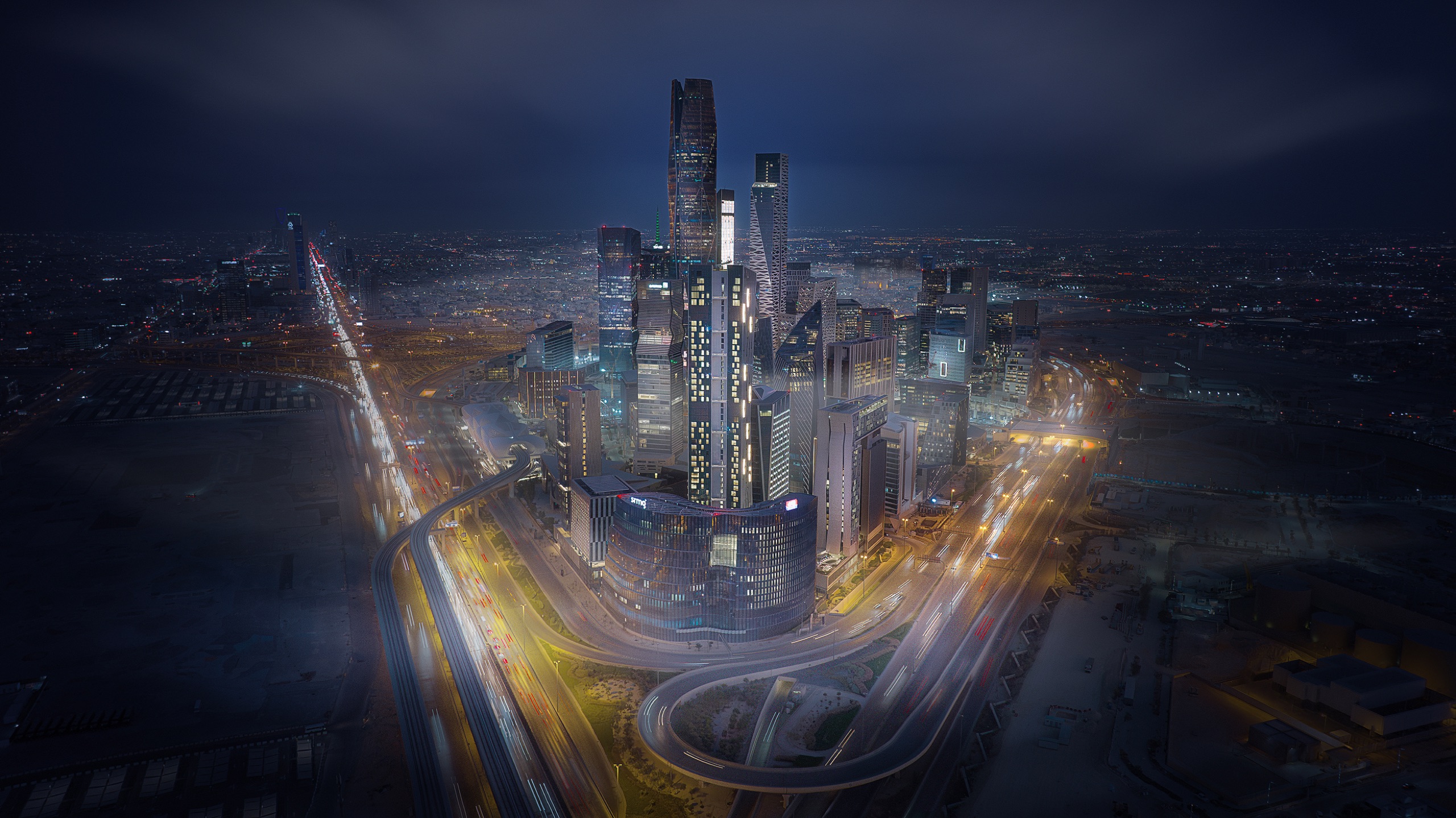
King Abdullah Financial District in Riyadh took a year and three separate sessions across more than ninety buildings. Returning across seasons was not thoroughness, it was necessity, because faceted and perforated facades behave completely differently under high summer sun than at low winter angles. One visit would have documented one version of that district. The aerial of the skyline at night from that series took first place in Cityscapes at the International Photography Awards in 2025.
Where the fine art and the commission meet
The honest answer is that they fund each other and they improve each other.
The abstraction I practise on personal work is the reason a client frame has a point of view. The access and the scale that come with commissions are the reason the personal work has subjects most people never get near. Being commissioned to photograph the Kaaba, which is the most meaningful thing I have been asked to do, was not a fine art brief. The series that came out of it became one.
If you are building a practice, do not treat the two as separate careers. Treat the personal work as the place where you decide what you think, and the commissioned work as the place where you prove you can do it under constraint.