Diwani House
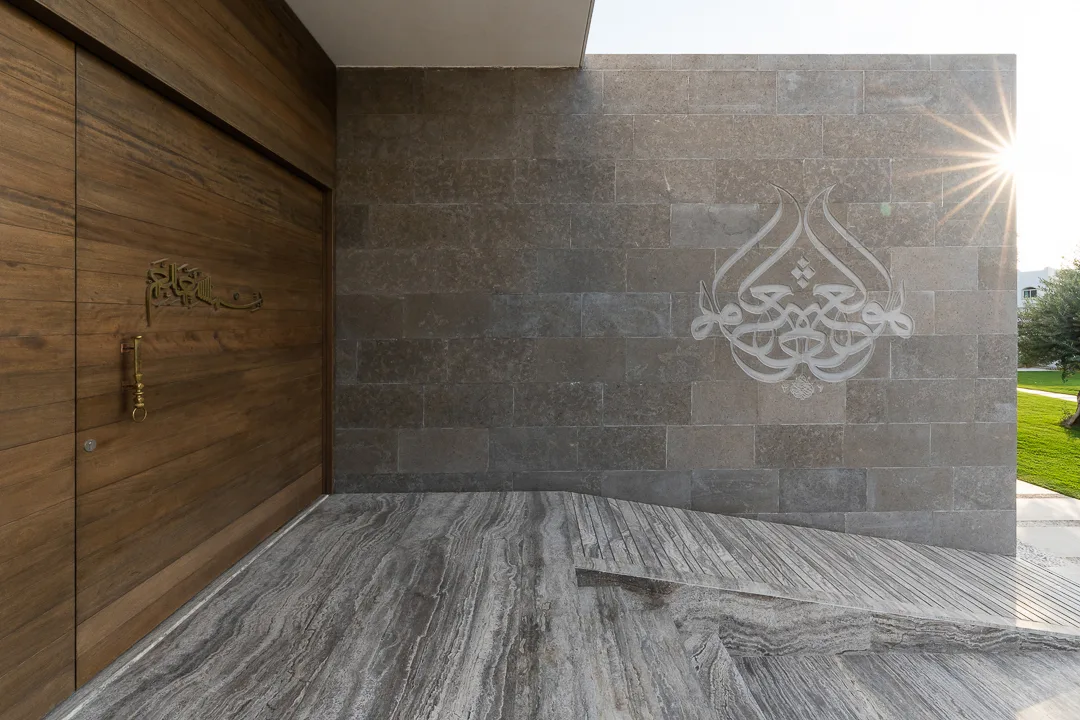
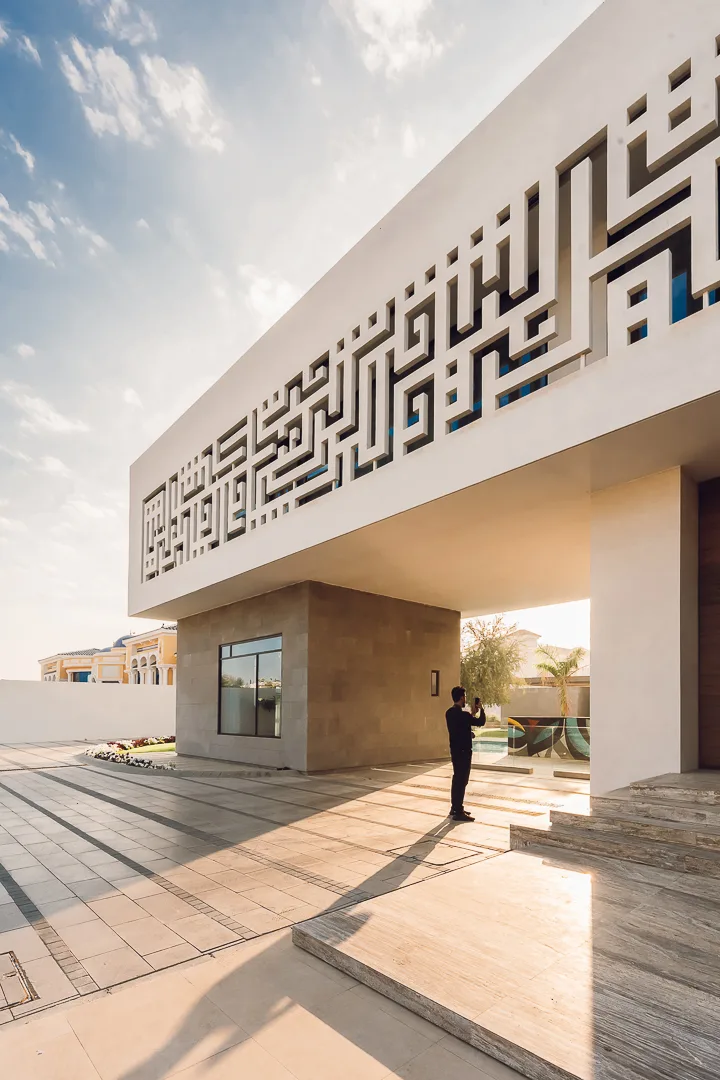
A private residence in Sharjah by Shape Architects. The commission began before there was one: driving through Sharjah, the villa was under construction and the facade stopped me. Arabic calligraphy had been used as a structural element, cut into the stone itself, at a scale I had not seen applied to a house.
I messaged Abdullah Alshamshi, the founder of Shape Architects, on LinkedIn. Not a pitch, just congratulations on the project and the hope that we might work together one day. When the house was finished, they got in touch.
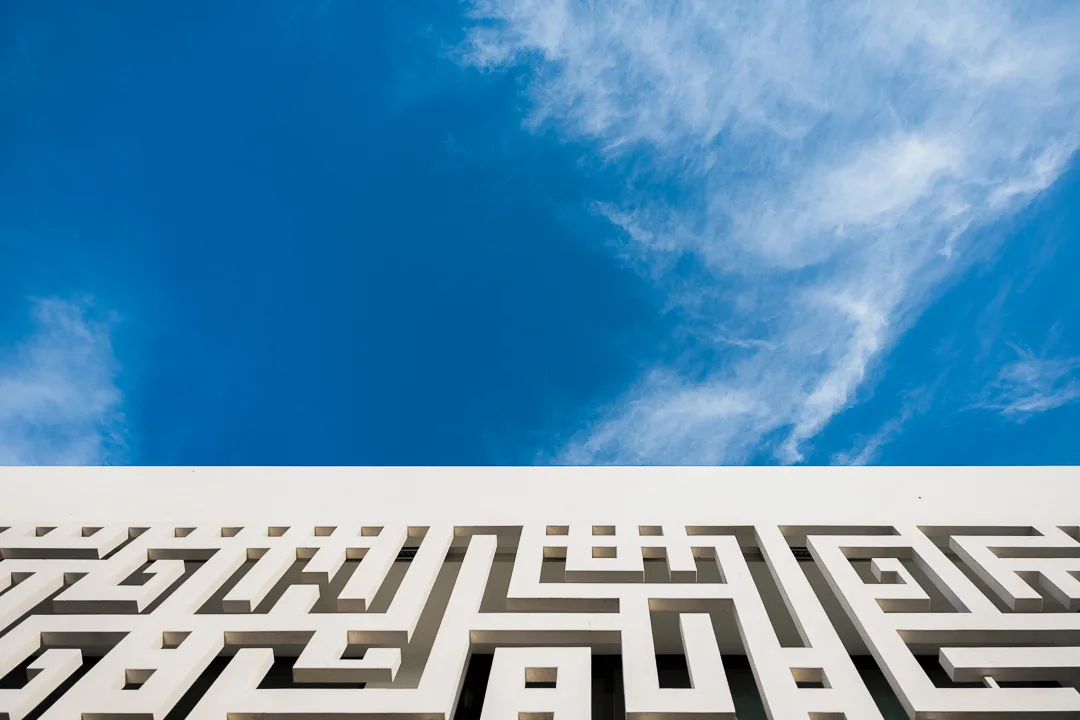
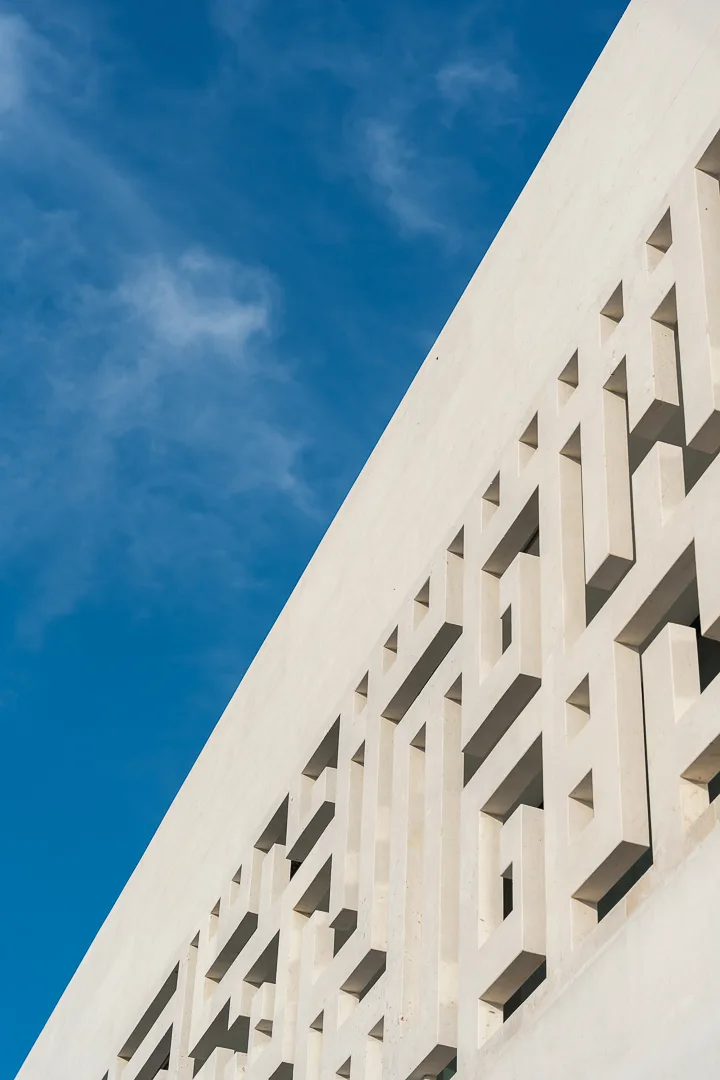
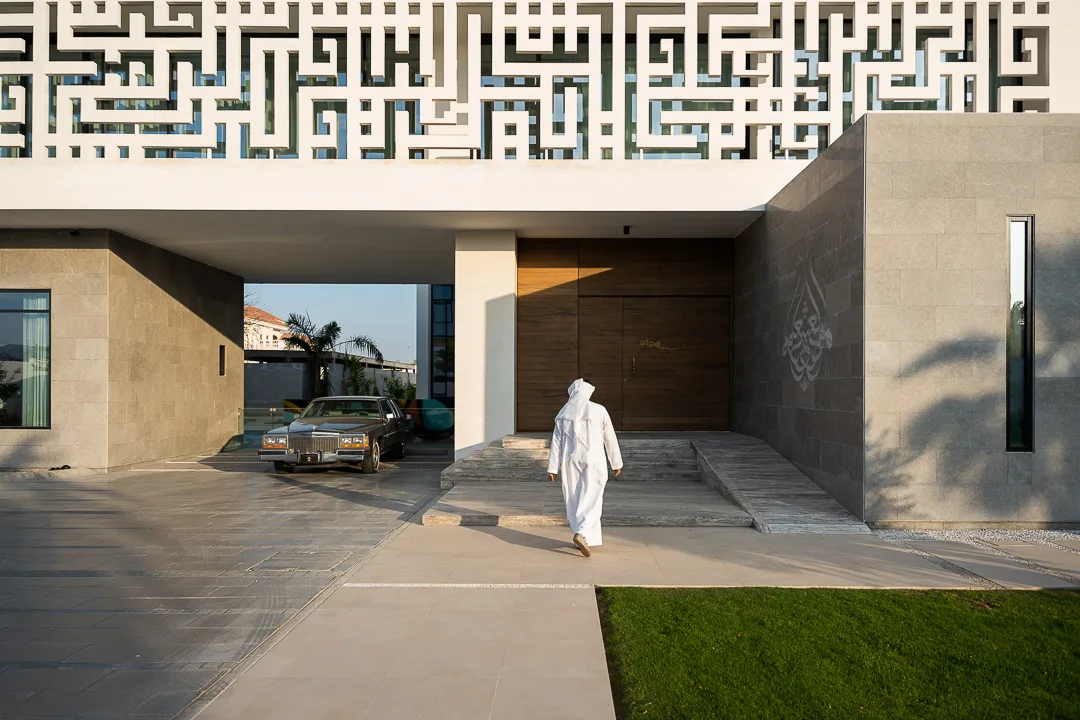
The house is the vision of its owner, Hisham Al Madhloum, an Emirati artist who has been central to the calligraphy and cultural scene in Sharjah for decades. The name carries both of its meanings. Diwani is one of the great Arabic scripts, developed under the Ottomans in the sixteenth and seventeenth centuries and long associated with palaces and courts. Diwan is also a gathering place, a council, a room for conversation. The building is both.
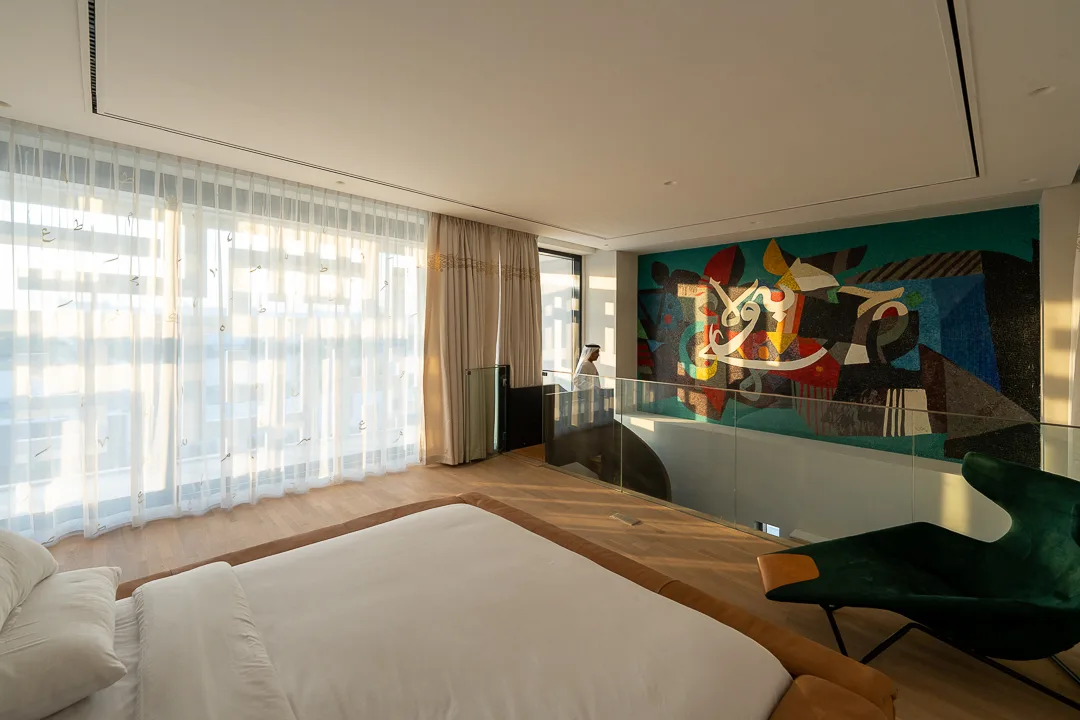
The main facade carries a Kufic inscription of a Quranic verse, handwritten by the Jordanian calligrapher Zuhair Afaneh and produced across eighty pieces of solid stone, three metres high and twenty-five metres wide. Inside there are close to two hundred works by more than eighty-five calligraphers, spanning the Ottoman, Iraqi and Egyptian schools. The owner still receives and hangs new work, so the house functions as much as a living museum as a residence.
Two days, with a scouting visit first to read the light, the geometry and the order the shots would need to run in. Day one was photography. The defining frames were made at sunrise, because that is the only time the light crosses the facade at an angle low enough to give the inscription its relief. Night frames were shot as well, but sunrise is what the building is for.
Day two was the film. A classic car in frame and people moving through the rooms, both deliberate choices, because a house built around gathering photographs badly when it is empty.
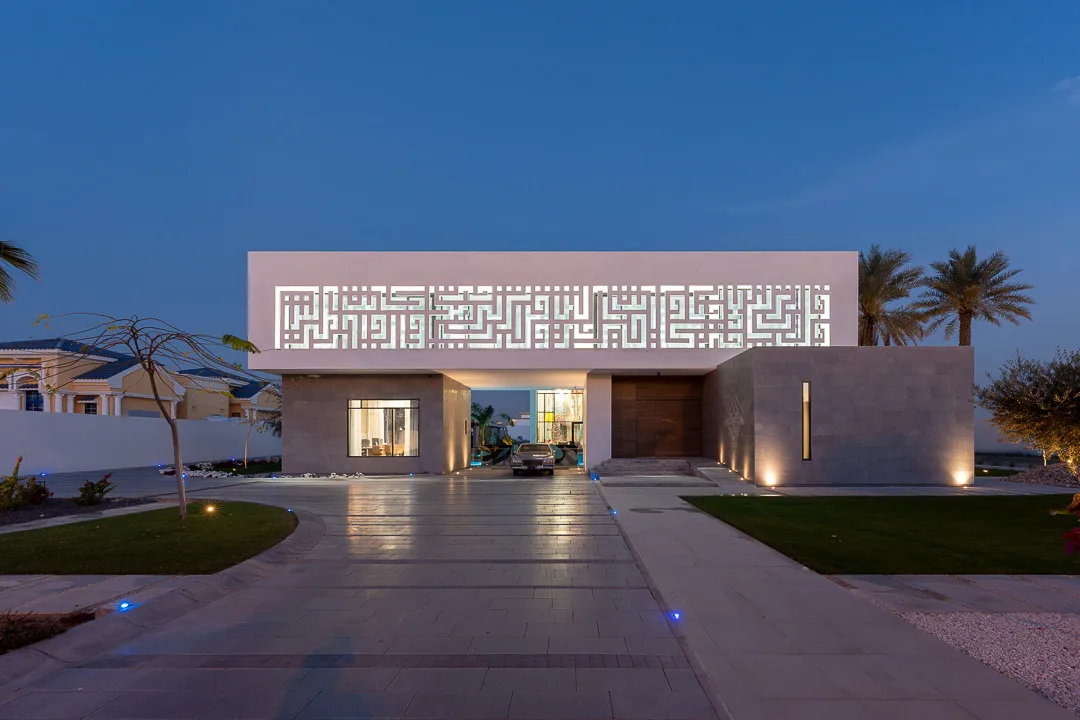
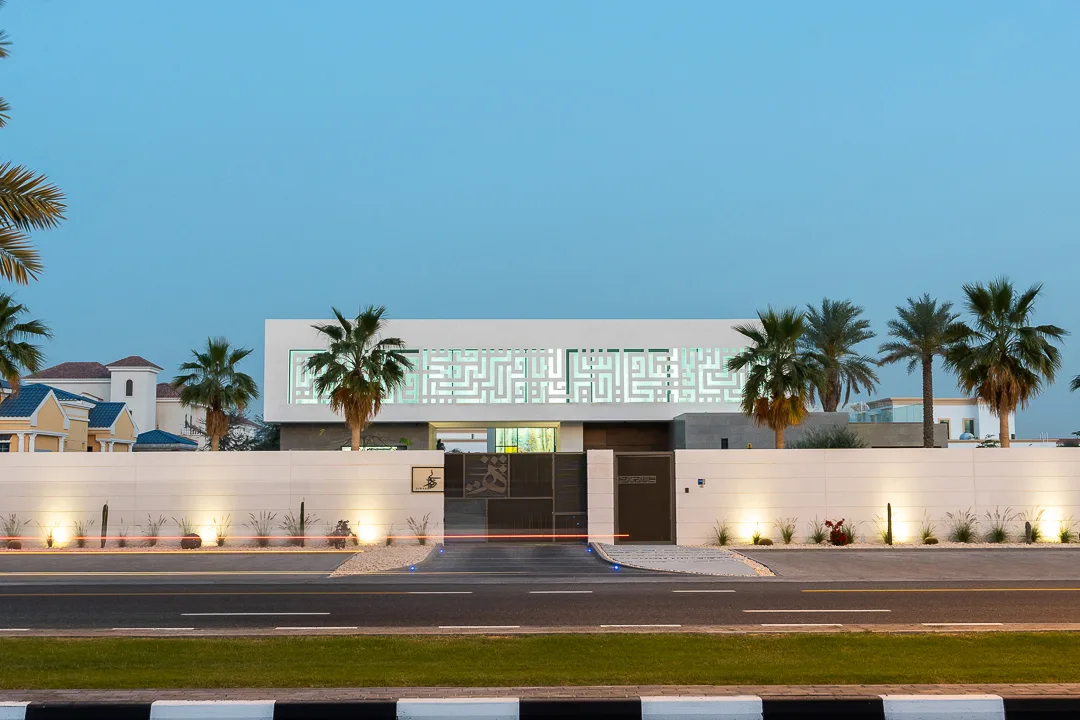
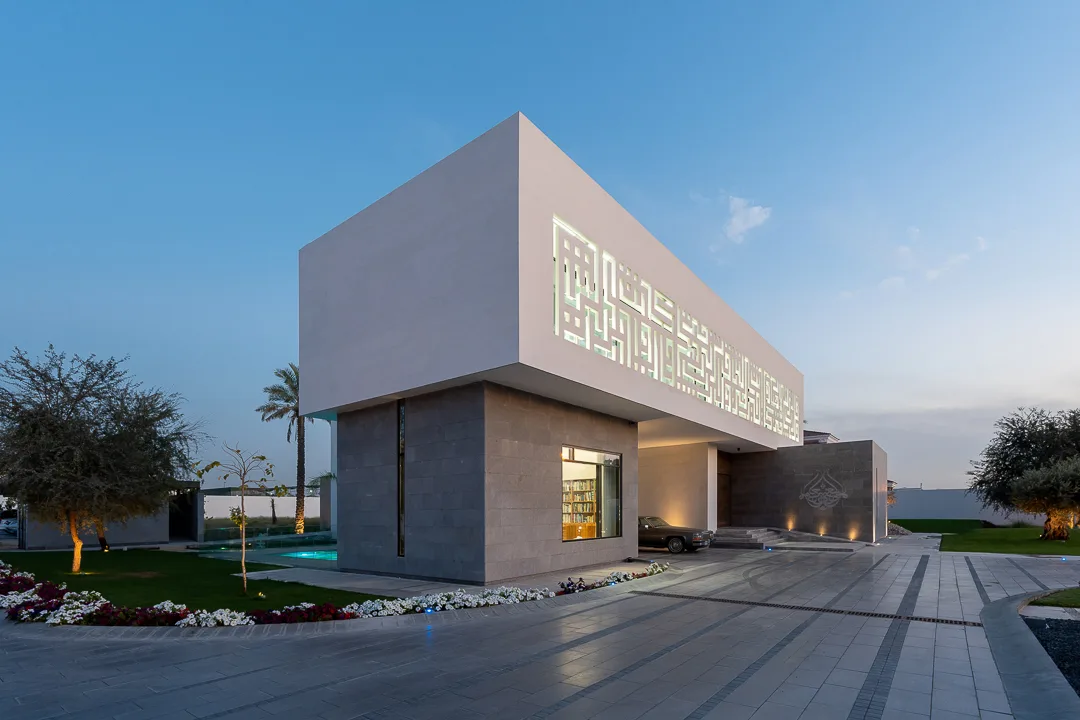
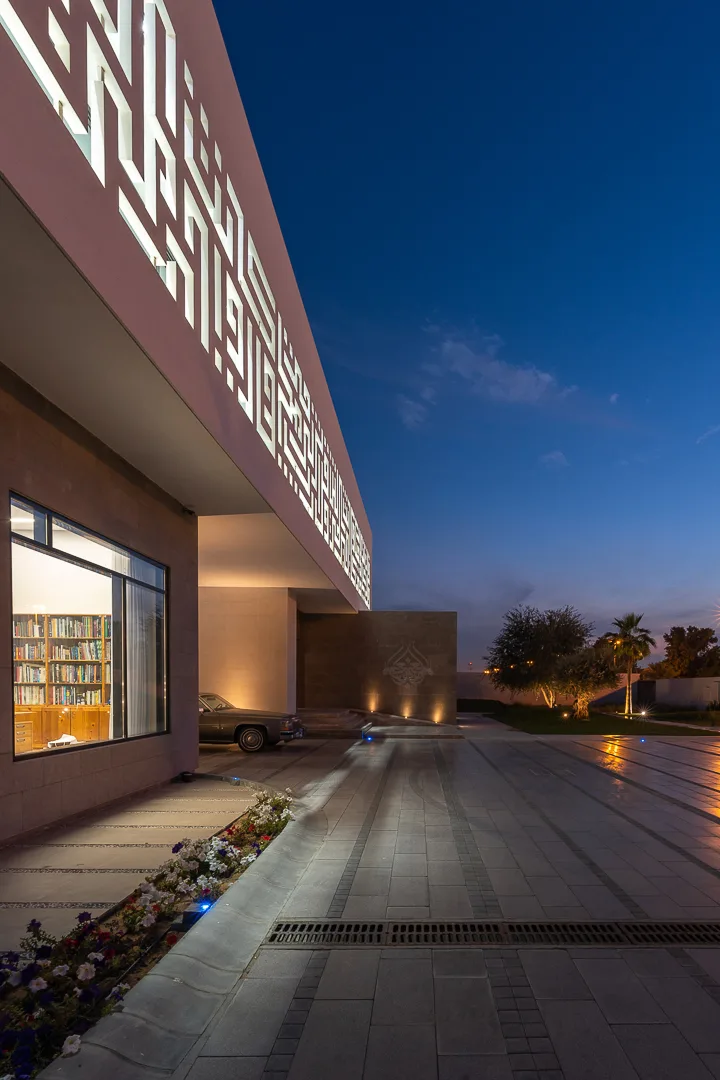
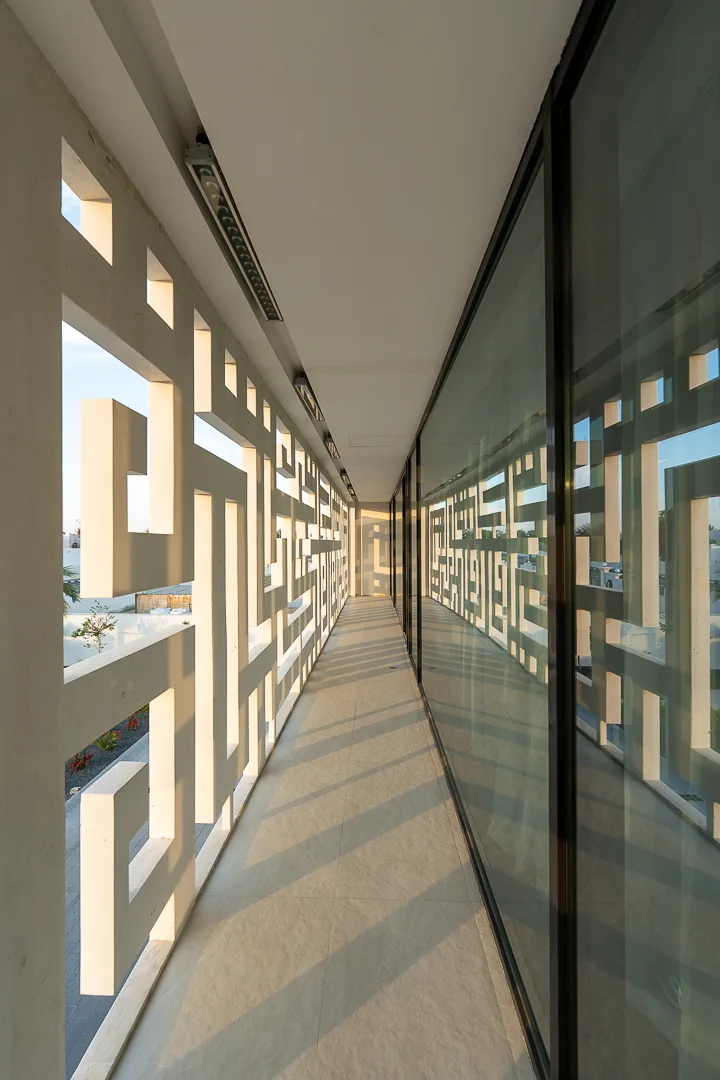
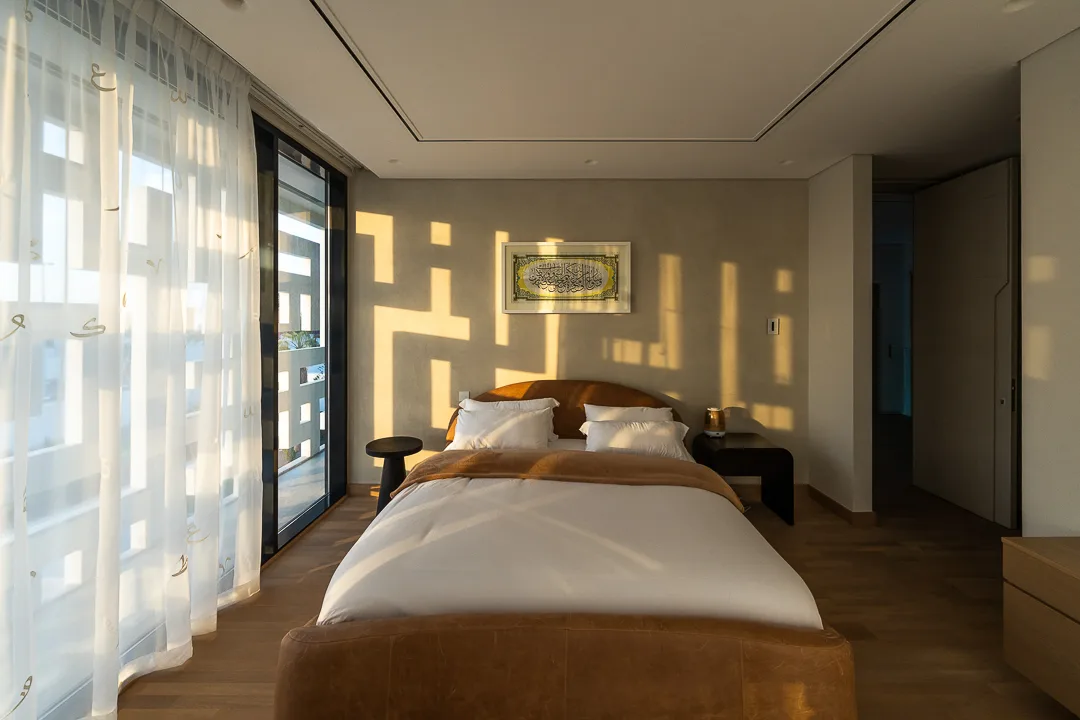
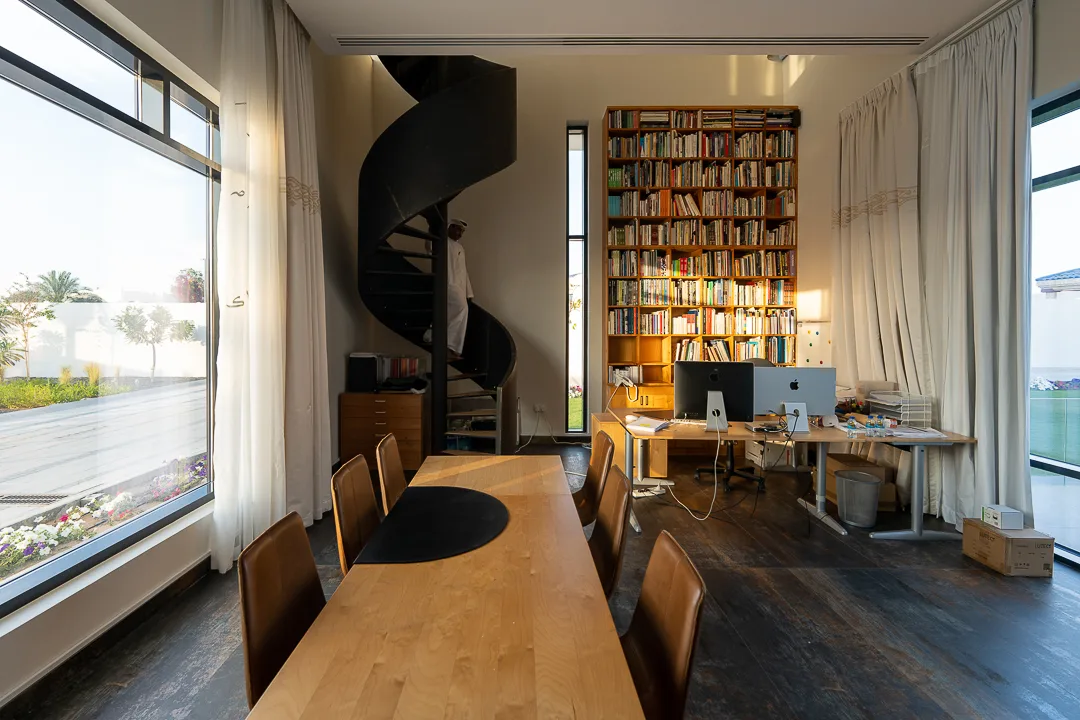
Inside, the screen stops being a facade and becomes a light source. The same Kufic band that reads as inscription from the street throws its pattern across floors, beds and corridors as the sun moves, so the script is never absent from a room even where there is no artwork on the wall.
The collection was photographed as part of the architecture rather than as objects. In a house conceived around Arabic, a carved medallion in a stone wall and a hung work by an Ottoman-school calligrapher are doing the same job.
What made the project personal was something I only discovered on site. My first photography exhibition, in 2008, was opened by the owner of this house. Years later I was photographing his home.
It produced long conversations across the two days about calligraphy, culture and the place of language in architecture, and it is why the work did not stop at photography. We also made an artistic film about the villa, not a walkthrough or a documentary but something closer to the building itself.