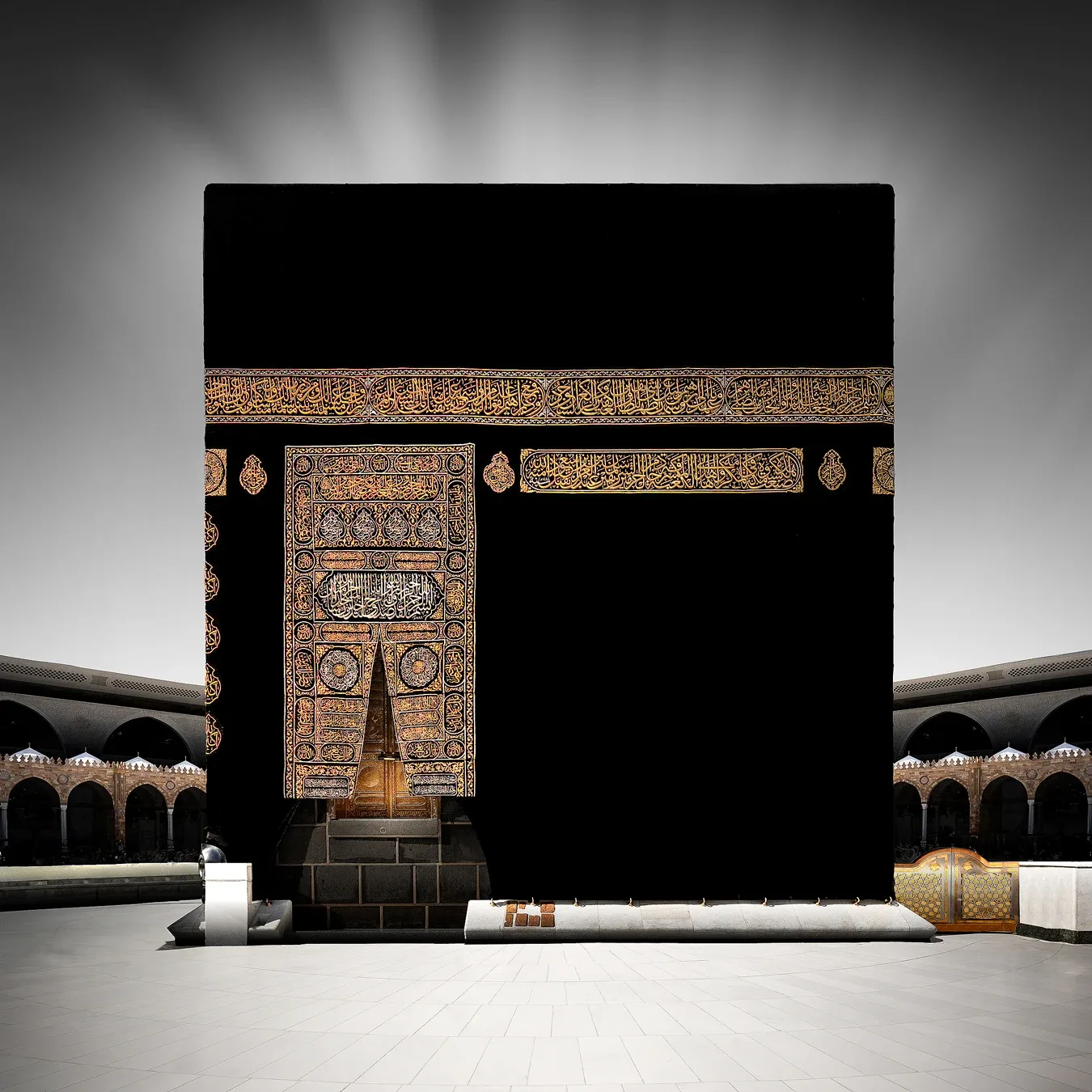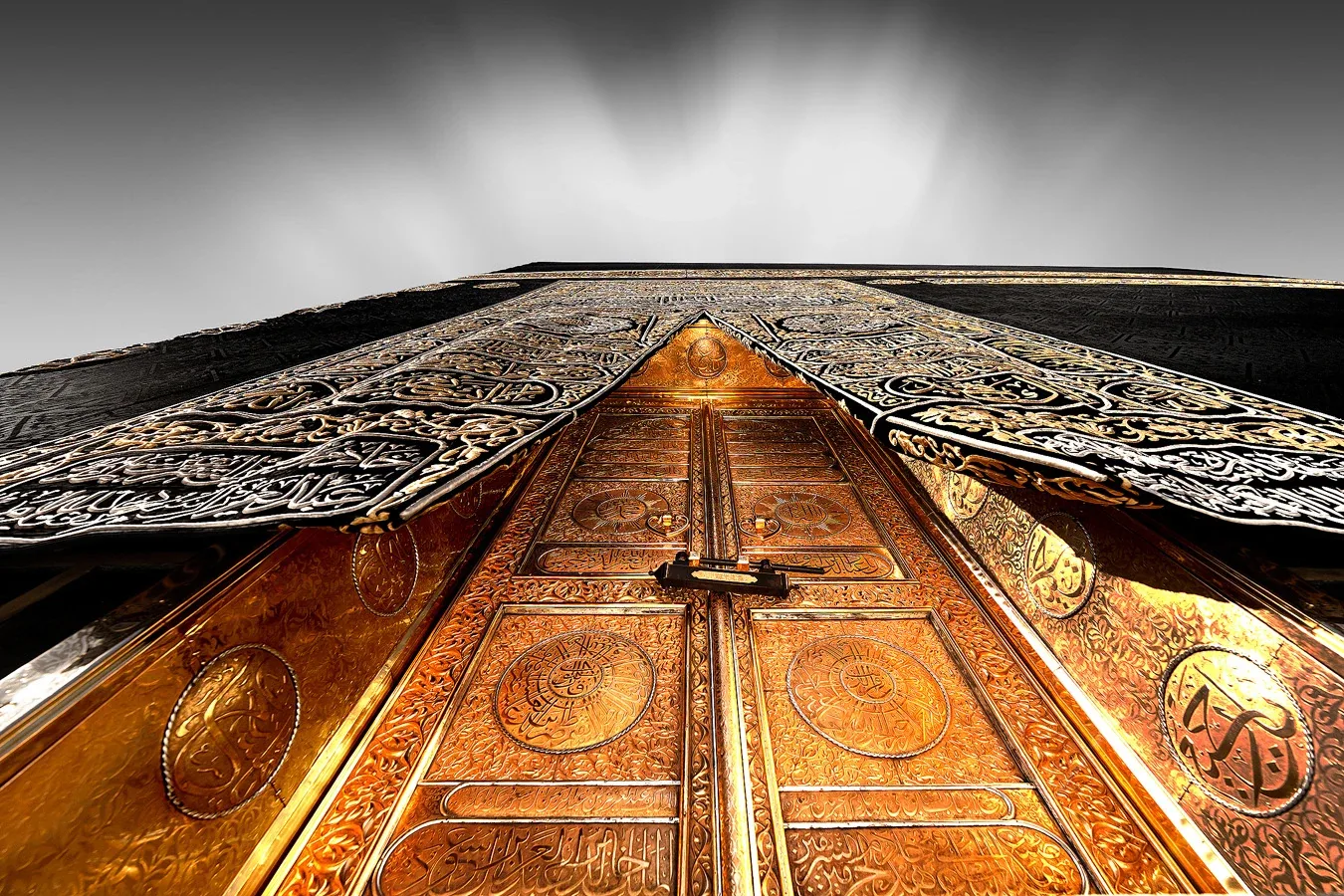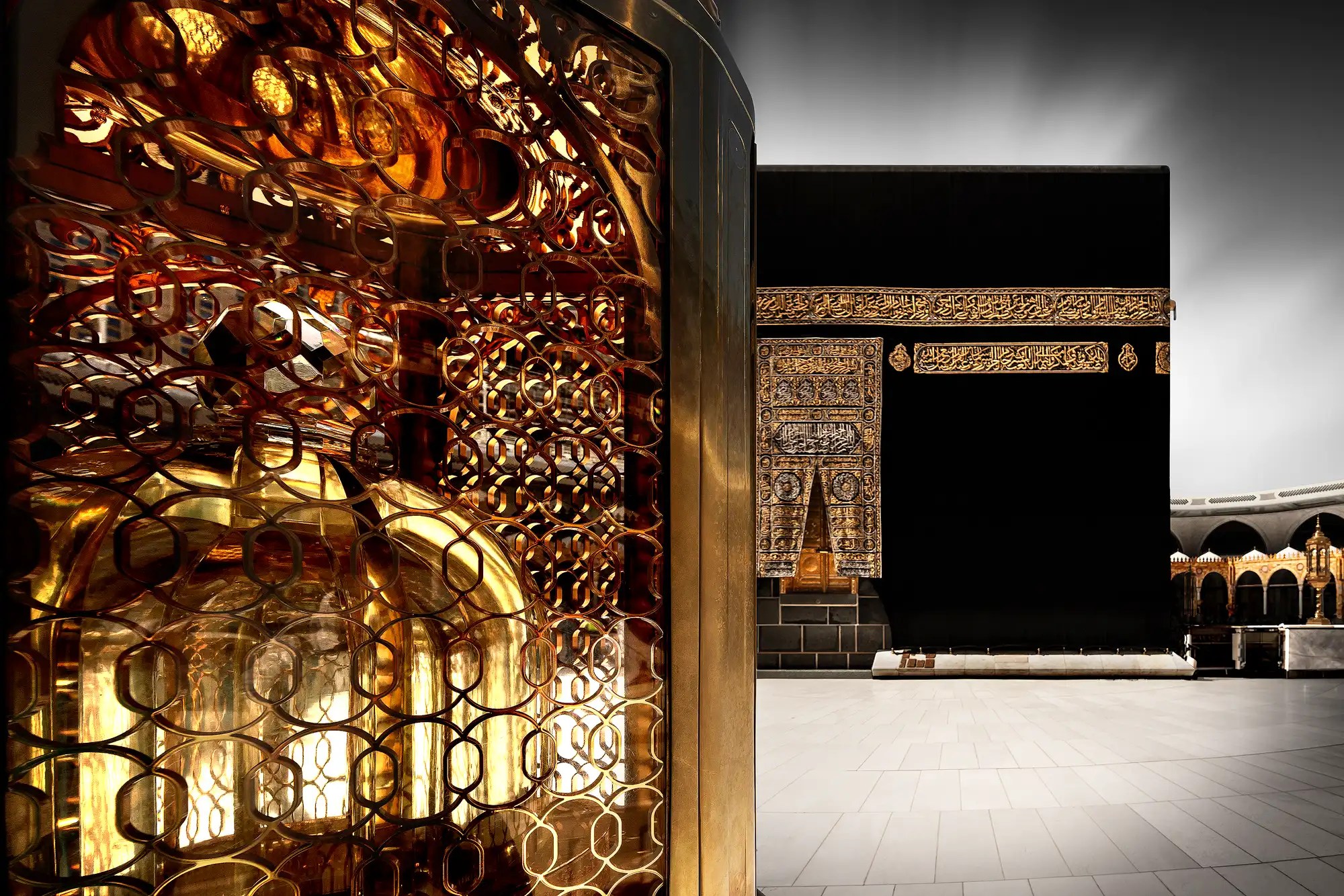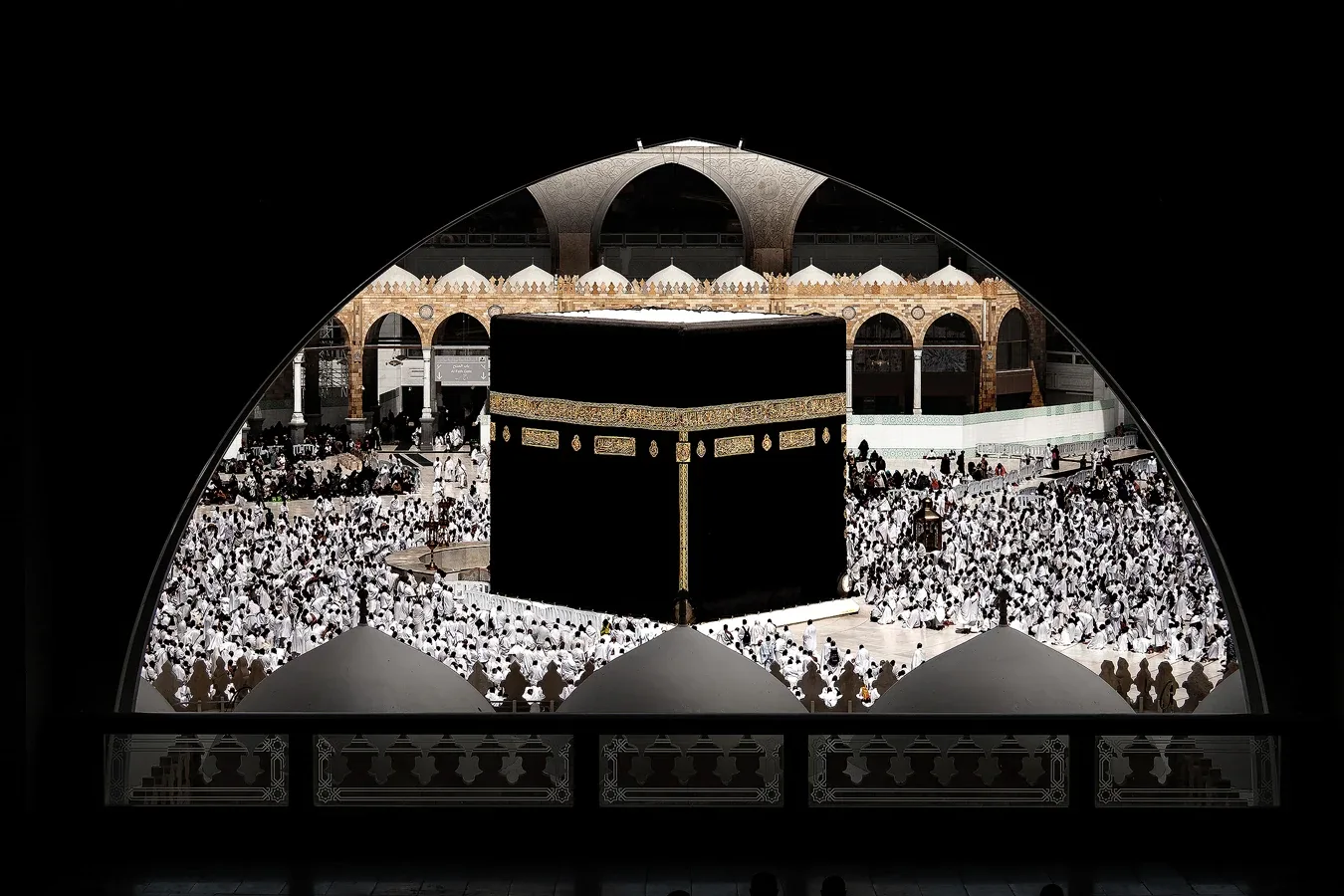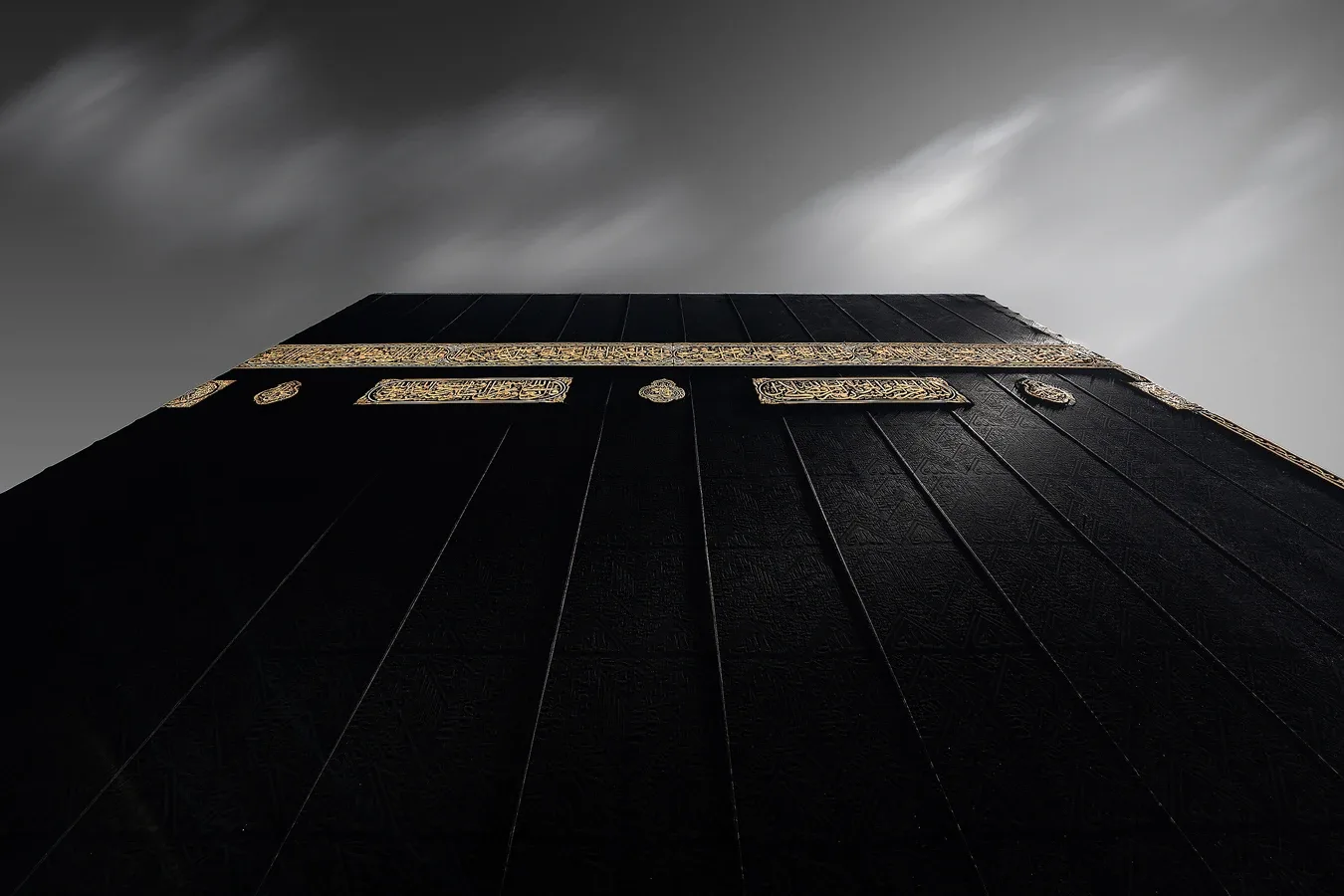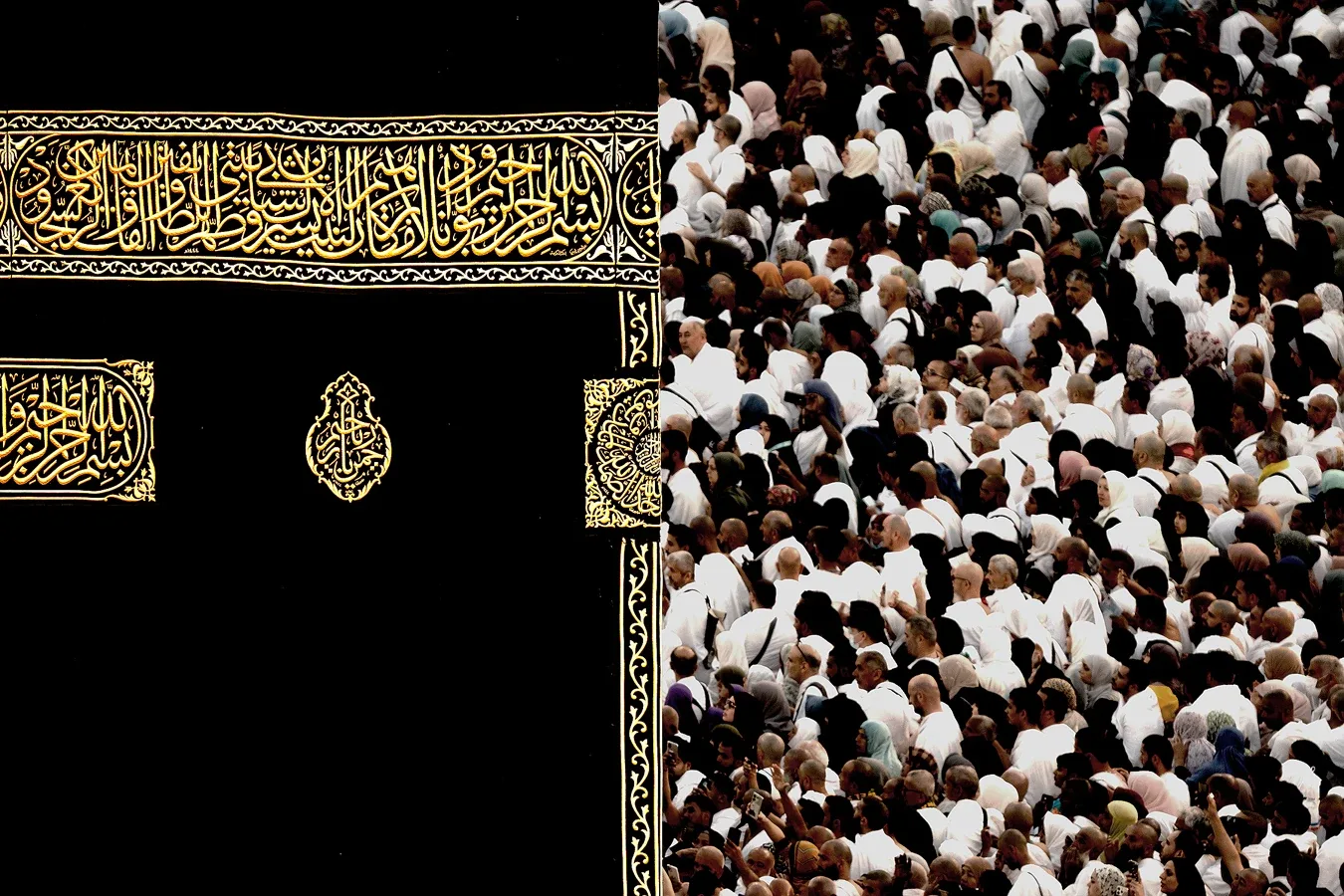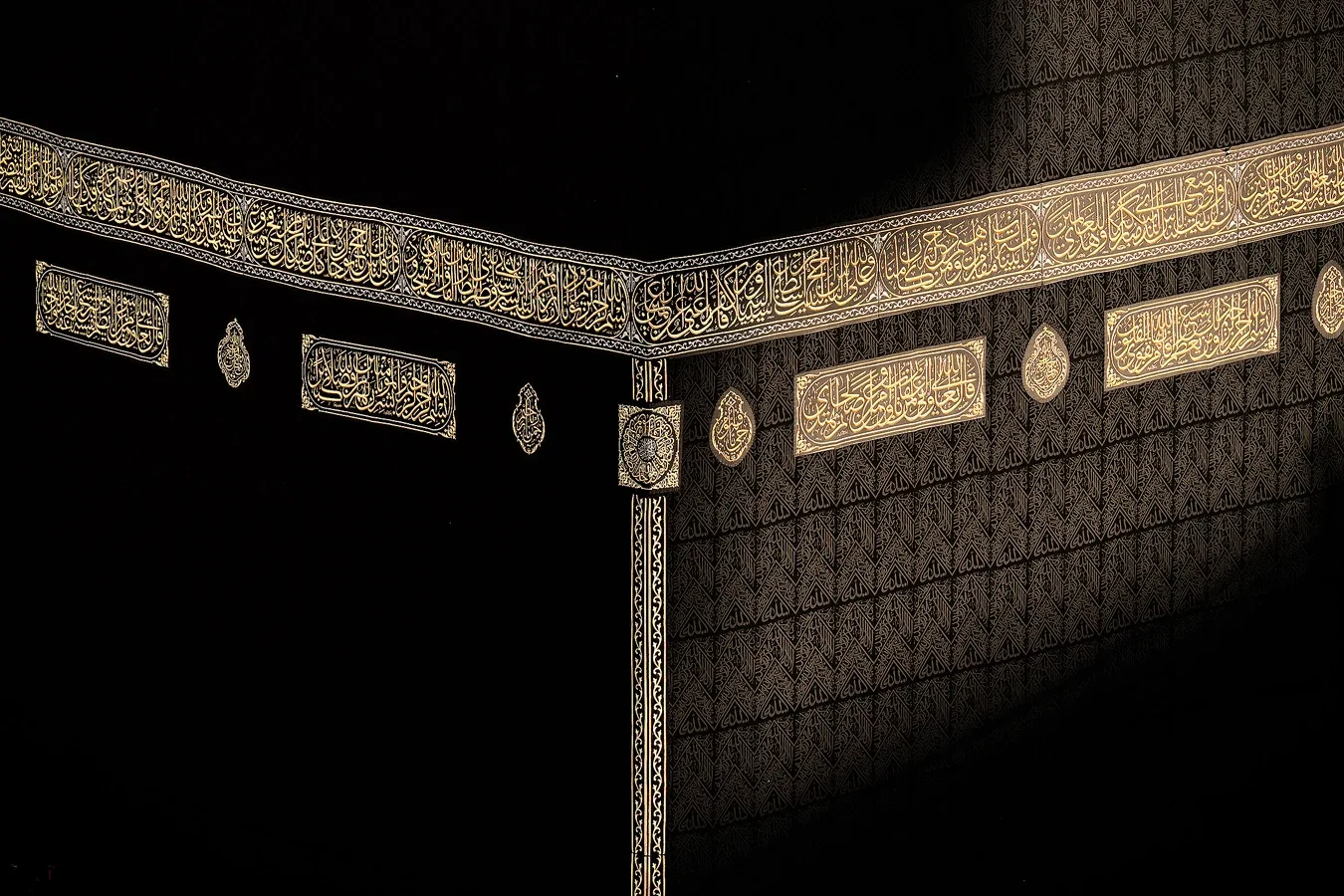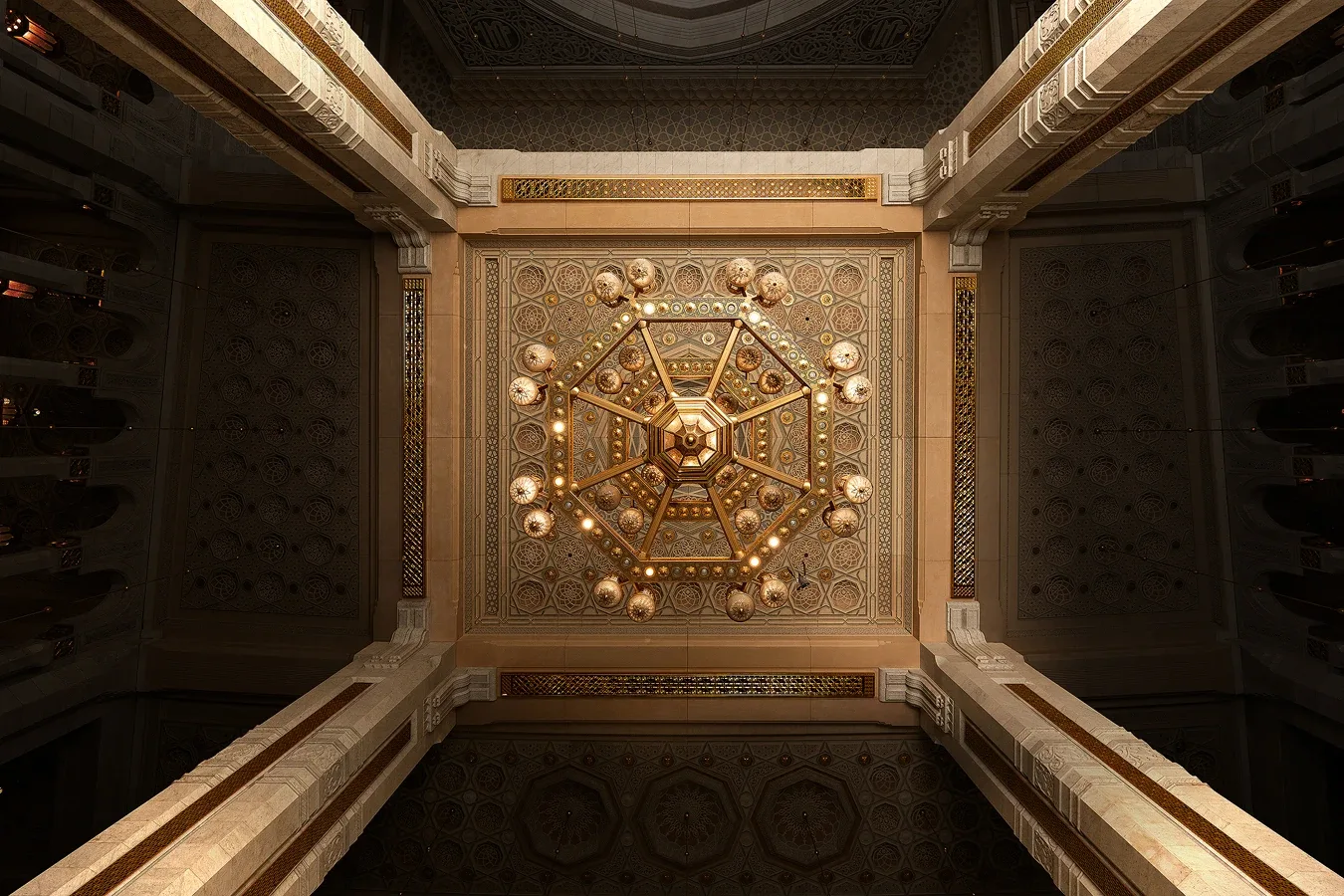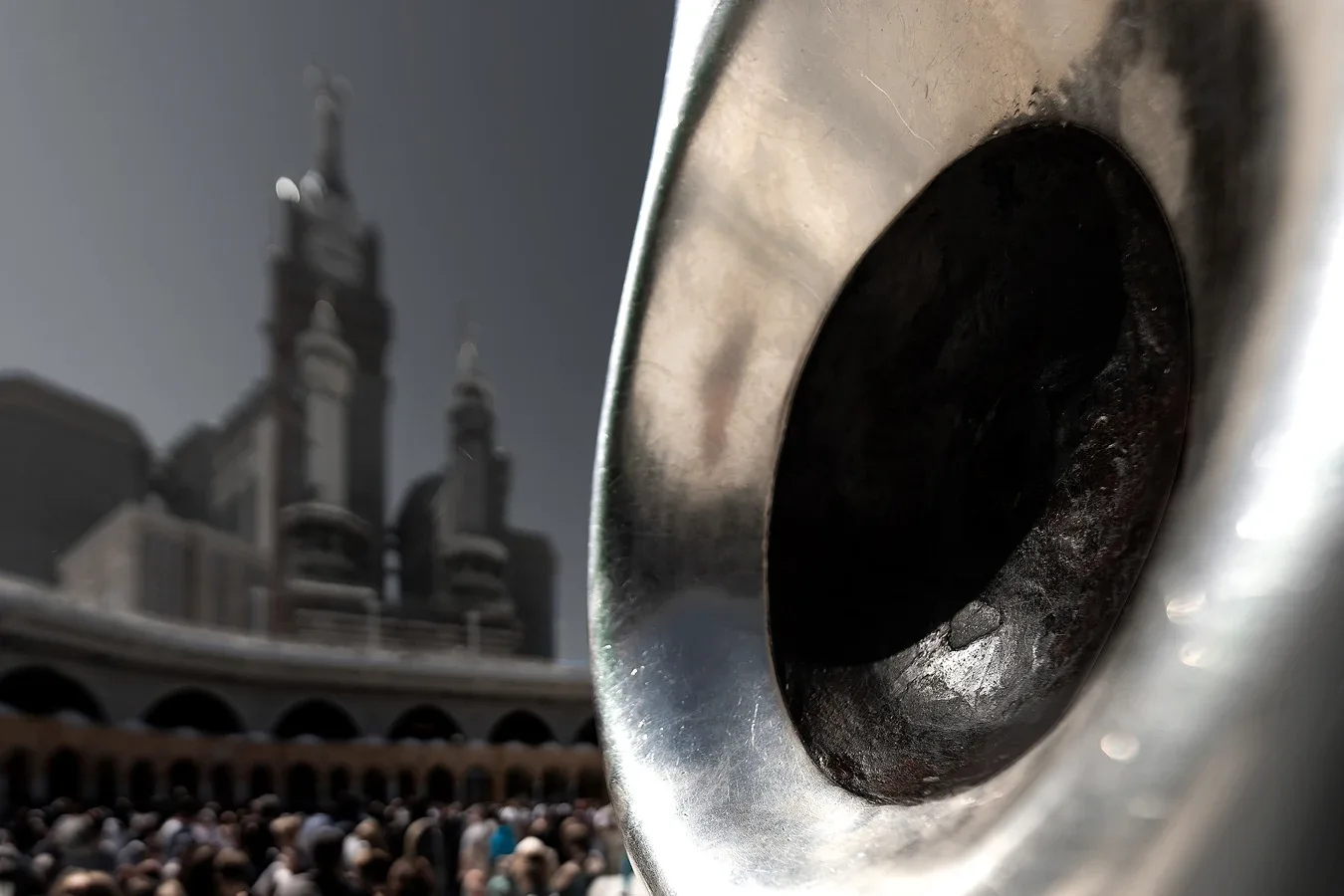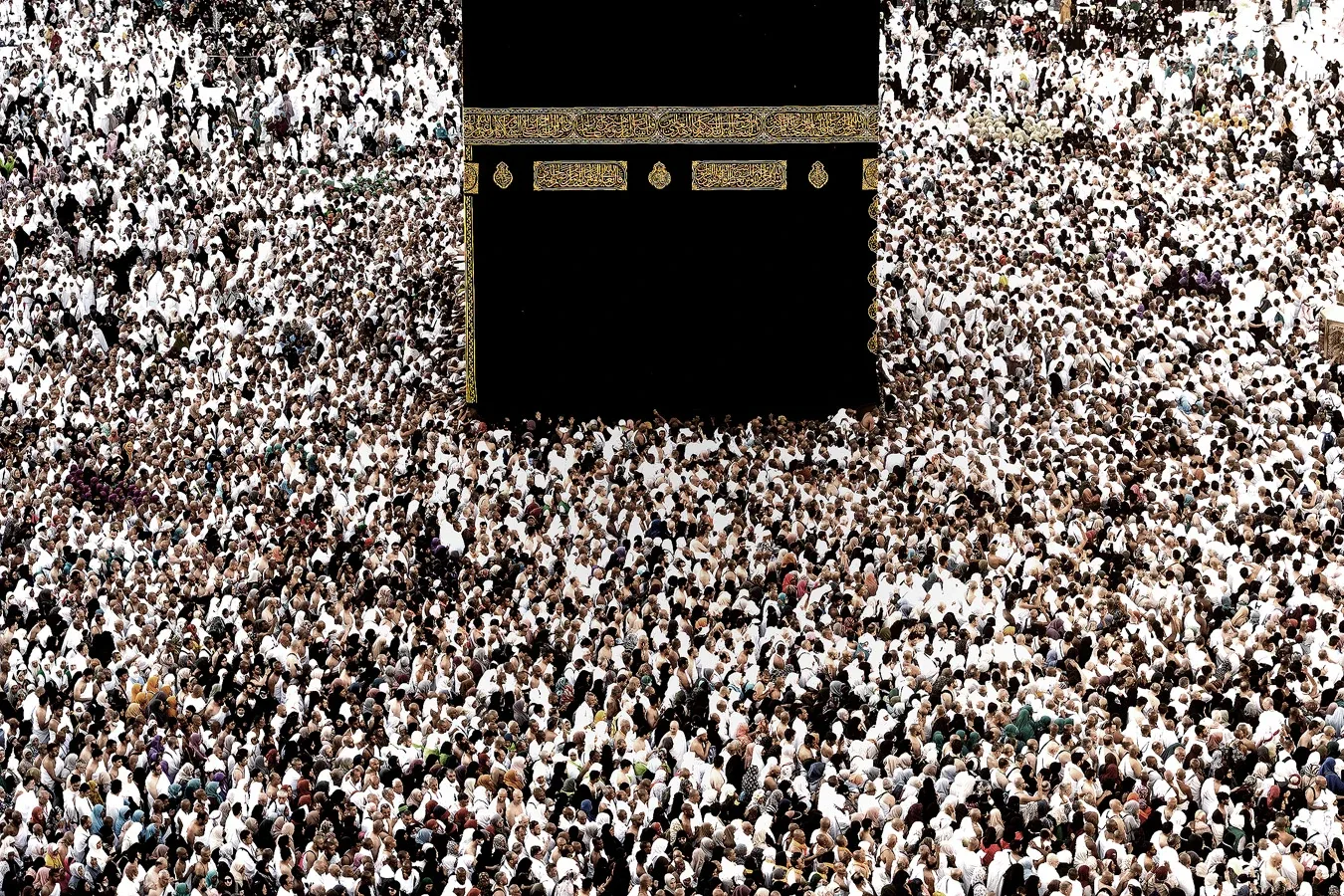
Makkah is the most restricted city in the Gulf to photograph, and also home to the most significant commission of this career: an exclusive, government-permitted documentation of the Kaaba itself, completely empty. Alongside it sit Mövenpick Hotel Makkah in the Abraj Al Bait and the heritage sites documented for Nusuk, from the cave of Hira to Masjid Aisha.
Architectural photographer working in Makkah (Mecca), based in Dubai and Riyadh, granted rare, exclusive access to document the Kaaba and the interior of Masjid al-Haram during a window with the space entirely empty. Work in the city also includes Mövenpick Hotel Makkah and the Nusuk heritage documentation made for Saudi Arabia's Ministry of Tourism.
Granted access to photograph the Kaaba during a rare occasion when it stood completely empty. No crowds, no queue, no noise. The access was arranged through official government permits and ran for close to twelve hours, from 3am to 3pm, with the space entirely clear.
The brief was architectural, not documentary: the sacred geometry, the scale, the relationship between light and form. The resulting series was shown publicly in a solo exhibition of around twenty large-format prints, alongside a talk on the project.
Mövenpick Hotel Makkah, in the Abraj Al Bait clock tower complex, was photographed in February 2025: the room categories, the restaurant and reception, and lifestyle frames with models, including the view from inside a guest room straight towards the Kaaba.
A separate project for Nusuk and the Ministry of Tourism covered the heritage sites of Makkah and Madinah: the Hira Cultural District, the cave of Hira on Jabal al Nour, Masjid Aisha at Al Taneem, the Khandamah viewpoint and the helipad level of the clock tower above the Haram. Makkah Mall was photographed for Cenomi in October 2023.
The Kaaba Project
Photographing the Kaaba is not access most photographers are ever offered. It required official government permits and a level of coordination that most commissions never involve, which is why the resulting body of work, made while millions dream of simply being near the Kaaba, sits among the most meaningful of this career.
The shoot ran close to twelve hours, from 3am to 3pm, with the Mataf and the Kaaba entirely clear. That window does not repeat on demand, so the coverage was built to be complete on the day: architecture, geometry, and detail, worked methodically rather than opportunistically.
The series was shown publicly through a solo exhibition of around twenty large-format prints, with an accompanying talk on the project. Because the images show the Kaaba without a single person in frame, some assumed they were digitally generated or shot during a pandemic closure. They were not; the access was real, arranged, and singular.
The Hardest Access in the Region
Beyond that access, Mecca remains the most difficult city in the Gulf to photograph professionally, and the reason has nothing to do with technique. Access to the holy city is restricted, which rules out the majority of the international architectural photographers a developer might otherwise commission. Work here is covered directly rather than subcontracted or handed to a fixer, and that is the practical difference on a Mecca project.
Mövenpick Hotel Makkah shows what that means in practice. It is one of several hotels inside the Abraj Al Bait, built under constraints of sightline, orientation and pilgrim flow that almost no other building has to satisfy, and the image that matters most to its guests is not the lobby but the view from the room towards the Kaaba. The room set is built around that view.
It is also a city that never stops. There is no empty hour and there is no closed day, so the notion of waiting for a clear frame does not apply, except on the rare occasions when it is arranged in advance.
Working Around the Pilgrimage
The calendar governs everything. Hajj and Ramadan transform density, access, and what is possible to an extent that has no equivalent in commercial photography elsewhere, and commissions are scheduled with that as the first consideration rather than a detail.
Airspace above and around the Haram is heavily restricted and aerial work is treated accordingly: cleared specifically or not undertaken. Elevated positions from surrounding buildings are frequently the correct answer and are secured during pre-production.
Photographing around worshippers carries an obligation beyond permission. Coverage is scheduled and positioned so it does not intrude on worship, which is both the right approach and, practically, the only one that gets access renewed.
Method
The walkthrough matters more here than anywhere. Understanding the flow of people through a building across a day, and where the vantage points actually are, determines whether a schedule is realistic before anything is shot.
Capture is medium format for full tonal fidelity, necessary given the extremes of Mecca's light: hard sun on stone against deep shade, and the artificial light of a city working through the night. Retouching is fine art realistic throughout.
Projects in Makkah are covered from the Dubai and Riyadh bases as regular work, with travel included in the scope rather than billed separately.