Most of the work made in Jeddah is retail architecture: the Cenomi mall programme, photographed over eight days at the turn of November 2023, from the ground and from the air. The city is also the gateway to Makkah and Madinah, where the Nusuk heritage work and the documentation of the empty Kaaba were made.
Architectural photographer working in Jeddah and along the Red Sea coast, based in Dubai and Riyadh. Work in the city centres on the Cenomi retail programme: Mall of Arabia, Jeddah Park and Yasmin Mall photographed ground and aerial, with Aziz Mall, Haifa Mall and Salam Mall alongside them.
The Jeddah leg of the Cenomi programme took six malls in eight days, some of them at both ends of the day, with exteriors, interiors and aerials made on the same visit so that each mall reads as one consistent set.
Production in Jeddah and across Makkah Province, from GACA drone clearance to access coordination with the operators of busy buildings, is arranged as part of the project, with the same planning every Saudi project receives.
The same programme continued to Makkah Mall, Noor Mall in Madinah, Jouri Mall in Taif and the Eastern Province malls, and it sits alongside the year long documentation of KAFD in Riyadh across more than 90 buildings, awarded 1st Place in Cityscapes at the International Photography Awards 2025.
Inland, Makkah and Madinah hold the heritage work made for Nusuk and the documentation of the Kaaba with the Mataf empty.
Retail Architecture: The Cenomi Malls
Almost all of the photography made in Jeddah is retail architecture for one client. Cenomi's programme covered its Jeddah centres in a single trip from the end of October 2023: Mall of Arabia, Jeddah Park and Yasmin Mall from the ground and the air, with Aziz Mall, Haifa Mall and Salam Mall photographed alongside them.
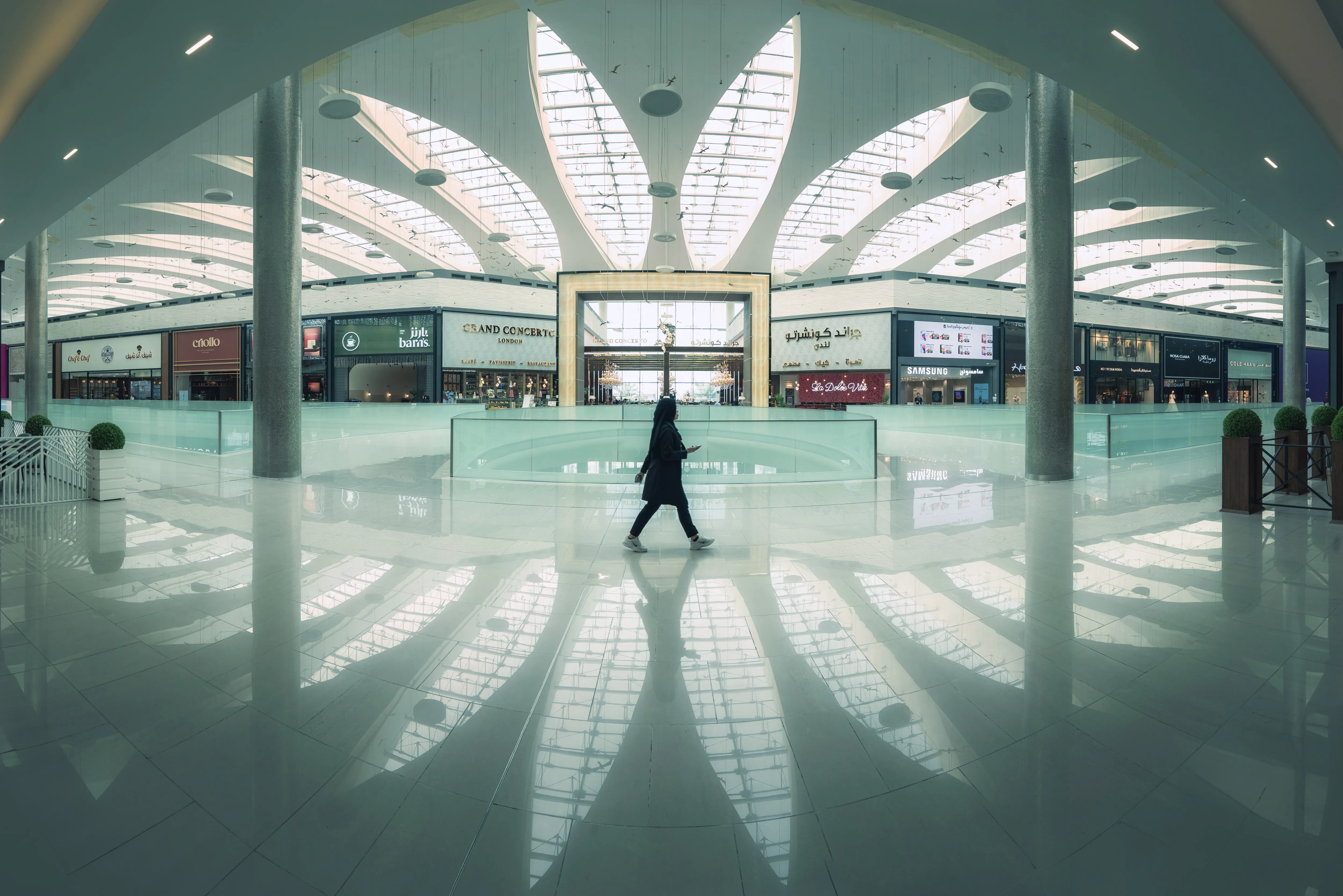
A mall is an awkward architectural subject. From the road it reads as a long wall of signage, and inside, the architecture is concentrated in a few places: the entrances, the main promenade and the skylit atrium, while the rest is tenant fit out. The set is built around those places rather than a walk down every corridor.
Mall of Arabia's vaulted skylight atrium is the clearest example. The roof is the building's one grand gesture, and it only reads when the daylight coming through it is balanced against the lit shopfronts below, which decides the hour it can be photographed.
Ground and Air on the Same Visit
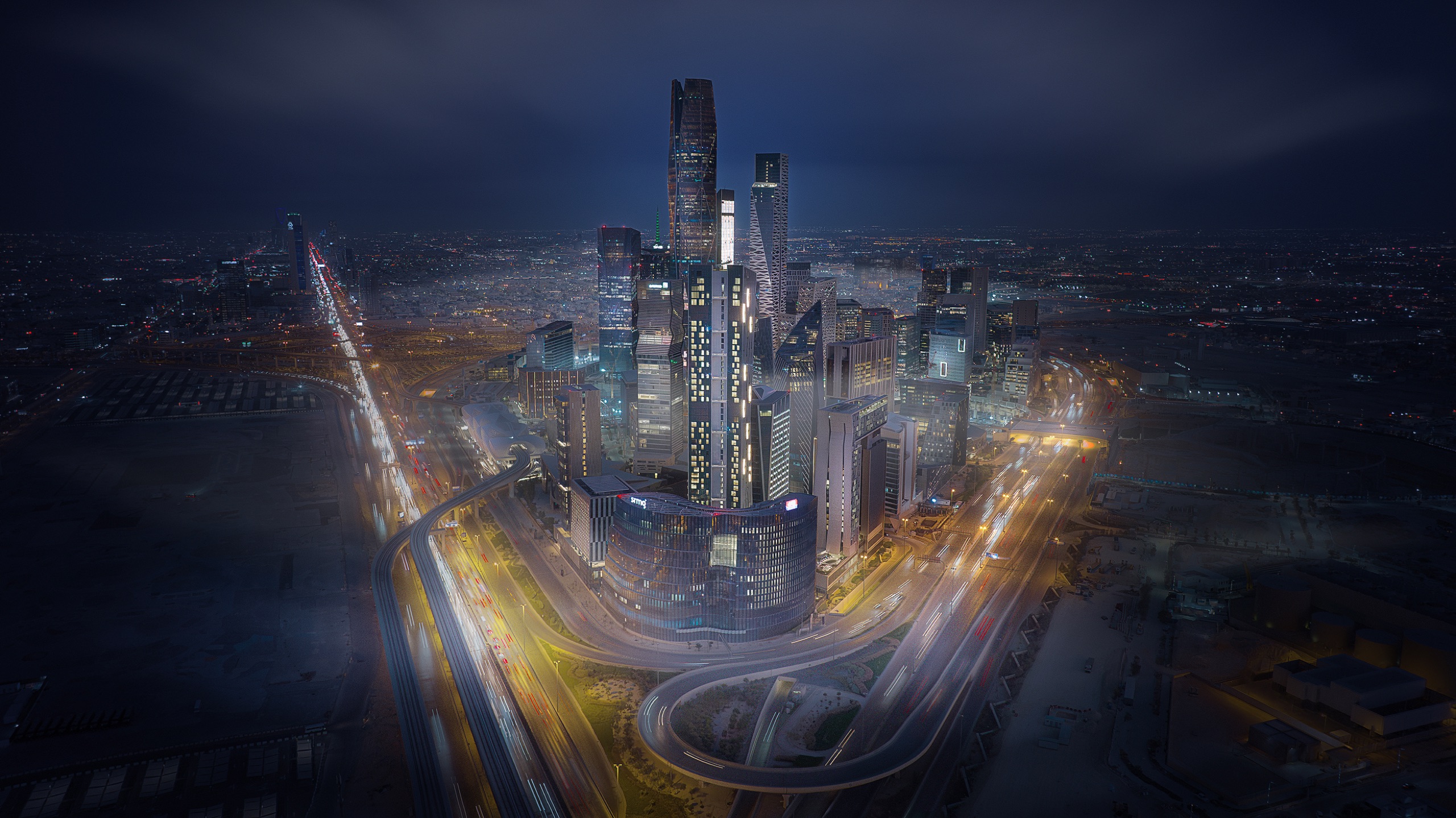
Three of the Jeddah malls were flown on the same visit as the ground photography. For an owner the aerial is the frame that explains a site in one image, which the ground set cannot do, and the aerial Jeddah page covers that side of the work in detail.
Doing both on one visit keeps the weather, the season and the colour consistent, so the establishing aerial and the shopfront detail read as the same building on the same day rather than two suppliers' work stitched together.
Drone work in Jeddah needs GACA clearance, and the coast and the airport put large parts of the city inside controlled airspace, so permissions are secured before the trip rather than on arrival.
Along the Red Sea Coast
Work on the coast reaches beyond the city. Al Wajh, further north on the Red Sea shore, was a separate four day project in June 2022.
Jeddah is also the way in to the holy cities. The Makkah work includes the documentation of the Kaaba and Mövenpick Hotel Makkah in the Abraj Al Bait, and the Madinah work, made for Nusuk, covers Quba Mosque, Mount Uhud and the Miqat mosque.
Projects in Jeddah are covered from the Dubai and Riyadh bases as regular work. Travel is not billed as an extra.