Dubai has one of the most photographed skylines on earth, yet most of it is shot the same way. As an architectural photographer in Dubai, the work is reading a tower, a residence, or a hospitality interior the way its architect intended, not simply recording that it exists.
Architectural photographer based in Dubai and Riyadh, working for the city's architects, developers and hospitality operators. Recent work here includes Noir Matière at Lana Residences, Binghatti at Dubai Silicon Oasis, and Muraba Residence on the Palm Jumeirah.
Dubai is the base, and the range of commission reflects that: a single penthouse interior for a design studio, a tower documented from the air for a developer, a hotel group covered across several properties.
The through line is that each was planned around when the building actually takes light, off a scouting visit, rather than fitted into a convenient afternoon.
Noir Matière at Lana Residences, Dorchester Collection, for BOOBROOK. Binghatti at Dubai Silicon Oasis. Muraba Residence on the Palm Jumeirah. Orangebox Villa. Al Warqa'a Mosque by waiwai. Rove Hotels across Downtown, Expo, CityWalk and Healthcare City. Steak 71 and Zouzou for food and beverage.
What Architectural Photography in Dubai Actually Requires
Dubai is the most photographed skyline in the region, which is precisely the problem: the city has been reduced to a handful of repeated views. The work that gets published is the work that treats a specific building as the subject rather than the skyline as a backdrop.
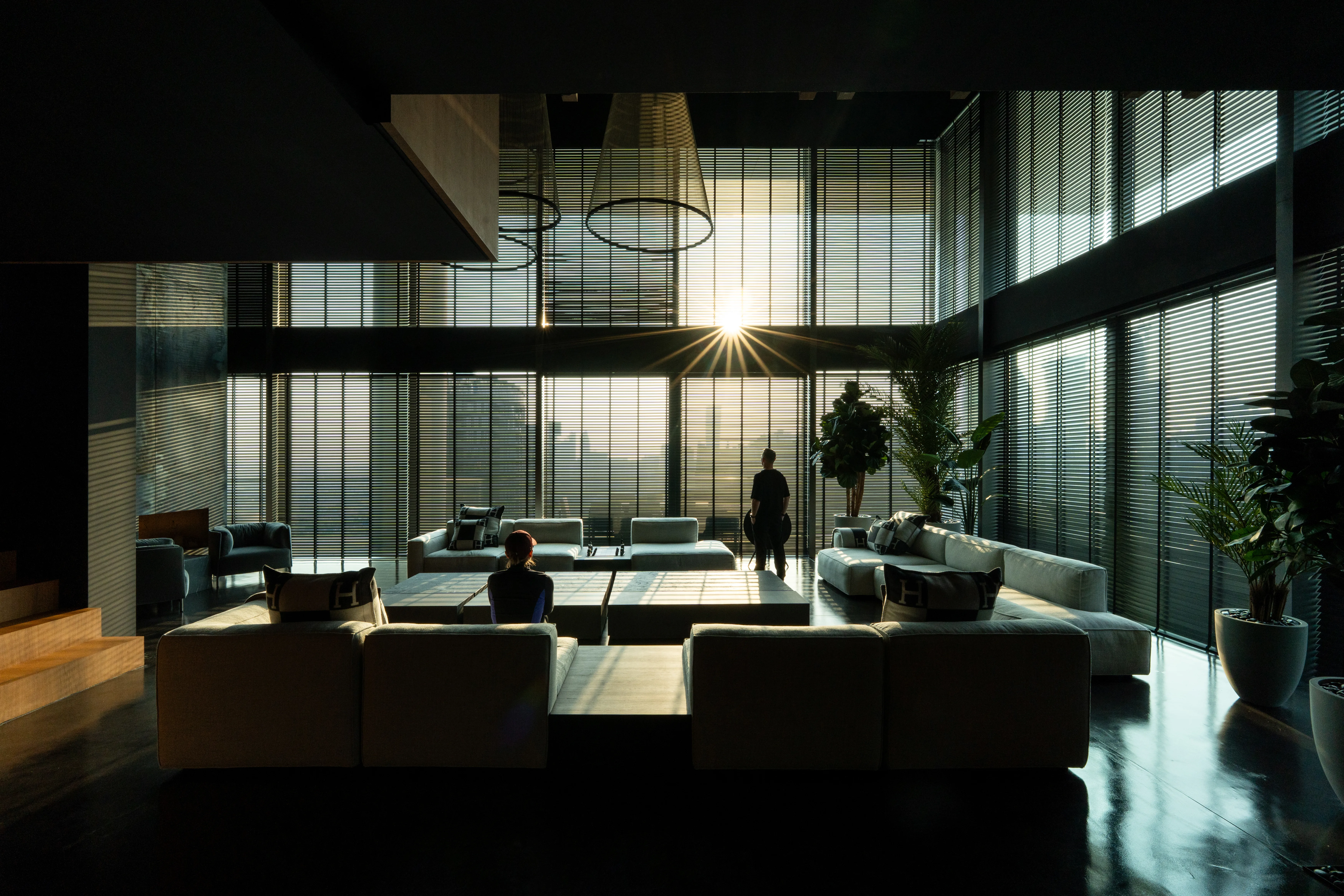
Noir Matière is the clearest case. A penthouse at Lana Residences, in a Foster + Partners tower, designed by BOOBROOK around darkness: blackened surfaces, raw mineral texture, monolithic form. Shot on natural light alone, scheduled around the hour in each room when the sun reaches far enough in to separate one dark material from another. It was awarded Best Photography Project of the Year at the Créateurs Design Awards 2026 in Paris.
Towers, Villas and Hotels Are Different Problems
On a developer tower the subject is usually the facade system. Binghatti at Dubai Silicon Oasis was flown for that reason: the deep repeated relief on those elevations reads as texture from the street and only resolves into geometry from above, with the sun low enough to throw the pattern into shadow.
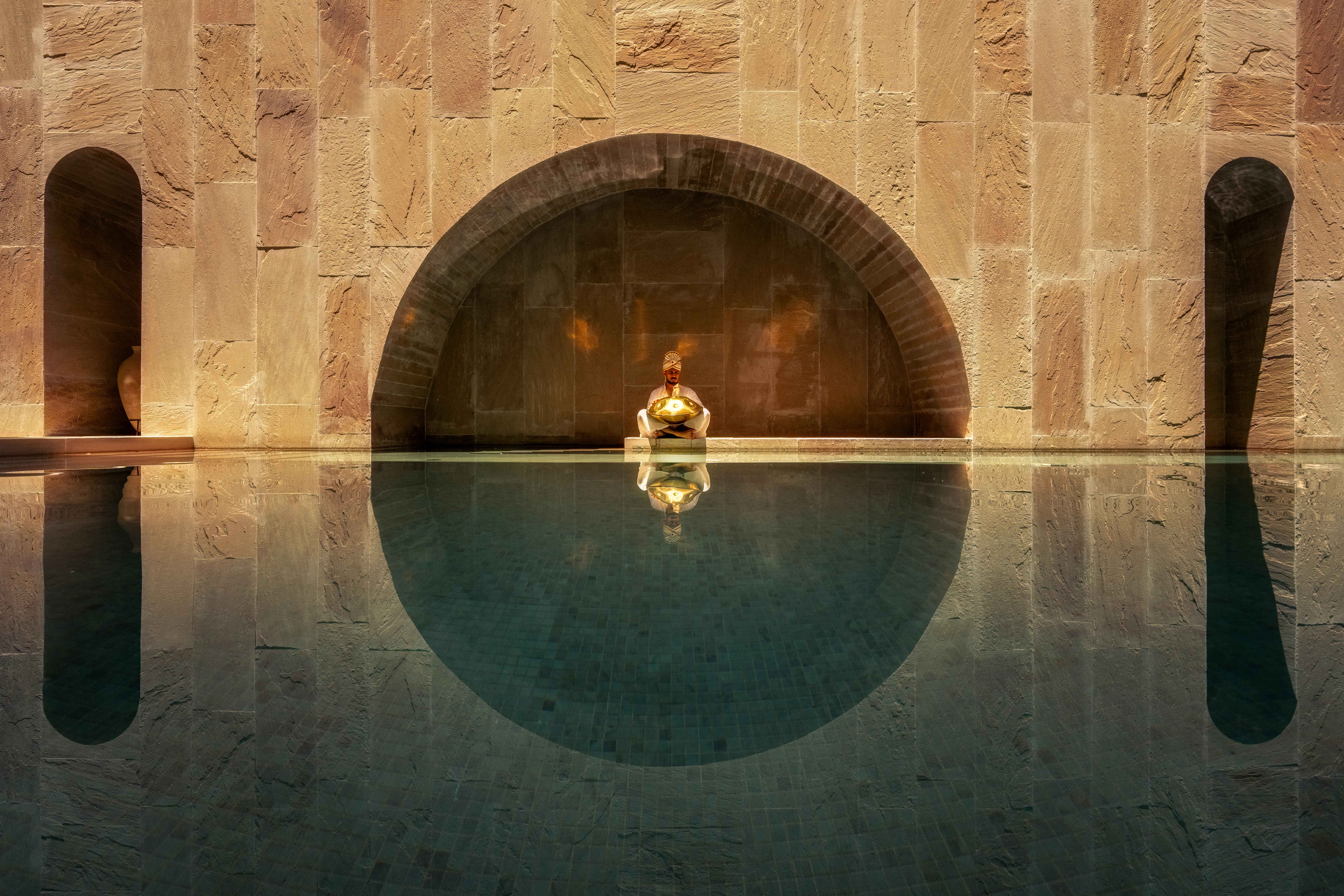
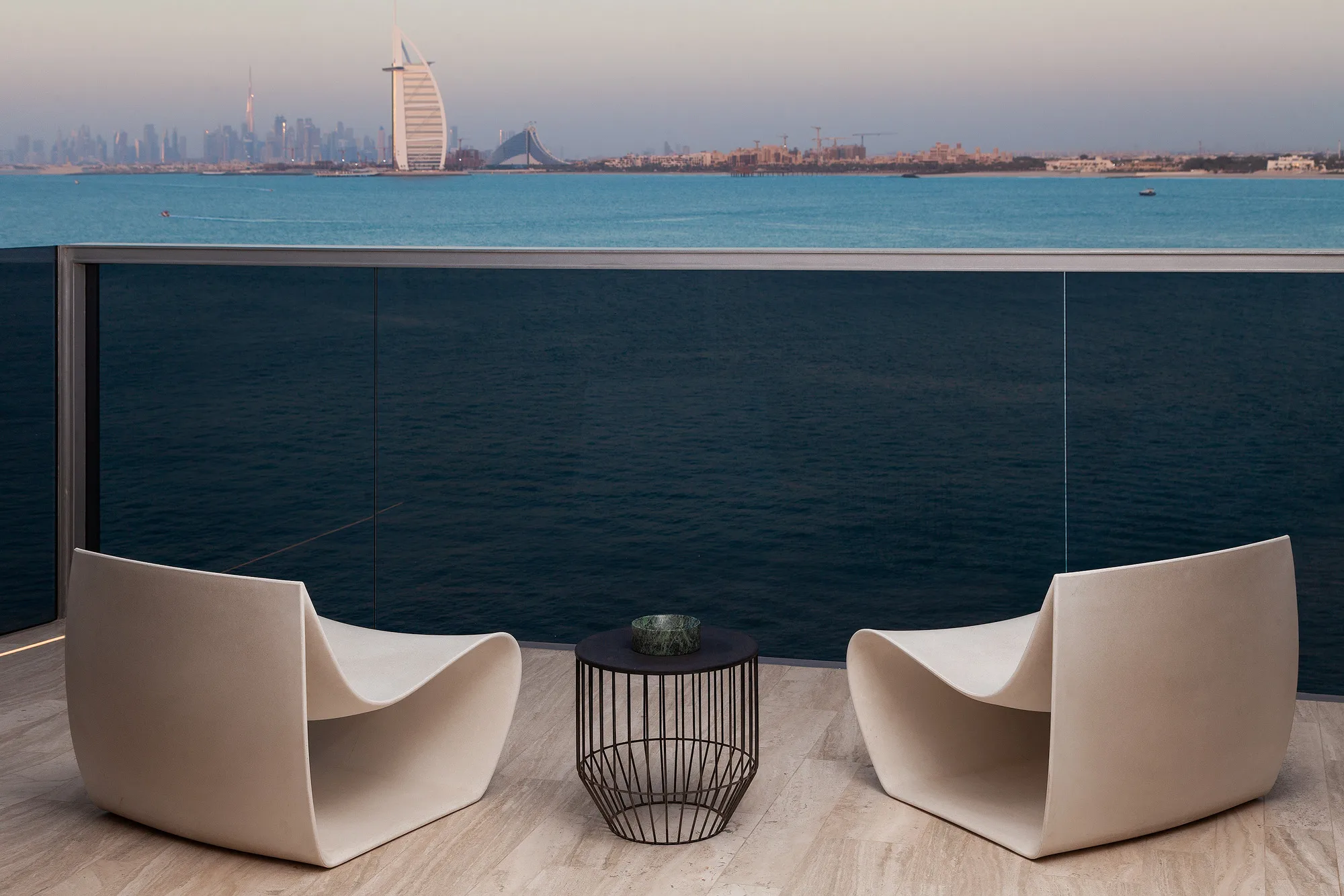
On a villa the subject is the plan. Orangebox and Muraba Residence both turn on a single move, a circular water court in one and a terrace framed on the Burj Al Arab in the other, and the set is built to arrive at it.
On hospitality the subject is the room in use. The Rove programme ran across Downtown, Expo, CityWalk and Healthcare City from 2021, with CityWalk photographed before it opened, and a hotel interior that photographs beautifully empty tells an operator nothing about how it works.
Interior, Hotel and Hospitality Photography in Dubai
Architecture is the centre of the practice, but a large share of Dubai commissions are interiors. Interior design photography is a different problem from a facade: the subject sits at eye level, the light is usually mixed daylight and artificial, and the room is often occupied while it is being shot. Design studios commission this work directly for their own portfolios and award submissions, which sets a higher bar than a marketing image.
Hotel and hospitality photography runs alongside it. The Rove programme covered Downtown, Expo, CityWalk and Healthcare City, and clients in the city also include Park Hyatt. Food and beverage sits in the same bracket, Steak 71 and Zouzou among them, where the brief is a brand standard rather than a property record.
Where a project needs more than one of these, they are planned as a single commission rather than booked separately. Interior photography in Dubai and hotel photography in Dubai cover how each is scoped on its own.
Beyond the Skyline: Villas, Mosques and Cultural Buildings
The published image of Dubai is towers, and it is the least interesting part of the work. The House of Courtyards, a private villa by Studio VDGA, turns on a circular water court that only resolves from directly above and from one position at ground level. The architectural film shot there, Orangebox, was selected for the 2025 Psarokokalo International Short Film Festival in the Architecture and Environment category.
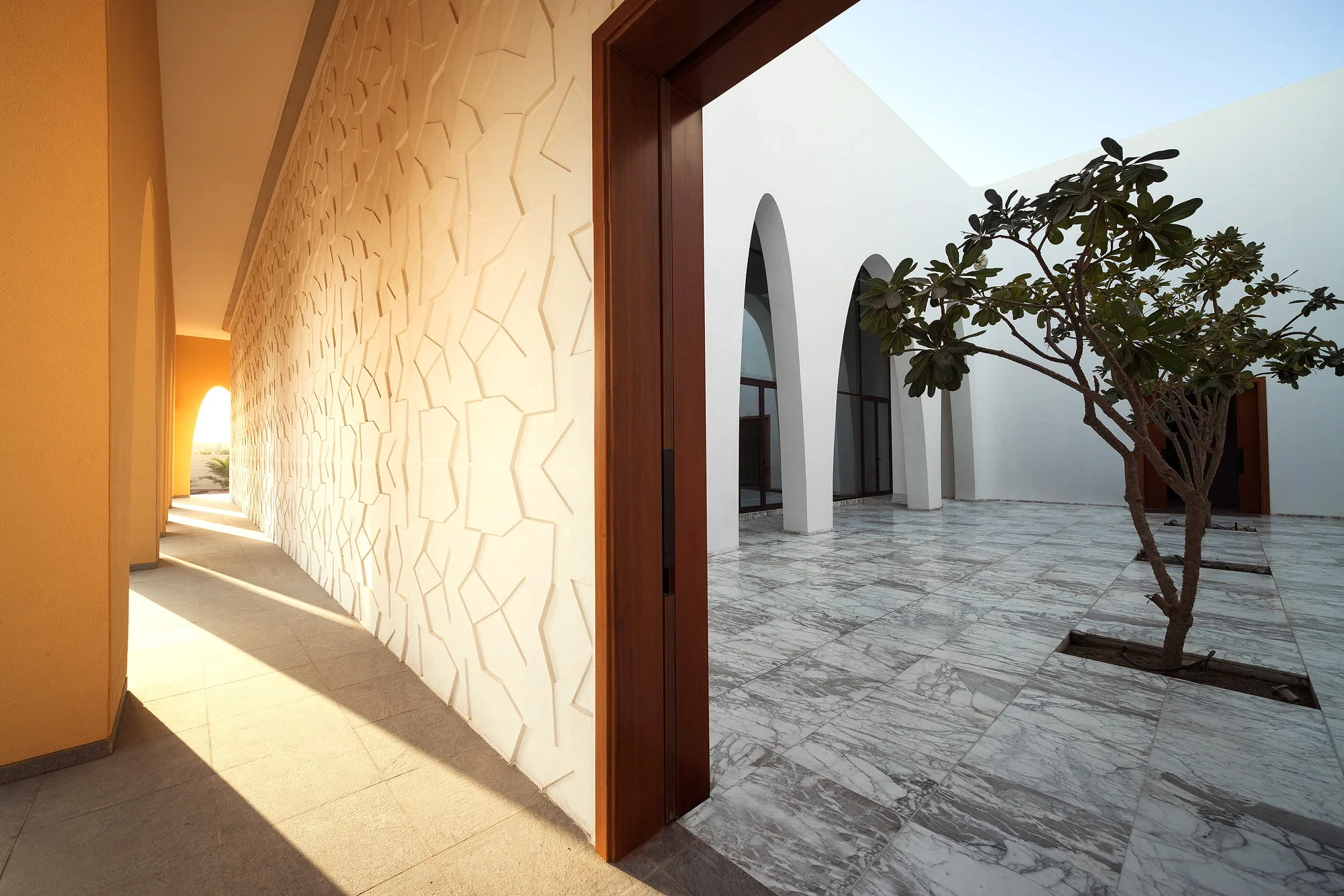
Al Warqa'a Mosque by waiwai is the other kind of Dubai building worth photographing properly, a contemporary mosque where the entire argument is what daylight does to a plain surface across the day. Buildings like these need more site time than a tower rather than less, because there is no skyline to fall back on and the photograph has to carry the architecture on its own.
Permits, Drones and Access in Dubai
Aerial work over Dubai is not casual. Large parts of the city sit inside controlled airspace, commercial flight needs GCAA clearance plus, depending on the site, coordination with airspace and property authorities, and approval typically runs to around fourteen working days.
Where a site cannot be cleared, an elevated position in a neighbouring tower usually delivers the equivalent frame, and in a city this dense that alternative is almost always available. Identifying it is part of pre-production, not an improvisation on the day.
How a Dubai Commission Is Planned
A site visit before the shoot. Orientation, glazing behaviour, the surrounding towers, and how light crosses the facade through the day determine the schedule, because on a glass building there are usually two short windows when it is not simply a mirror.
Capture is medium format, retouching is fine art realistic, and interior and aerial coverage are planned into the same commission rather than booked separately. Work extends to Sharjah and Abu Dhabi as regular work.
Who Commissions Architectural Photography in Dubai
Architects and design studios shooting for their own portfolio, award submissions and press. Developers documenting completed towers, villas and master planned communities for marketing and sales campaigns. Interior designers who need finished rooms represented at the standard the design deserves. Hotel operators and hospitality groups, both before opening and for brand refreshes. Retail and food and beverage brands opening in the city.
The common requirement is that the images have to hold up beyond a website. Award juries, editorial submissions, printed brochures and sales centre installations all set a higher bar than a listing photograph, and the shoot is planned to meet that bar rather than to fill a gallery.