Abu Dhabi is a developer and institutional market before it is anything else, and the work here reflects that: residential towers and public realm for Q Holding, infrastructure for Khazna, and waterfront development at Al Raha Beach.
Architectural photography in Abu Dhabi for developers, operators and institutions. Commissions in the emirate include Q Holding's residential and public realm projects, the Khazna Data Centre, and AlTorath Engineering at Al Raha Beach.
Abu Dhabi is a different market from Dubai, and the difference shows in what gets commissioned. More of the work is for developers and operators who need a building documented as an asset rather than as a launch image, and more of it involves sites where access is arranged rather than assumed.
That suits a practice that plans permissions and elevated positions during pre-production instead of on the day.
Q Holding, across residential towers and the public realm around them. Khazna Data Centre. AlTorath Engineering at Al Raha Beach. Nahdi, across a retail rollout that also produced a light study inside the Sheikh Zayed Grand Mosque. Abu Dhabi University.
Commissions here are usually awarded on published work rather than on a pitch, which is why the case studies carry the detail.
Towers, and the Ground Around Them
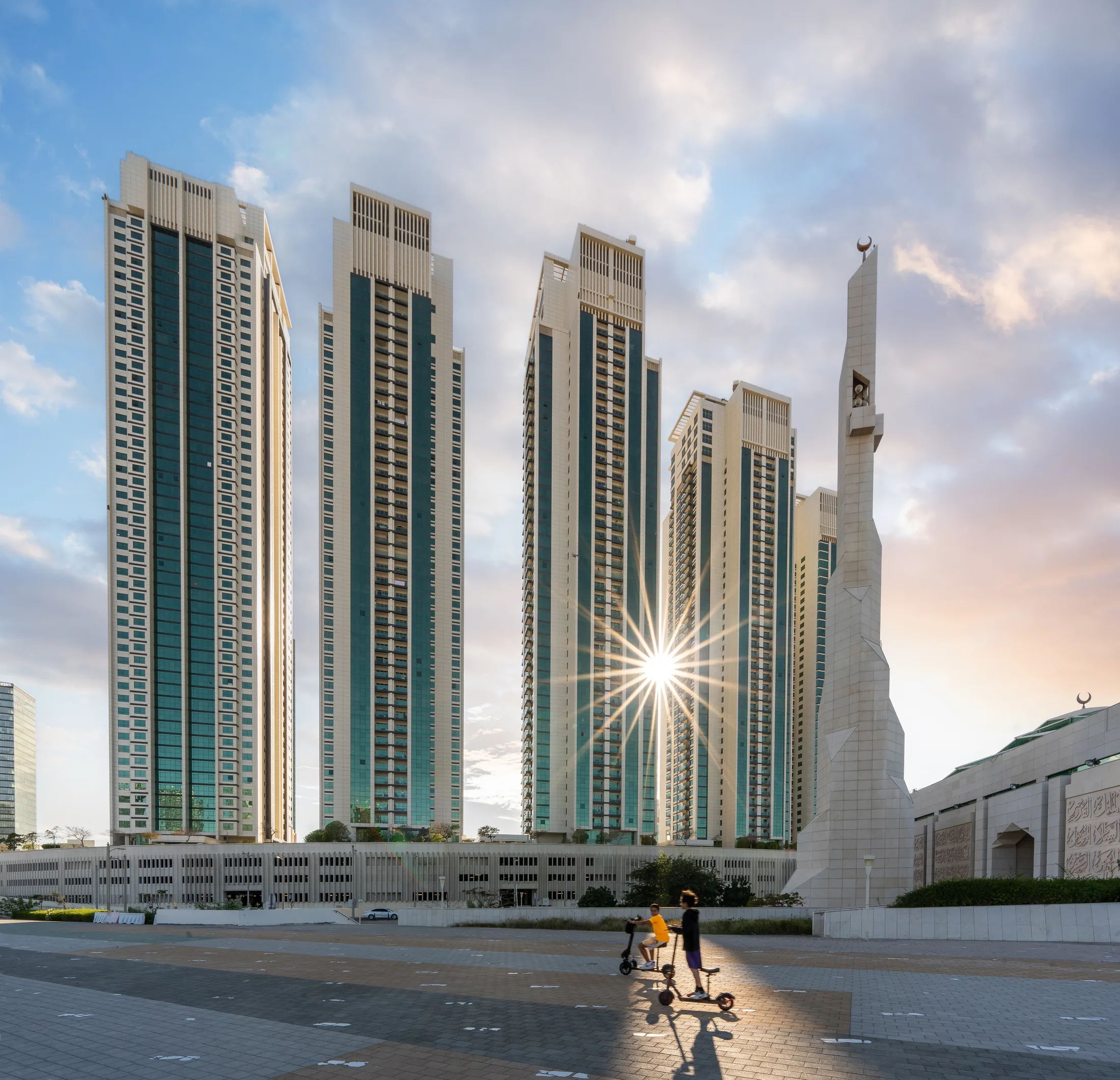
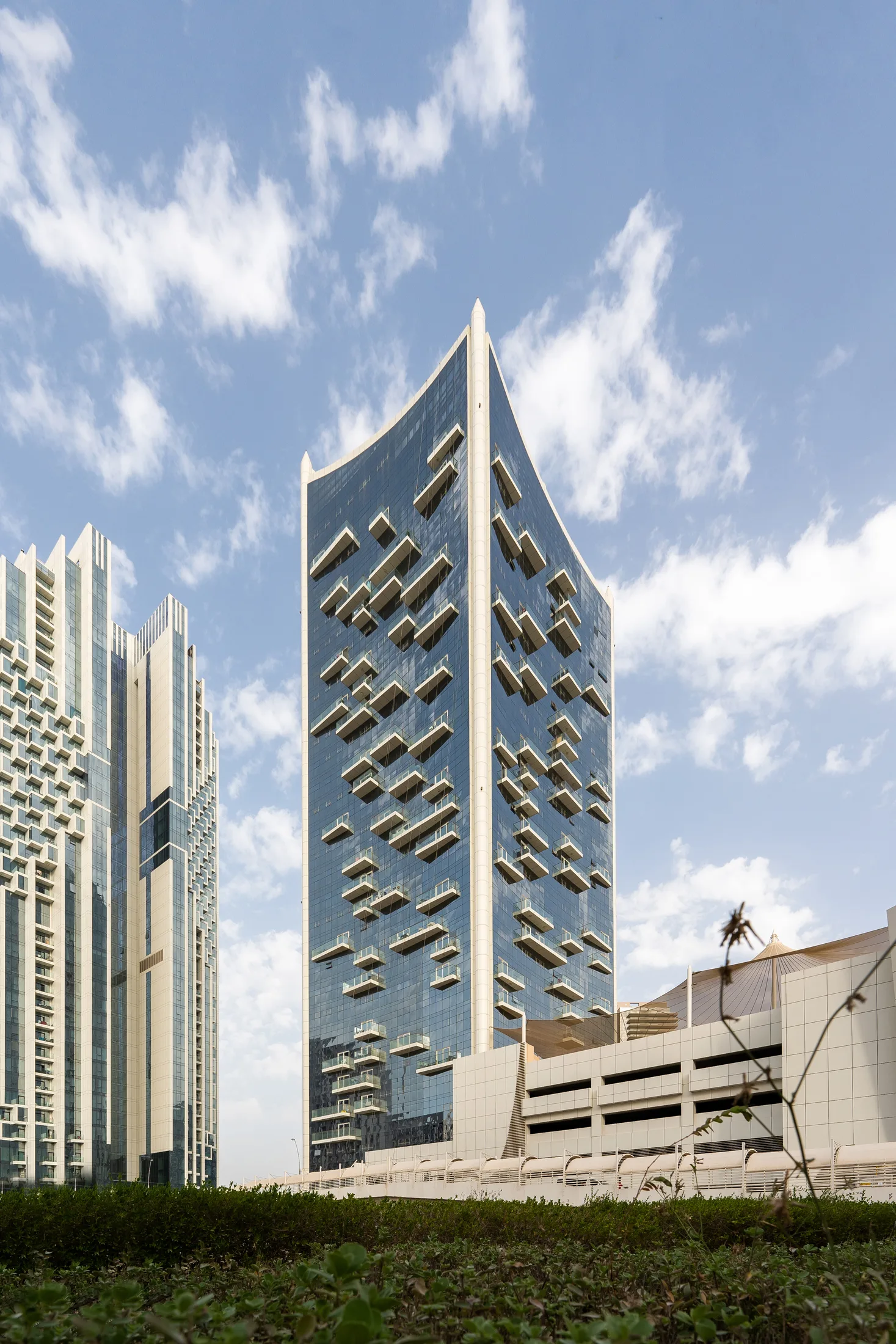
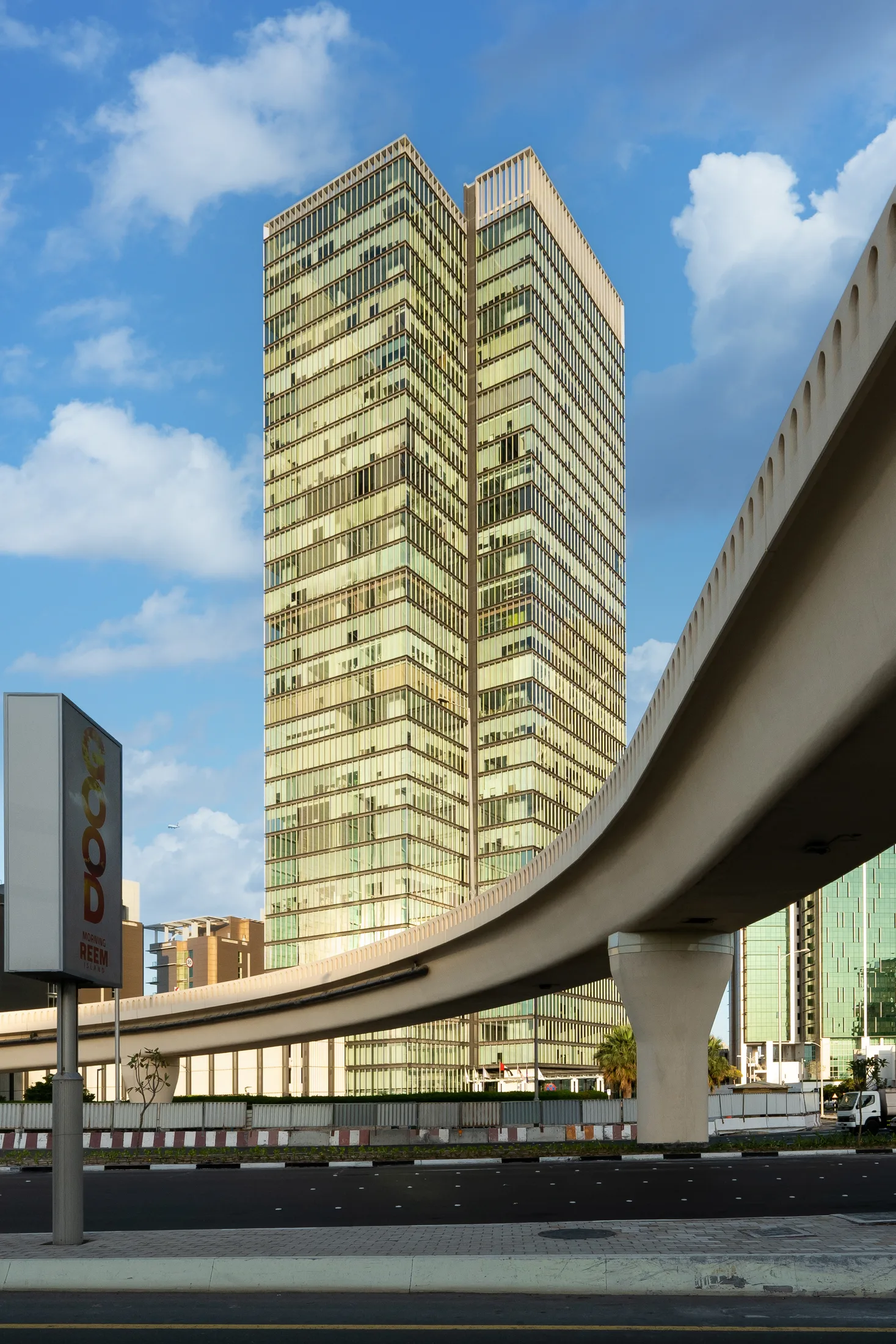
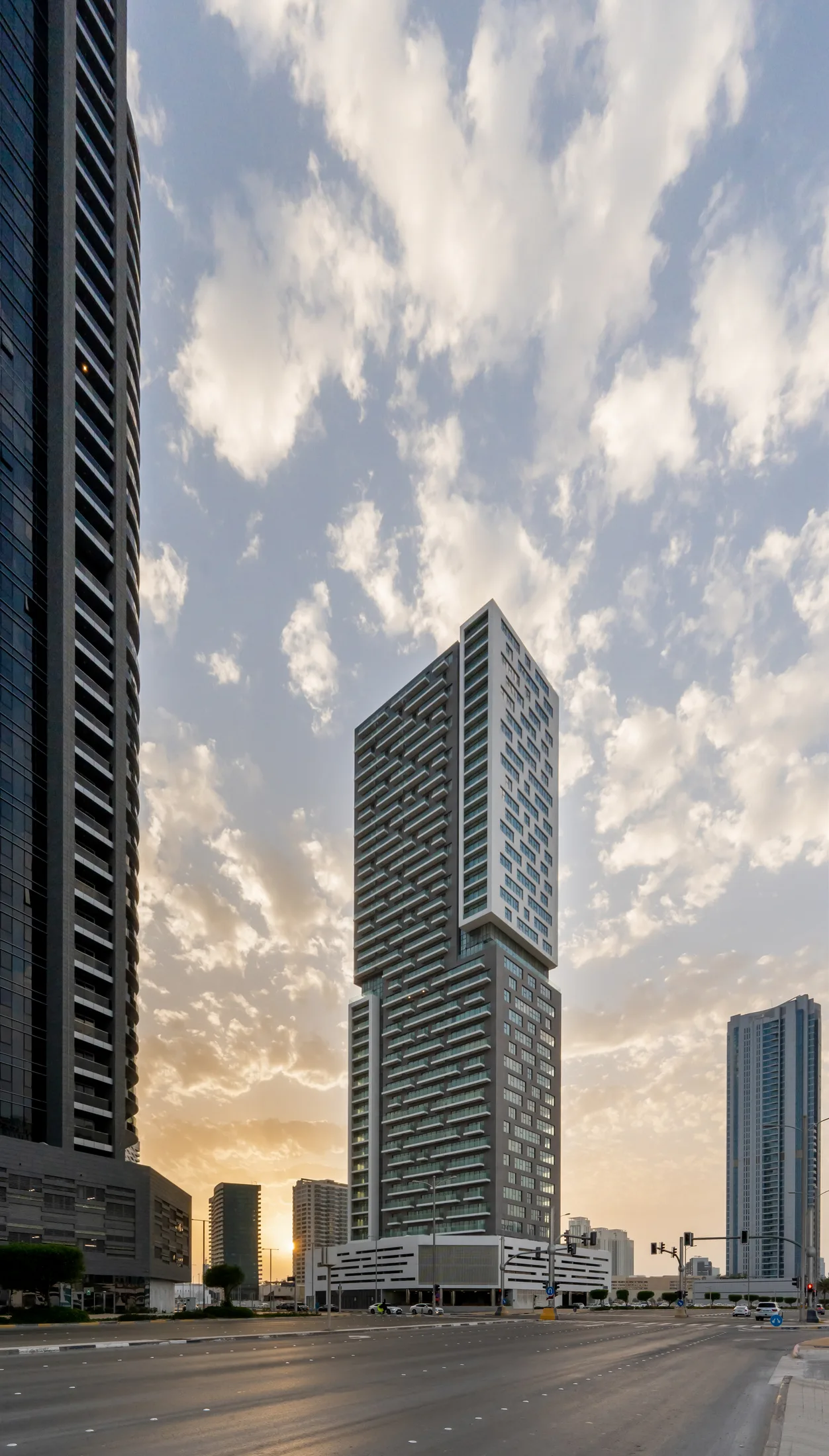
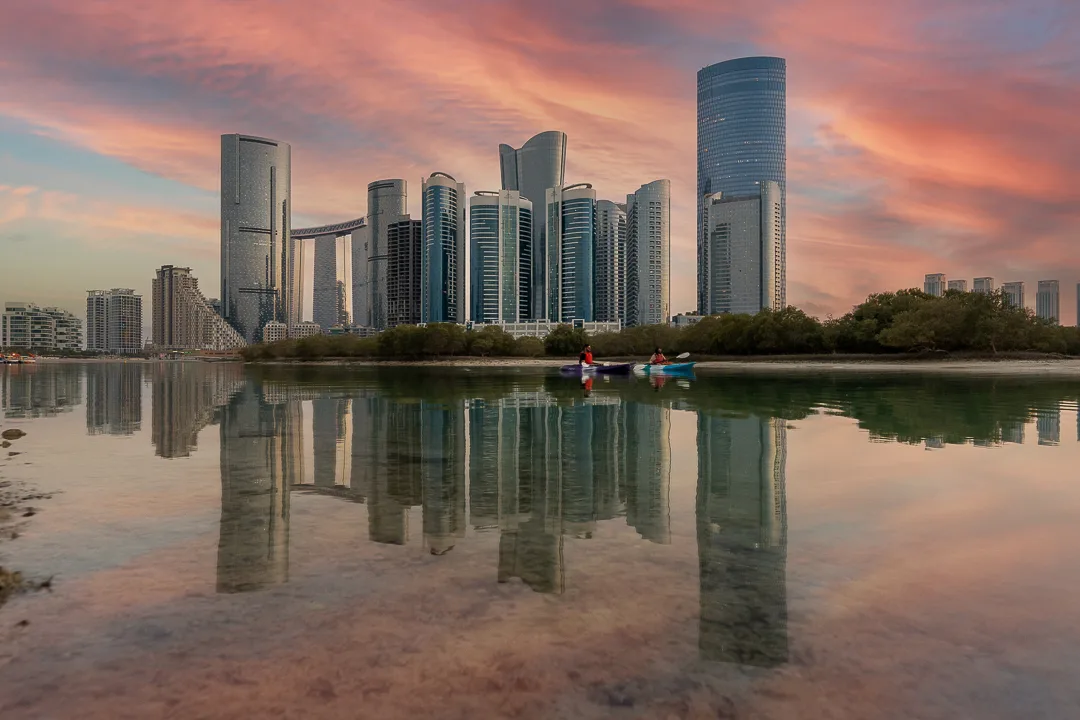
The Q Holding work is the clearest example of what Abu Dhabi asks for. A residential tower is easy to photograph badly: point up, get a sky, call it architecture. What a developer actually needs is the tower in its setting, because the setting is what is being sold, and on Al Reem that means the water, the corniche and the neighbours.
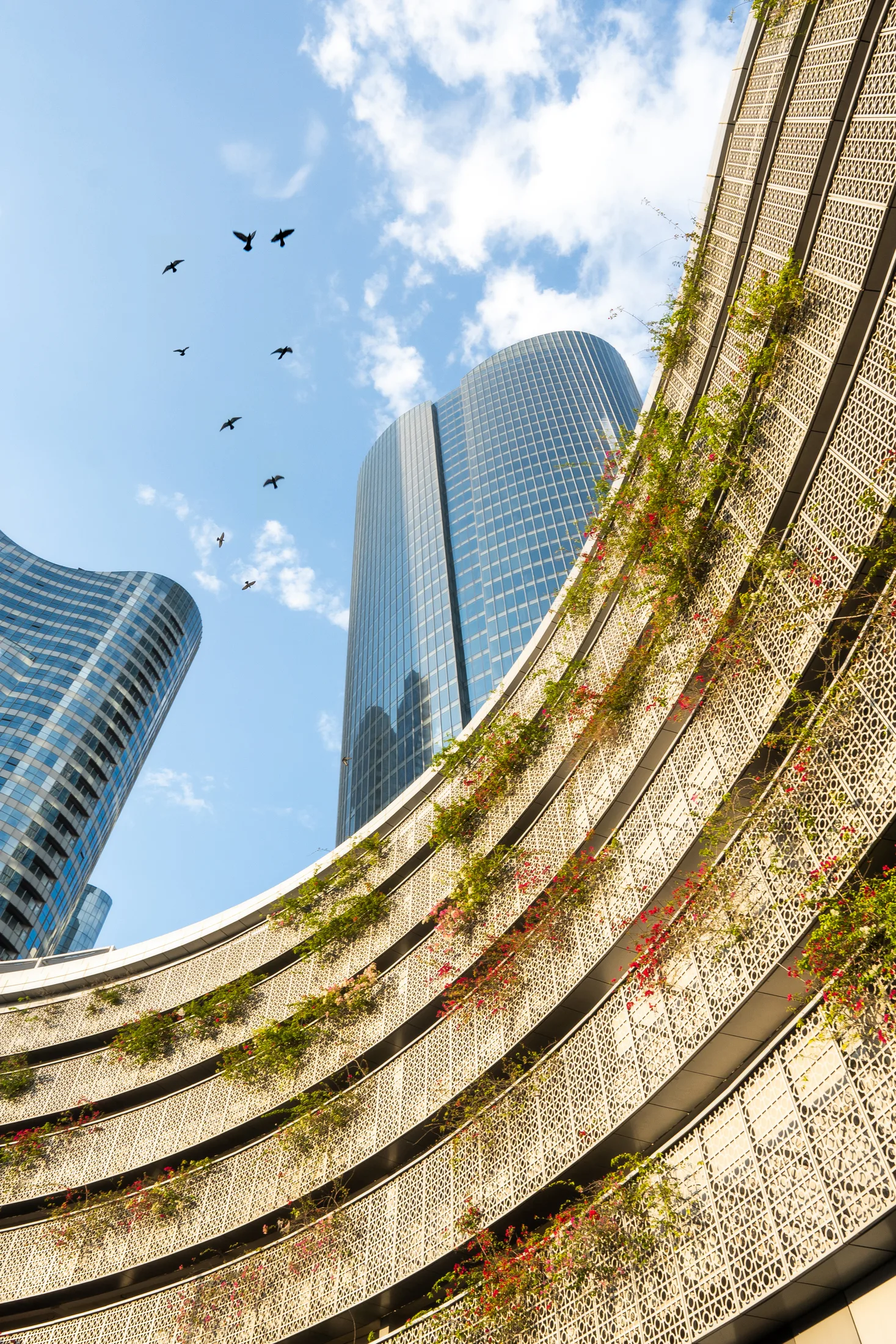
So the set runs from the skyline reflected across the channel at sunset down to a single run of planted balconies with birds crossing it. Both are the same commission, and the second only earns its place because the first has already established where you are.
Infrastructure Is Architecture Here
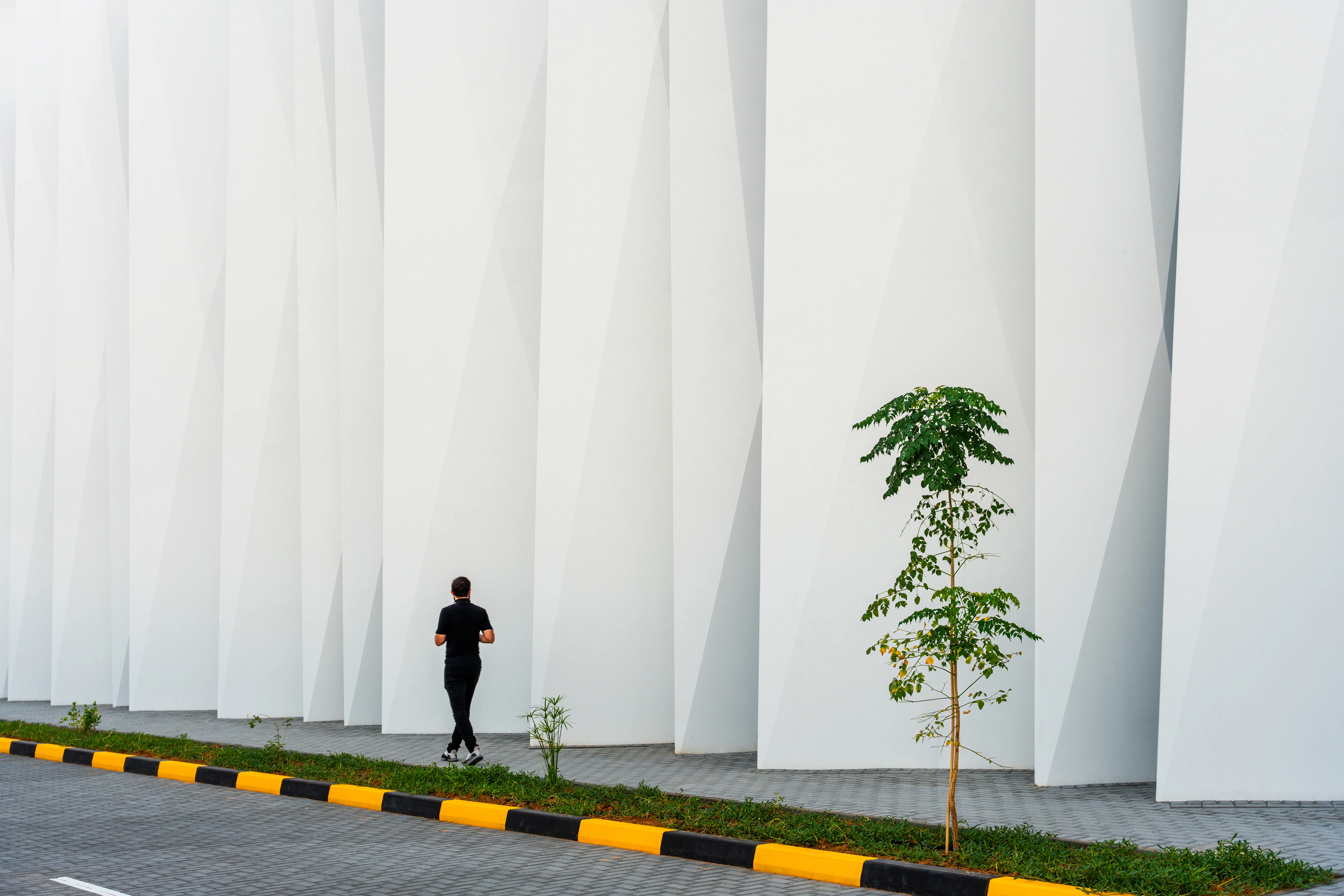
The Khazna Data Centre is a low, long, deliberately unglamorous building, and it is exactly the kind of subject Abu Dhabi produces a lot of. At ground level it photographs as a wall. The job is to find the frame where it reads as a piece of infrastructure sized against its site rather than as a shed.
AlTorath Engineering at Al Raha Beach is the opposite problem: a waterfront setting that is the entire point of the project and that falls apart in any frame tight enough to flatter the building.
Access and Permissions
Abu Dhabi carries extensive controlled and restricted airspace, and a large share of what is worth photographing sits near something that complicates it. Aerial work is cleared with GCAA in advance, and where a permit is not achievable the equivalent elevated position is secured during pre-production instead.
Ground access to towers, plazas and institutional buildings is arranged the same way. The Nahdi rollout included a light study inside the Sheikh Zayed Grand Mosque, which is not a place anyone photographs by turning up with a camera.
Method
Medium format capture, fine art realistic retouching, and a walkthrough before the shoot day so the schedule is built around when each elevation actually takes light.
Abu Dhabi is covered from the Dubai base as regular work, with travel inside the scope rather than billed on top. Interior and aerial coverage are planned into the same commission rather than booked separately.