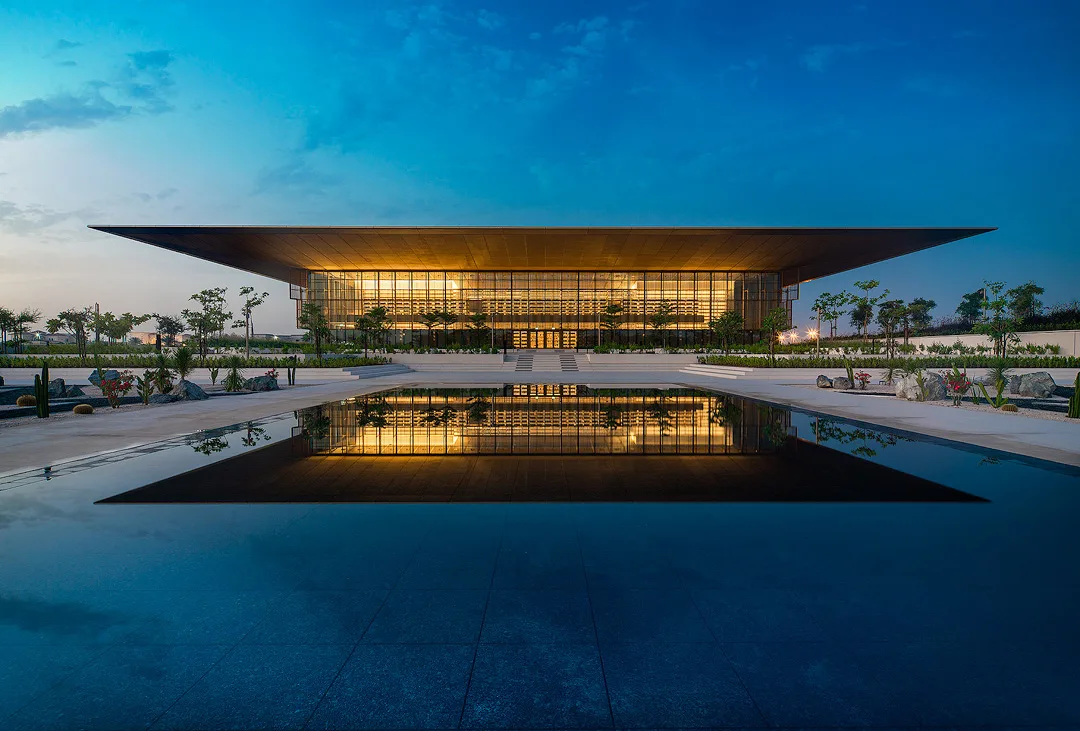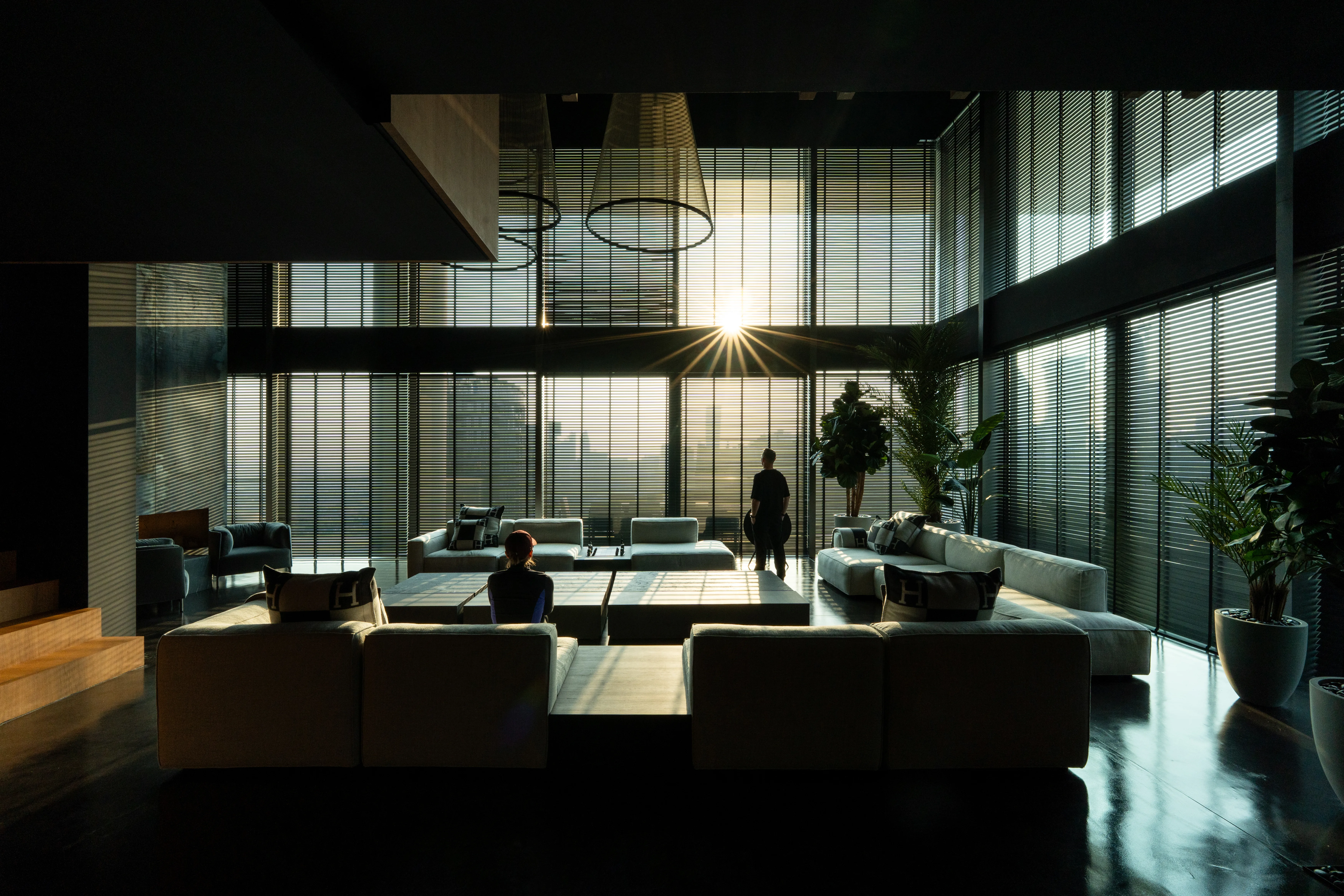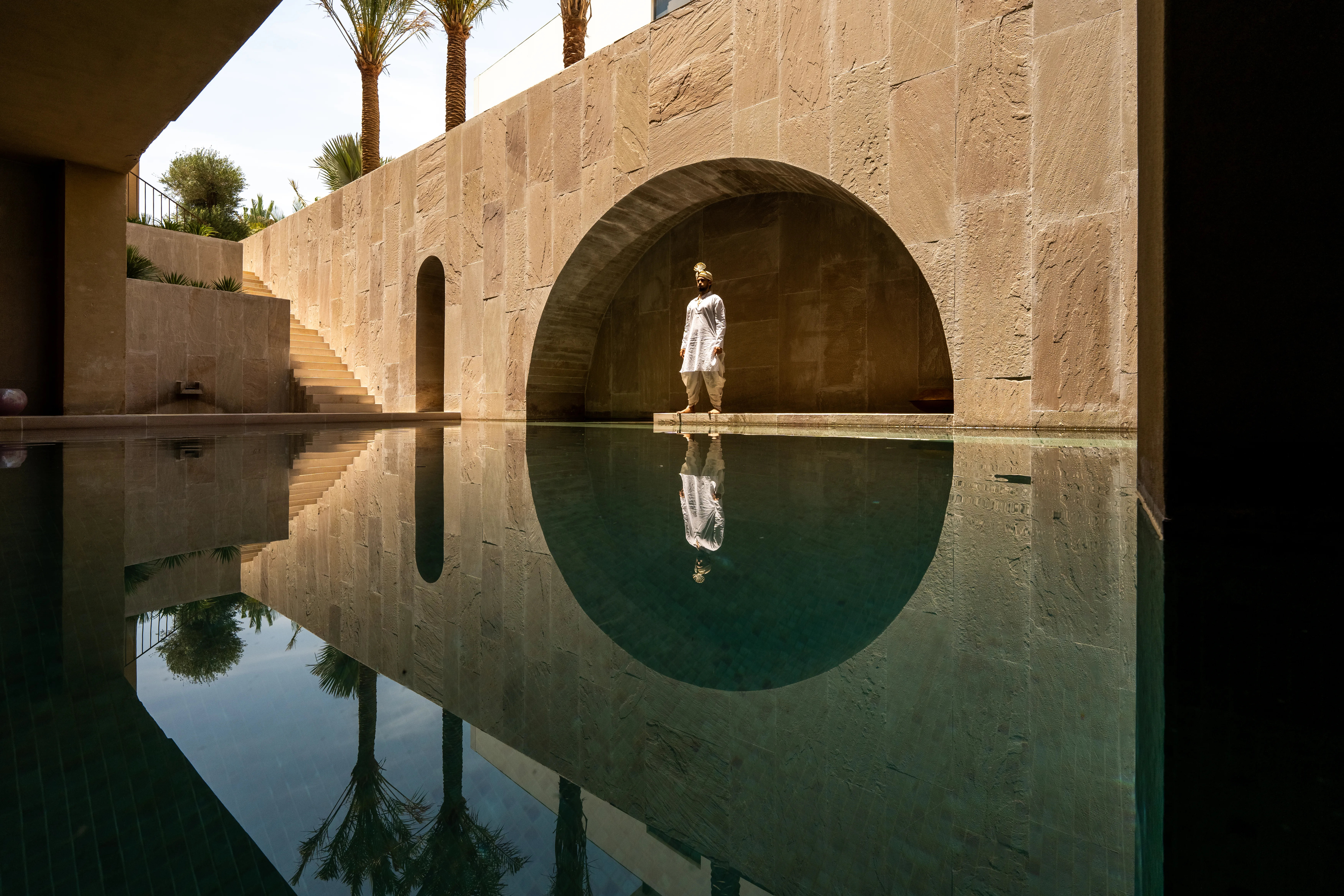
Muscat is unlike anywhere else in the Gulf: a low-rise capital where architecture is held in balance with the mountains and the sea, and where heritage character is protected by design. From the Sultan Qaboos Grand Mosque and the Royal Opera House to new hospitality and residential development, photographing here means respecting that restraint.
Architectural photographer serving Muscat and Oman, for developers, architecture and design firms, and hospitality brands. The Sultanate's distinctive low-rise, landscape-led architecture is documented to the standard of international publication, by an architect-trained photographer with 60+ international awards and work published in Dezeen, Architectural Digest, and Wallpaper.
Oman's architecture is shaped by a deliberate relationship with its setting: height limits, natural stone and earth tones, and a landscape of mountains meeting coastline. Photographing it is closer to reading architecture within a landscape than documenting an urban skyline, which is exactly where an architect's eye matters most. Commissions span hospitality, residential, cultural, and civic work.
Production across Muscat and the wider Sultanate, including drone permits, site access, and coordination with project teams, is handled as part of every commission.
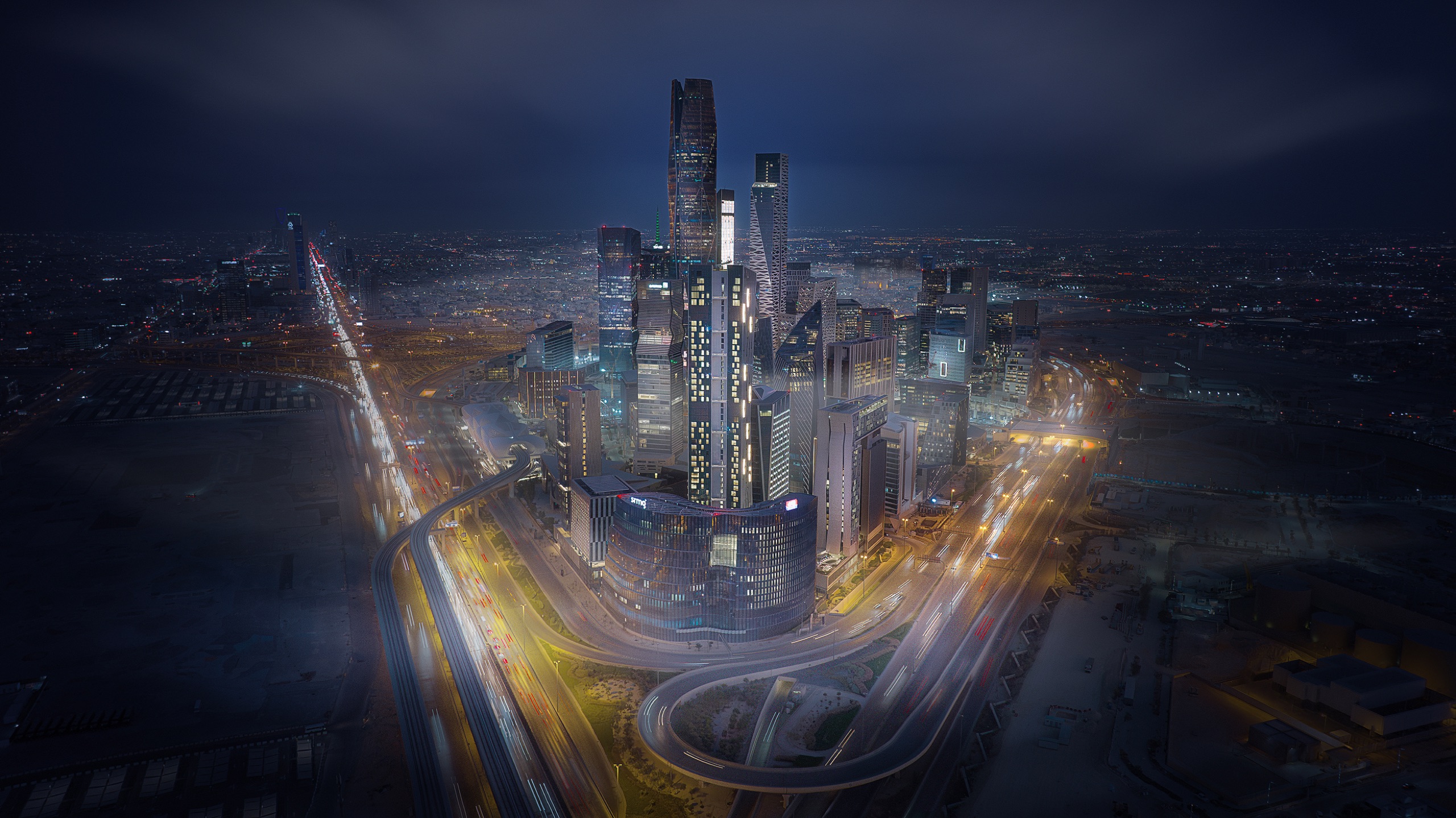
Muscat commissions sit alongside a decade of work across the UAE and Saudi Arabia, including the year-long documentation of KAFD in Riyadh across 90+ buildings, awarded 1st Place in Cityscapes at the International Photography Awards 2025, and commissions in Dubai, Abu Dhabi, and AlUla.
Every project is delivered for marketing, publication, and awards submission, with medium format capture and fine art realistic retouching.
Oman Builds Under Rules Nobody Else Has
Muscat is the most distinctive architectural context in the Gulf, and the reason is regulatory rather than stylistic. Oman restricts building height and enforces design guidance that keeps the city low, white, and in deliberate relationship with the mountains and the coast. The result is a capital that looks like nowhere else in the region, and photographing it means working with landscape rather than against skyline.
That has direct consequences for the work. With height limited, the elevated vantage points that structure a Dubai or Doha commission largely do not exist, so the images are built from the ground and from the terrain. The mountains behind the city frequently do the job a tower would do elsewhere, giving a building something to be measured against.
The light is coastal and clean, and the white render that dominates Muscat is genuinely difficult: it blows out under hard sun and goes flat under overcast. The working windows are narrow and worth planning around.
Access and Aerial Considerations
Drone operations in Oman require civil aviation clearance and are arranged in advance. Muscat's geography, with the airport, port, and government districts distributed through a long coastal city, means restricted airspace is a real constraint rather than a formality.
Heritage and government adjacent sites carry additional considerations, and permissions there are established before travel. Where aerial work is not available, the terrain frequently offers natural elevated positions that a drone would otherwise provide.
How the Work Is Approached
The walkthrough matters particularly in Muscat because the correct position for a building is frequently not adjacent to it. Establishing where the architecture reads against the landscape is the first task, and it is not something that can be worked out on the shoot day.
Capture is medium format, which the white render genuinely requires: holding detail in a bright facade against a deep sky is a tonal range problem before it is anything else. Retouching is fine art realistic, correcting perspective and balancing exposure without flattening the light that gives the building its form.
Muscat is covered from the Dubai base as regular regional work, with travel included in the commission scope rather than billed separately.