
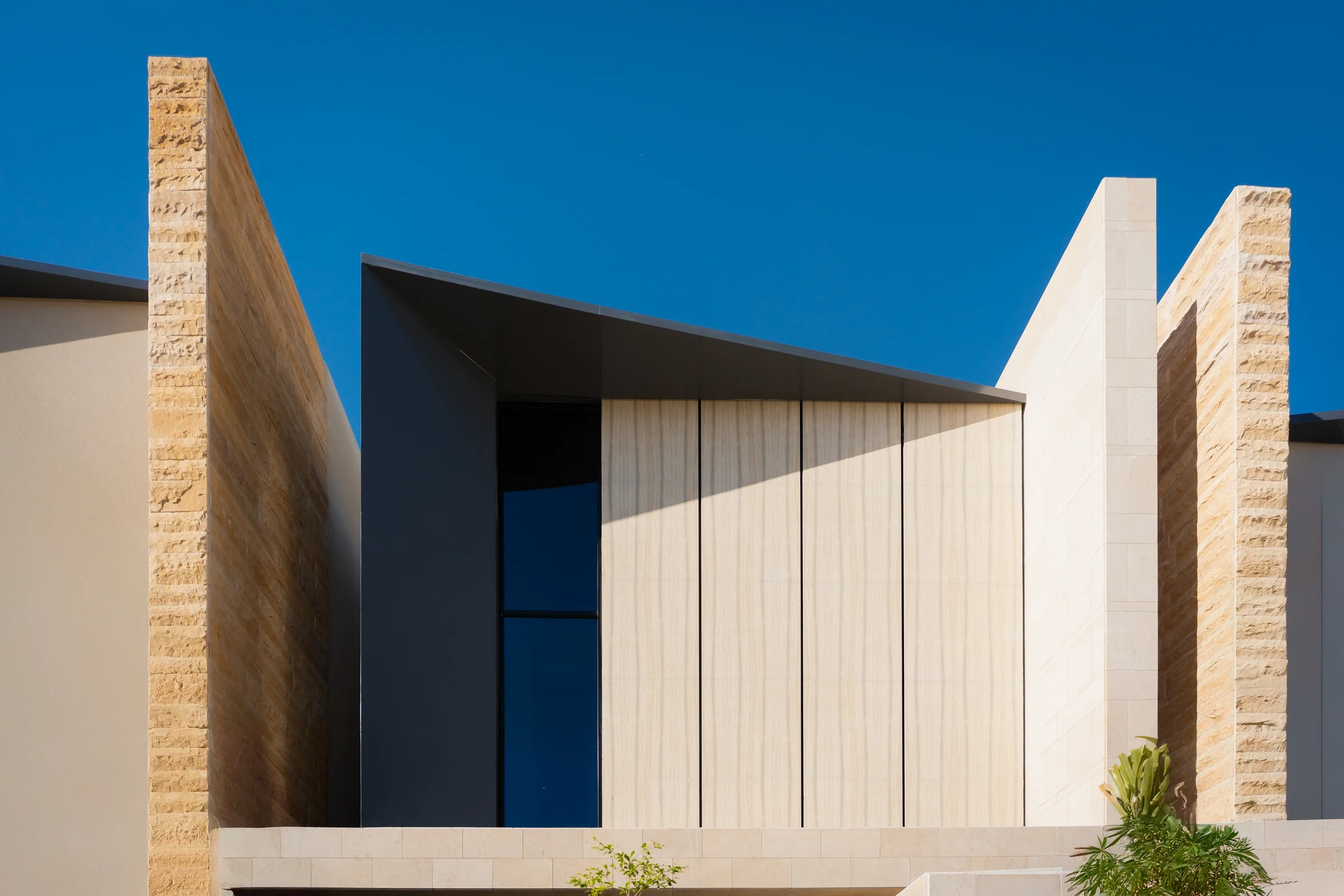
Hiring an Architectural Photographer in Dubai: The Questions That Matter
Most people commissioning architectural photography in Dubai for the first time compare quotes on two numbers: the day rate and the number of final images. Neither of those predicts whether the photographs will be worth having. A cheap day that produces forty competent, forgettable frames costs more than an expensive day that produces eight you will still be using in five years.
Here is what actually distinguishes one commission from another, and what to ask before you sign anything.
Ask who owns the images, and who else can use them
This is the question that causes the most trouble after the fact, and almost nobody asks it upfront. On a typical Dubai project there are at least three parties who will want the photographs: the developer or owner, the architecture or design studio, and frequently the contractor or a product supplier. If the licensing only covers the commissioning party, everyone else either goes without or negotiates later from a weak position.
Ask specifically: what usage is included, for how long, and what happens when a third party wants the images. A clear answer is a flat fee per additional licensee. An unclear answer is a problem you will inherit in six months.
Ask about permits before you ask about drones
Aerial work over Dubai requires civil aviation clearance and, depending on the site, coordination with airspace and property authorities. Large parts of the city sit inside controlled airspace. This is not a formality and it is not something that gets resolved on the shoot morning.
The question is not "do you have a drone". It is "who arranges the clearance, and what happens if the site cannot be cleared". A photographer who has worked here properly will have an immediate answer to the second half: elevated positions from neighbouring buildings, identified and secured during pre-production. A photographer who has not will tell you it will be fine.
Ask what happens before the shoot day
The single most reliable predictor of quality is whether there is a site visit before the shoot. Dubai buildings are oriented, glazed, and surrounded in ways that make the difference between a strong image and an ordinary one a matter of a forty minute window and a position two buildings away. That cannot be worked out while the meter is running.
If the proposal goes straight from booking to shoot day, you are paying someone to discover your building on the clock. The schedule should be built around when each elevation and each space actually reads, which frequently means the best frames are hours apart, and occasionally means two days rather than one.
Ask how the images will be lit
The most common failure in this market is over lighting. Flooding an interior with artificial light produces an even, bright, entirely characterless frame, and it erases the exact thing the designer spent the budget on: how light was meant to move through the space. Dubai's interiors run on stone, brass, timber, lacquer, and textile, frequently in the same room, and each of those reflects differently. Blanket light flattens all of it.
The answer you want is that natural light leads, with small controlled sources used only to supplement. Not because natural light is a philosophy, but because the alternative photographs a room instead of an experience.
Ask about capture and retouching in the same breath
These are related in a way that quotes rarely make clear. A glazed Dubai interior with a bright exterior beyond has an extreme tonal range in a single frame. That is a capture problem, solved with medium format and the right hour. If it is solved in retouching instead, you get an image that has been rescued rather than made, and it looks it.
Ask what the retouching standard is. "Fine art realistic" should mean perspective corrected, exposure balanced, materials colour accurate, and nothing in the frame that was not in the room. If the sample work has skies that were never there and interiors glowing from no visible source, you are buying renderings.
Ask when, not just whether
The best light in Dubai runs from roughly November to March. Haze drops, visibility improves, and the lower sun gives facades genuine modelling instead of flat overhead glare. Summer commissions work perfectly well, but they are built around early morning and blue hour rather than fighting a vertical midday sun at forty five degrees.
Timing matters at the project level too. The window between handover and the accumulation of signage, fit out, and use is short. Photograph a building six months into occupation and you are photographing a different building than the one that was drawn.
The short version
Compare licensing, not day rates. Ask who arranges permits and what the fallback is. Insist on a site visit. Establish that natural light leads. Confirm the retouching does not invent. And book the shoot around the building's moment rather than the calendar's convenience.
If you are planning a commission in Dubai or across the GCC, get in touch, or look at how a Dubai commission is actually planned.