
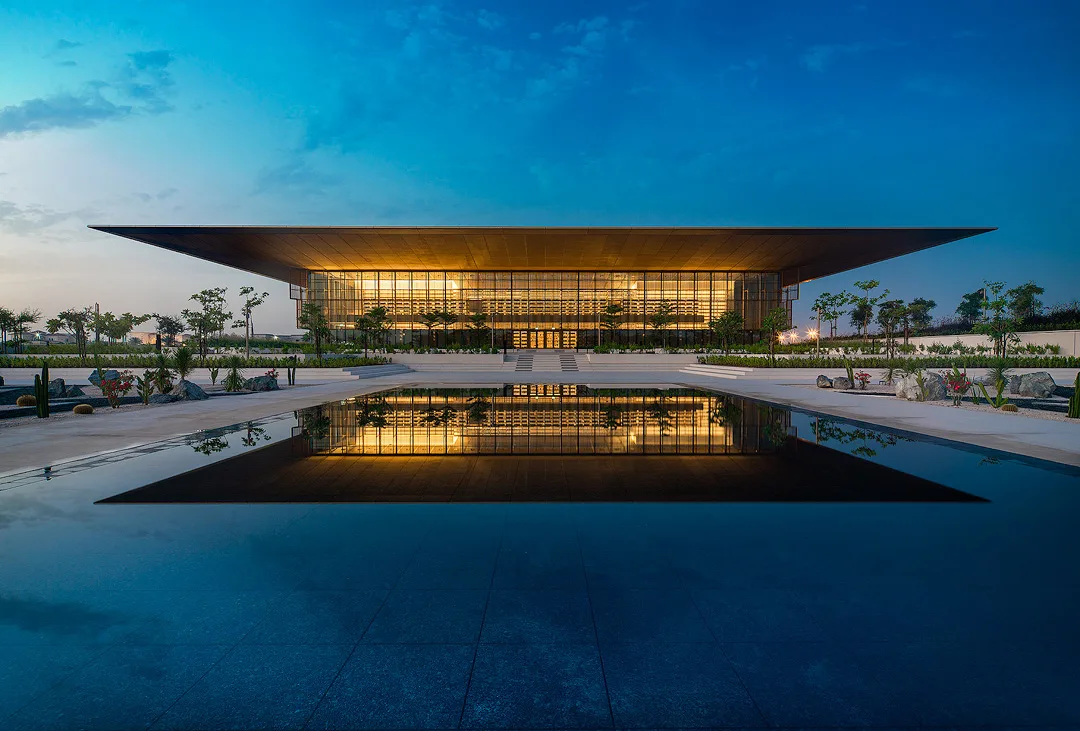
Why Medium Format Changed Everything for Architectural Work
When I moved to medium format, the first thing I noticed was not the resolution. It was the relationship. The camera is bigger, slower, more deliberate. It changes how you move through a space and how long you spend in front of any one frame. That shift in pace turned out to matter as much as the technical upgrade.
The resolution question is real but often misunderstood. At 100 megapixels, the ability to crop aggressively without losing quality changes how you compose. You can shoot a building at the focal length that best represents it spatially, rather than the focal length dictated by where you can physically stand. That freedom is significant on constrained sites, which most architectural shoots are.
For print, medium format is not optional at the scale architects and developers want to work. A 120×180 cm fine art print from a 35mm sensor will show its limits. The same file from a medium format sensor has headroom to spare. That difference is exactly what shows up at the scale of large format prints: at that size, medium format is the only answer.
The dynamic range improvement matters specifically for architecture. Most buildings, photographed at their best moment, involve both direct sunlight and deep shadow in the same frame. The medium format sensor's latitude in holding both ends of that range, without HDR processing, gives images a quality of light that is much harder to achieve otherwise. The shadows are shadow-quality dark. The highlights retain texture. The image reads as a photograph rather than a composite.
The transition is not without cost. The system is heavier, slower to focus in difficult conditions, and significantly more expensive. The lenses require more care. But for work where image quality is the primary product, where the client is buying a representation of their building that has to carry full-page editorial, award submissions, and large format print, there is no credible argument for working below medium format.