
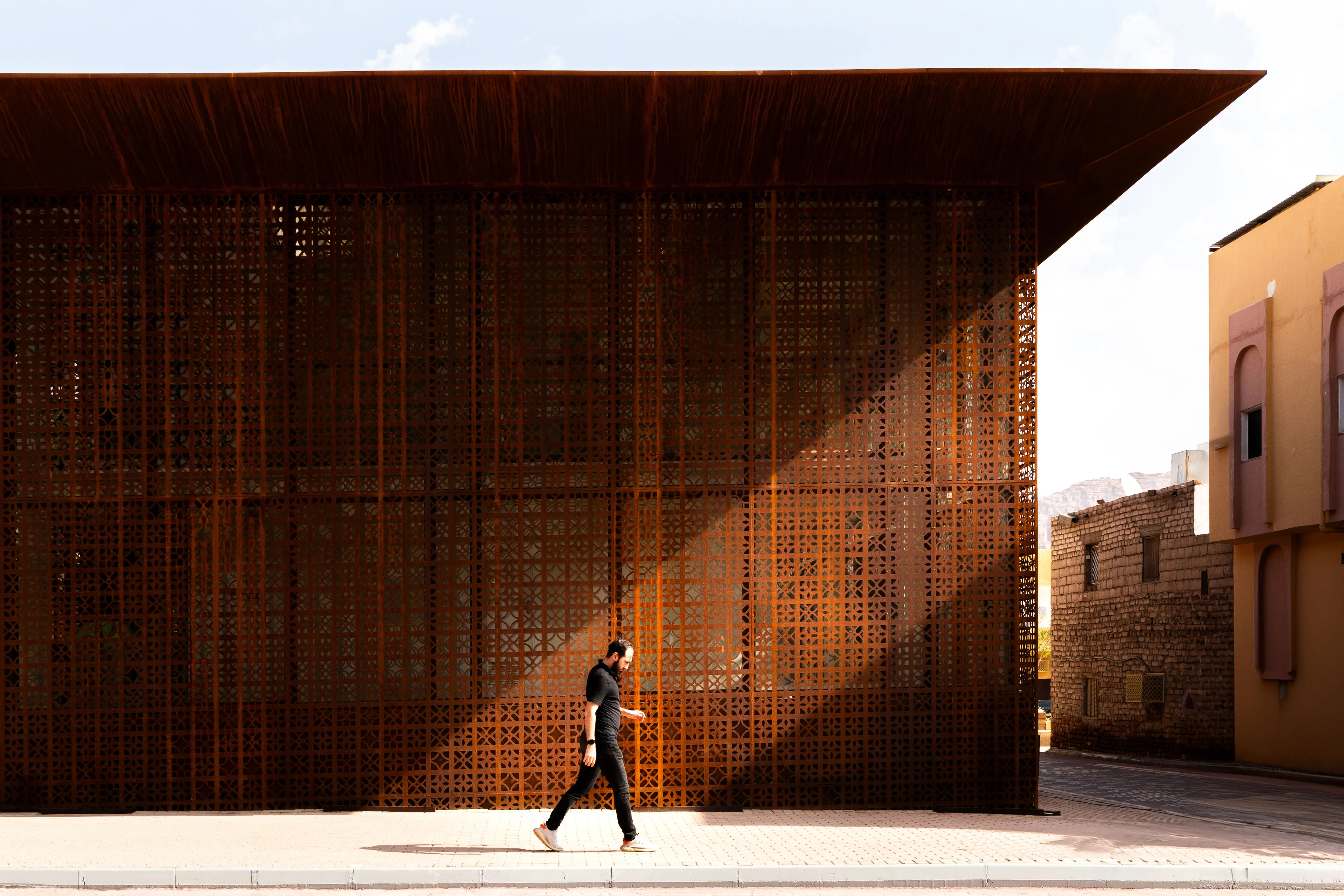
How to Brief an Architectural Photography Commission
The strongest architectural photography briefs I receive are specific about intent and deliberately loose about execution. The weakest are the opposite: a shot list, a day rate, and no explanation of what the building is actually for.
That inversion matters because a shot list is a guess made before anyone has stood in the space at the right hour. Intent survives contact with the building. A list does not.
Start with what the images are for
An image made for an awards submission, an image made for a developer's sales campaign, and an image made for a design studio's portfolio are three different photographs of the same room. The awards image argues a point. The sales image sells a lifestyle. The portfolio image demonstrates a studio's hand.
Most commissions need more than one of these, which is fine, but they need to be named. A brief that says "photograph the building" gets a competent record. A brief that says "these images have to win a jury and also carry the launch campaign" gets a schedule built to do both.
Say what the building is arguing
Every building worth photographing is making an argument: about light, about material, about how people move through it, about its relationship to what surrounds it. The architect knows what that argument is. It is astonishing how frequently it never reaches the photographer.
Tell me the thing you would point at if you were walking me through it. The detail you fought the contractor over. The moment the section was designed around. That single sentence changes more about the resulting images than any shot list.
Be honest about the building's condition
This is the most useful and least comfortable part of a brief. Is the landscaping in? Is the signage up? Is the neighbouring plot a construction site? Is there a services riser on the elevation you would rather nobody saw?
None of this is disqualifying and all of it is schedulable. What is genuinely expensive is discovering it on the shoot day, because at that point the only options are to work around it badly or to come back. Photographers who have worked here for a while are not surprised by an unfinished podium. We are surprised by not being told about it.
Specify usage, not just deliverables
"Twelve final images" is a deliverable. It says nothing about what happens when the operator, the owner, and the design studio all want to use them, which on most projects they will.
Name the parties who will need the photographs and what each will do with them. That is what determines the licensing, and it is far cheaper to establish upfront than to renegotiate after the campaign is built.
Give the schedule room to be right
The most common structural mistake in a brief is treating the shoot as a single day because a day is how rates are quoted. Buildings do not cooperate with that. An east facing entrance and a west facing terrace are not at their best within the same six hours, and an interior with three orientations is a scheduling problem before it is a photographic one.
This is what the pre shoot walkthrough resolves. Light is mapped through the day and the sequence is built around when each space actually reads. Sometimes that fits in a day. Frequently it does not, and knowing that before the booking is better than discovering it at four in the afternoon.
Leave the frames to the photographer
Reference images are useful for tone and completely counterproductive as instructions. A brief that arrives with fifteen frames from someone else's project is asking for a reproduction of a different building in different light.
Share references for mood, for the emotional register you want, for how much the images should breathe. Then leave the composition alone. You are commissioning judgement. Constraining it to a mood board wastes what you paid for.
What a good brief looks like
Three or four sentences on what the building is arguing. A named purpose for the images. An honest note on condition and access. The list of parties who will use the photographs. A completion date, and a flag on anything that will change after it.
That is it. It fits in an email, and it produces materially better work than a fifteen page document with a shot list in it.
For a Dubai-specific version of this, see hiring an architectural photographer in Dubai.If you have a project coming up, start the conversation here.